
20 October 2026, 15:34
Loading...
Report: Europe's e-mobility revolution needs better charging infrastructure

Zuzana Vrbová
17 April 2025, 10:38
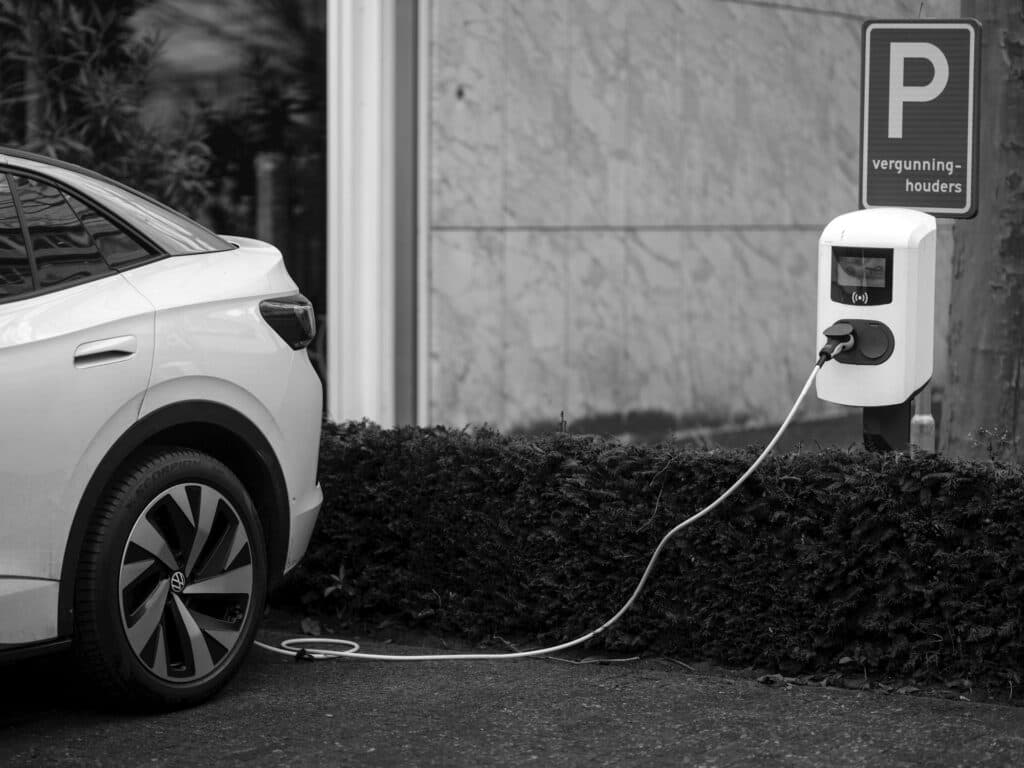
One of the main ambitions of European environmental policy is to increase the number of electric vehicles on local roads. One of the main obstacles, however, is inadequate charging infrastructure.
As reported by Euractiv, according to a new report by gridX, an energy technology company, the European continent is lagging behind in preparing for a fully electrified future.
The European Union currently has only 882 thousand public charging stations. This is significantly below the European Commission's target of 3.5 million by 2030. Including the wider region (the United Kingdom, Norway, Switzerland and others) brings the number of stations to just over one million. Reaching the EU target would require installing approximately 410 thousand chargers a year, three times the current rate.
Poor charger availability worries drivers despite increasing ranges
According to the gridX report, although driving ranges on a single charge continue to increase overall, the average European electric vehicle can now travel approximately 389 km on a full charge. Drivers are still concerned about “charging deserts”. For example, the 3,550 km journey from Lisbon to Białystok (a city on the Polish-Belarusian border) would require at least 10 well-placed charging stops. Chargers are often difficult to find away from major highways.
According to the research agency, the uneven distribution of charging infrastructure, alongside the number of chargers, is a major obstacle to the further development of e-mobility. gridX also identifies overloaded electricity grids and legislation as problems. Permitting processes vary between EU countries and are often complicated and lengthy.
As the report notes, eastern and southern Europe are now expanding the number of fast-charging stations, but the region only began investing in infrastructure relatively recently, and it remains inadequate. Countries such as the Netherlands and Norway lead in charging infrastructure density. By contrast, Germany and France lag behind in availability per capita and relative to the size of their motorway networks, despite having high overall numbers of electric vehicles.
Inadequate infrastructure is holding back e-mobility
Car manufacturers say that 3.5 million chargers will not be enough. According to estimates by industry group ACEA, at least 8.8 million are needed to meet climate targets for 2030 and 2050. The lack of infrastructure and shorter driving ranges are then an obstacle to users buying more electric vehicles.
According to a gridX survey, 73% of electric vehicle owners mainly drive short distances in cities, and 70% of them still plan their charging stops in advance. As a result, many prefer charging at home, which limits their use of electric vehicles for long journeys.
Translation disclaimer
This article is a machine translation of the Czech original and has not yet been fully reviewed. In case of any doubt, please refer to the Czech version.
Sdílejte článek prostřednictvím:
You might also like


20 October 2026, 12:55
20 October 2026, 10:49

20 October 2026, 06:13