
28 October 2026, 15:10
Loading...
Czech scientists test energy recovery from sewage sludge and restaurant waste

oEnergetice.cz, ČTK
5 March 2024, 13:15
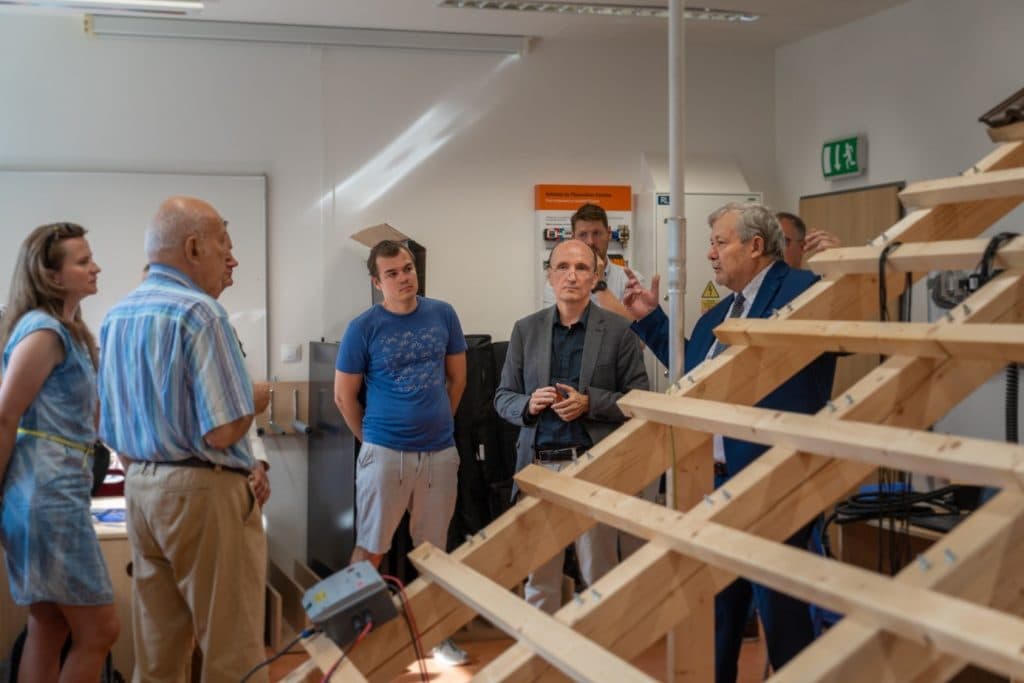
Rising energy prices are driving wastewater treatment plants to strengthen their energy self-sufficiency, for example by installing solar panels. Scientists at the Faculty of Agronomy of Mendel University in Brno are testing an alternative approach. They are focusing on the co-fermentation of sewage sludge and food waste from restaurants, which produces biogas, university spokesperson Tereza Pospíchalová said.
In 2020 alone, more than 970.000 tonnes of food waste from restaurants and other catering businesses were generated in Czechia, according to experts’ estimates. However, processing it presents some challenges. “Its composition changes every day, depending on what dishes restaurants happen to cook. The food also contains proteins and various spices, which can significantly affect the fermentation process,” said Pavel Suchý of the faculty’s Institute of Agricultural, Food and Environmental Engineering.
The scientists therefore decided to combine food waste from restaurants with sewage sludge, which is generated in quantities of several hundred thousand tonnes a year and helps stabilise the fermentation process.
Combining it with food waste from restaurants makes it possible to generate more energy. “Restaurant waste is rich in lipids and carbohydrates, which are the most suitable substrates for biogas production in the fermentation process. We expect that adding it to sewage sludge could increase the energy self-sufficiency of wastewater treatment plants to as much as 70 to 80 percent,” Suchý said.
Special permits are required to process both sewage sludge and food waste from restaurants. “In both cases, we are dealing with potentially infectious biological waste. The waste may contain various bacteria, including salmonella and Escherichia coli. The advantage is that biogas plants at wastewater treatment facilities already have these special permits and the necessary technology,” Suchý explained.
The scientists are working with a company that collects waste from restaurants and canteens in Brno. “In the laboratory, we will test different proportions of sewage sludge and food waste from restaurants. We will also try different temperatures during anaerobic fermentation to find out which conditions are best for producing biogas—specifically biomethane,” Suchý said. According to Suchý, there is strong interest from industry in new waste-processing technologies. The scientists expect to have the research results by the end of the year.
Translation disclaimer
This article is a machine translation of the Czech original and has not yet been fully reviewed. In case of any doubt, please refer to the Czech version.
Sdílejte článek prostřednictvím:
You might also like

28 October 2026, 13:08

28 October 2026, 11:10

28 October 2026, 09:08
