
28 October 2026, 15:10
Loading...
German railways switch off platform departure boards to save energy

oEnergetice.cz, ČTK
11 April 2024, 14:39
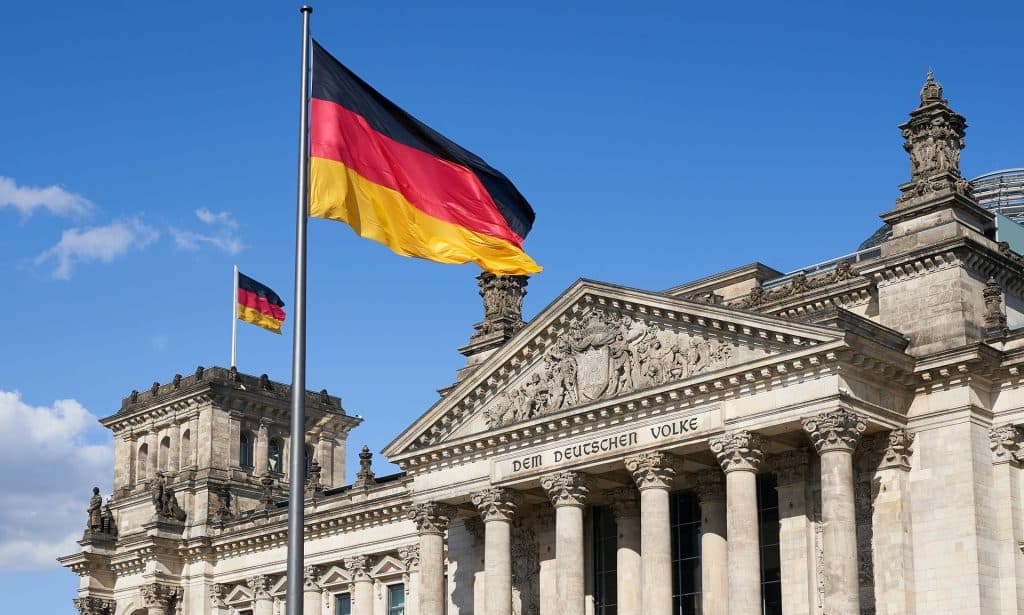
Berlin, April 11 (ČTK) – German rail operator Deutsche Bahn (DB) wants to prevent thousands of kilograms of carbon dioxide (CO2) from being emitted into the atmosphere by switching off digital departure boards when they are not needed. The rail operator says the energy-saving mode has significant potential, particularly at night and at smaller stations with less traffic.
„The energy-saving mode was tested in the second half of 2023 as part of a pilot programme at Berlin’s Potsdamer Platz and Wannsee stations, and later on 100 devices at various locations across Germany,“ the rail operator said.
It has now extended the energy-saving mode to around 1800 departure boards at approximately 250 stations across Germany.
By switching off the boards’ backlighting when there is no activity on the platforms, the devices’ electricity consumption falls to a third. The rail operator described the energy savings as significant. At the three stations where switching off the boards during the pilot project had the greatest impact, the savings in one month were equivalent to the annual consumption of a single-person household.
„According to the trial, around 720 kilowatt-hours are saved per display each year, equivalent to the annual consumption of a cooker and refrigerator. The pilot project showed that departure boards are in energy-saving mode for an average of a quarter of the time,“ the rail operator said.
The boards typically switch to sleep mode 15 minutes after a train departs and 30 minutes before the next departure. „As a result, the boards use only a small fraction of the energy they consume during normal operation. Thousands of kilograms of carbon dioxide can therefore be saved each year. The greatest savings potential is at smaller stations with less traffic, and at night,“ the rail operator said. According to Deutsche Bahn, if the transport situation changes suddenly, the departure board wakes from energy-saving mode so that new information can be displayed to passengers.
The energy-saving mode works not only at smaller stations but also at major railway hubs. Examples include the main stations in Leipzig and Düsseldorf.
Reducing electricity consumption is part of DB’s plan to become climate-neutral by 2040. The rail operator was also driven to make savings by a sharp rise in energy prices. The energy crisis, which was gradually brought under control, was triggered two years ago by Russia’s invasion of Ukraine.
In the summer of 2022, the rail operator promised to pay all employees a one-off bonus of 100 euros (2500 Kč) at the end of the year for energy-saving behaviour. The company eventually increased the bonus to 150 euros (3800 Kč), citing the large number of energy-saving ideas. These included installing motion sensors for lights, switching off unused printers and monitors, turning off lights in unused areas of depots, and switching off lighting in carriages when empty trains were being transported. According to DB human resources chief Martin Seiler, these measures reduced energy consumption by more than ten percent.
Translation disclaimer
This article is a machine translation of the Czech original and has not yet been fully reviewed. In case of any doubt, please refer to the Czech version.
Sdílejte článek prostřednictvím:
You might also like

28 October 2026, 13:08

28 October 2026, 11:10

28 October 2026, 09:08
