25 September 2026, 09:51
Loading...
Crisis for pumped-storage hydropower in Germany: EnBW cancels its project

David Vobořil
27 October 2017, 17:17
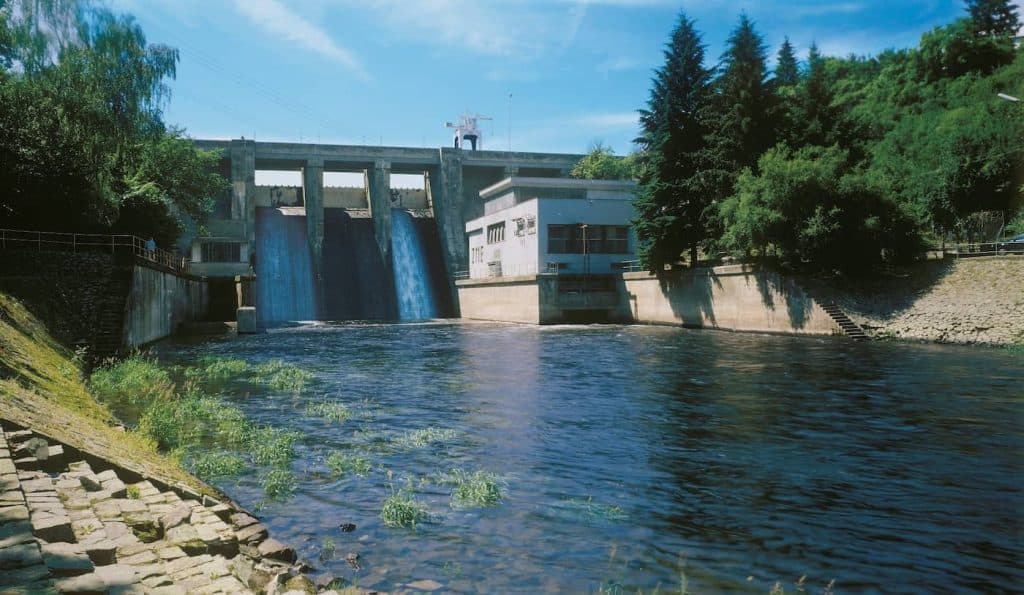
EnBW is cancelling the Atdorf pumped-storage hydropower plant project, which would have become one of the largest plants of its kind in Europe. The company says that regulatory conditions in Germany have not undergone the necessary changes to enable economically viable operation. The company announced the termination of the project on 11 October in a press release.
In recent years, conditions in the energy sector and the regulatory environment for pumped-storage hydropower plant (PSH) projects such as Atdorf have not developed positively. In its press release, the company said that despite these challenging market conditions, it has always supported the development of pumped-storage projects and expanded its energy storage activities.
„Over the past few months, we have comprehensively reviewed the outcomes of three weeks of talks, as well as discussions with Schluchseewerk AG. Based on the final assessment, we have concluded that we will not continue with the project,“ said Dirk Güsewell, head of portfolio development at EnBW.
The German Association of Energy and Water Industries (BDEW) pointed out that the operation of pumped-storage hydropower plants is subject to grid charges twice: for electricity drawn during pumping and again for subsequent electricity generation. As a result, their operation is not particularly economically viable. For this reason, Vattenfall has moved to restructure its PSH plants.
„We finally need compensation for flexible storage services,“ said BDEW President Stefan Kapferer.
The Atdorf plant, which was to be built in the far south of Germany in the state of Baden-Württemberg, would have become one of Europe's largest pumped-storage plants with an installed capacity of 1.4 GW. By comparison, the largest PSH plant in the Czech Republic, Dlouhé stráně, has an installed capacity of 650 MW. Construction of the plant was to be carried out by Schluchseewerk AG, a subsidiary of EnBW and RWE –.
Germany currently has 6.7 GW of installed PSH capacity, according to energy agency DENA, which has repeatedly called for improved operating conditions for these plants.
A classic problem for PSH plants – opposition from environmental activists
The plant project had been planned since 2014, when RWE withdrew from its implementation due to uncertainty over its economic viability. Commissioning of the plant, whose investment costs were estimated at 1.6 billion euros (41 billion Kč), was planned for 2022, when the country's last nuclear reactor was due to be shut down.
The construction of the plant drew criticism for its impact on the landscape, which, along with high investment costs, is generally one of the biggest obstacles to implementing PSH projects. Environmental association BUND welcomed EnBW's decision, stating that if the plant had been built, many rare animals and plants would have irreparably lost their natural habitat, while it would also have had a significant impact on the area's water balance.
„The fact that EnBW has abandoned construction of the Atdorf pumped-storage hydropower plant in this protected area is good news for local residents, nature and the environment,“ said BUND member Sylvia Pilarsky-Grosch.
Franz Untersteller, Baden-Württemberg's energy and environment minister, said that the decision was not entirely unexpected. However, he said it was regrettable and that he would welcome EnBW and its subsidiary finding a way to successfully complete planning for the project.
Featured photo: Kölnbrein dam, Austria, source: Verbund
Translation disclaimer
This article is a machine translation of the Czech original and has not yet been fully reviewed. In case of any doubt, please refer to the Czech version.
Sdílejte článek prostřednictvím:
You might also like

24 September 2026, 11:23

24 September 2026, 10:30
24 September 2026, 06:56