
28 October 2026, 15:10
Loading...
Czech law likely to revise electricity storage rules, lower house backs move

oEnergetice.cz, ČTK
19 April 2024, 13:49
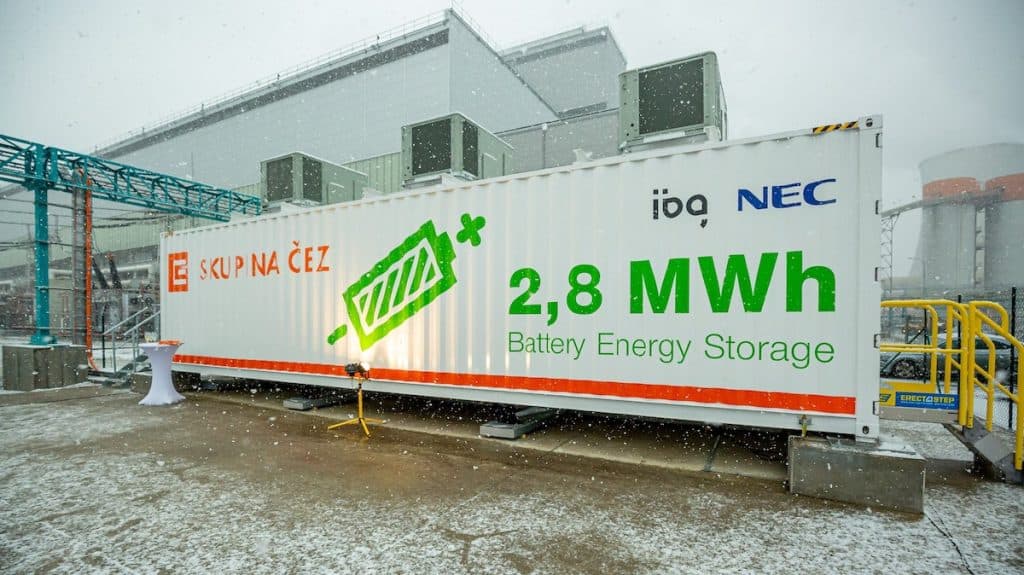
Rules for storing electricity and aggregating its generation and consumption are likely to be added to the Energy Act. The Chamber of Deputies today discussed the government’s amendment, which would enable storage and aggregation, at its first reading. According to the Ministry of Industry and Trade (MPO), the amendment should, among other things, improve the management of power balancing in the grid. It should, for example, allow customers to adjust their consumption according to current energy prices. The amendment should also provide customers with an independent electricity price comparison tool. The government is also proposing to reduce the number of members of the Energy Regulatory Office (ERÚ) Board from five to three.
Industry Minister Jozef Síkela (STAN) said that the bill is largely a transposition of the 2019 European directive on common rules for the internal electricity market. He noted that increasing the storage capacity of electricity systems is a global trend linked to the development of renewable energy sources. Rapporteur Ivan Adamec (ODS) said that, apart from one million crowns to develop the price comparison tool, the amendment would have no impact on the state budget.
The Energy Regulatory Office (ERÚ) will manage the energy prices and offers comparison tool because, as the government states, it must be an institution independent of any market participant. It will also be able to contract a private party to operate it. The comparison tool will enable customers to compare prices and other terms of electricity and gas offers, including spot prices. The explanatory memorandum estimates its operating costs at one million crowns a year. It will be freely available on the ERÚ website. Electricity traders will be required to provide the information requested for the system.
The government expects the comparison tool to enjoy a high level of customer trust. It should therefore contribute to market transparency and encourage consumers to take a more active role in seeking out offers. The law does not, however, prevent anyone else from operating their own price comparison tool.
According to the MPO, developing electricity storage—that is, storing surplus electricity when it is generated and subsequently releasing it into the grid when consumption is higher—is necessary, in particular, to increase the system’s resilience to operational fluctuations, integrate renewable energy sources into the grid and support investment.
The ministry says the changes should also make the domestic grid more flexible, allowing energy production and distribution to be adjusted to current needs. It expects this to reduce peaks in energy demand, which often occur when demand is high. It will also make it possible to spread energy consumption more evenly throughout the day. In its explanatory memorandum, the government says that the flexibility offered by producers and consumers will constitute a service in legal terms, provided by these flexibility providers to an aggregator, and that aggregators will subsequently trade this service with network operators. Aggregation should then make it possible to combine multiple producers into a single larger group.
Other changes also focus on consumer protection. For example, customers will be able to withdraw from fixed-term contracts if a supplier’s procurement policy does not comply with the rules. The rules for issuing licences to traders should also be tightened
The amendment also reduces the number of members of the ERÚ Board from five to three. One of the board members will serve as the office’s chair. The government will appoint the board on the proposal of the Ministry of Industry. Last year, the Pirates put forward a similar proposal during consideration of the previous amendment to the Energy Act, but the Chamber of Deputies did not approve it. KDU-ČSL MP David Šimek said on behalf of his party’s parliamentary group that reducing the number of board members was not ideal in the current situation and that the Christian Democrats were willing to discuss the change.
Translation disclaimer
This article is a machine translation of the Czech original and has not yet been fully reviewed. In case of any doubt, please refer to the Czech version.
Sdílejte článek prostřednictvím:
You might also like

28 October 2026, 13:08

28 October 2026, 11:10

28 October 2026, 09:08
