
28 October 2026, 15:10
Loading...
EIB to help finance development of a pumped-storage power plant in the Baltics

Lukáš Lepič
16 March 2024, 12:53
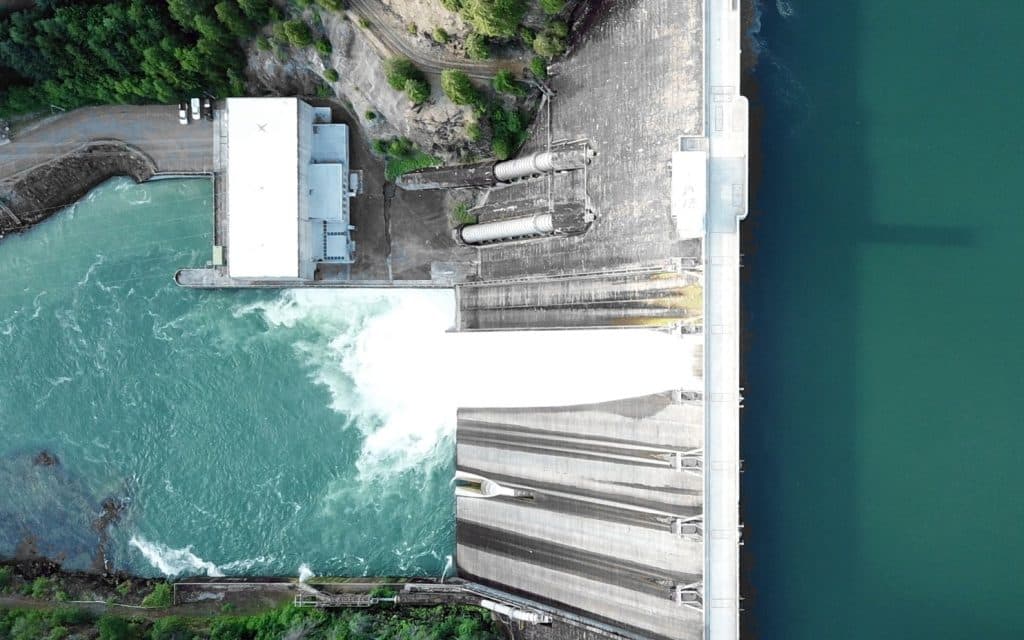
Baltic energy company Ignitis Group has signed a financing agreement with the European Investment Bank for another unit at the Kruonis pumped-storage hydropower plant. The new project, with a total installed capacity of 110 MW, is strategically important for Lithuania and is expected to make the entire power system more flexible. The system must respond in particular to the growth in installed renewable capacity.
As part of the strategic development of the Kruonis pumped-storage hydropower plant, Ignitis Group signed a EUR 105 million financing agreement with the European Investment Bank (EIB) on 12 March. The loan will be provided for a term of up to 16 years, with the investment going toward construction of Unit 5, with a capacity of 110 MW.
"We are pleased to sign an agreement with the European Investment Bank, opening the door to new opportunities by expanding the infrastructure of the Kruonis pumped-storage hydropower plant and implementing sustainable energy solutions for the future. The necessary investments will also increase electricity generation and facilitate the development of green generation,"said Jonas Rimavičius, the group’s CFO and a member of the management board.
The unit under construction will have a maximum output of 110 MW, with a wider operating range in generator mode starting at 0 MW; in pumping mode, it will be able to operate from 59 MW. The installation of Unit 5 (110 MW) will increase the installed capacity of the Kruonis plant to 1,010 MW, making it one of Europe’s largest energy storage facilities. The new unit is expected to be completed by the end of 2026.
Kruonis currently operates four units, each with a maximum output of 225 MW. The plant is unique among the Baltic states. It can currently supply electricity to all of Lithuania continuously for 12 hours at an output of 900 MW.
The existing units can provide balancing services. However, the company says their ability to provide some of the new frequency control services will be limited. This is expected to be due to changes in demand for ancillary services in the near future and the limited flexibility of the existing units.

Kruonis pumped-storage plant. Source: Wikipedia
Pumped-storage plants are needed, but development is complex
Pumped-storage hydropower plants are currently the dominant form of electricity storage. They therefore play an important role in the development of renewable energy sources and their integration into the grid. Worldwide, pumped-storage hydropower plants provide regulation and spinning reserve, and account for about 96% of utility-scale electricity storage.
The EU has 46 GW of installed pumped-storage capacity, a quarter of the global total. Hydropower technology is well established, and overall efficiency generally exceeds 80% and can reach 90%.
Further development in Europe is uncertain, however. The EU expects that up to 108 GW of new energy storage capacity will be needed in EU member states by 2030, including pumped-storage plants. However, these projects require substantial space, time and investment, and can be built only at sites with specific conditions. The technology is also beginning to face competition from larger battery storage projects.
The challenges involved in delivering such projects can be illustrated by another project seeking financing from the European Investment Bank: the Amfilochia pumped-storage hydropower plant in Greece. It has been designated a Project of Common Interest since October 2013. However, the decisions granting permission to implement the project and begin construction work were not issued until 2022. The total investment is estimated at EUR 685 million, with EUR 120 million expected to be financed by the European Investment Bank.
Translation disclaimer
This article is a machine translation of the Czech original and has not yet been fully reviewed. In case of any doubt, please refer to the Czech version.
Sdílejte článek prostřednictvím:
You might also like

28 October 2026, 13:08

28 October 2026, 11:10

28 October 2026, 09:08
