From storage to energy management: Huawei LUNA2000-241-2S1 is transforming business energy
Today, companies are dealing with more than just the price of electricity. Growing market volatility, pressure to improve efficiency and a focus on operational stability are making energy management a strategic issue. In this context, the role of battery storage is changing. No longer just an add-on to solar power, it is becoming an active tool that enables energy to be managed over time, optimises its use and increases operational resilience.
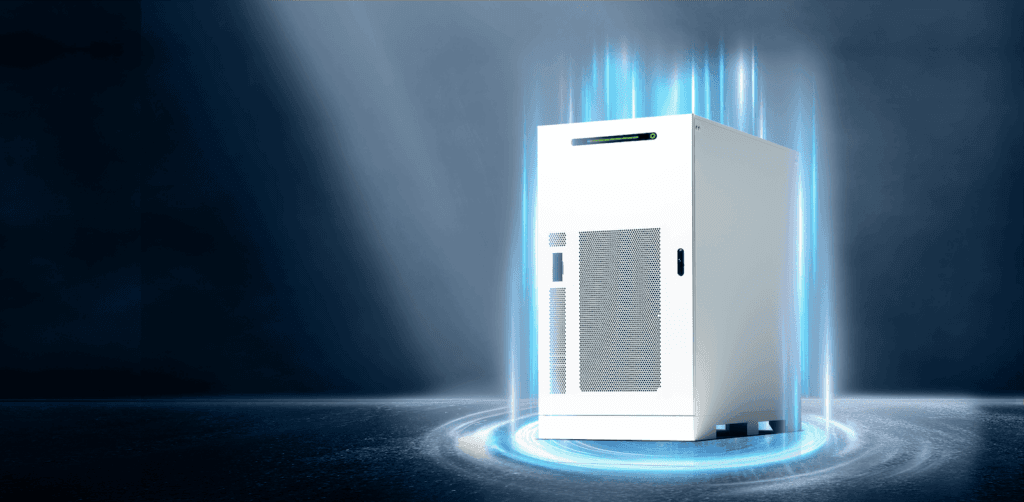
One solution that clearly illustrates this shift is the HUAWEI LUNA2000-241-2S1 system – a next-generation battery storage system designed for commercial and industrial use.
Companies today are thinking not only about how much energy they consume, but also how they can manage it over time. Combining battery storage, power management and safety features makes it possible to use self-generated energy more efficiently while also increasing operational stability. In practice, this is not just about savings, but about a fundamental change in how companies approach energy.
From passive storage to active energy management
The basic principle of battery storage remains the same: store energy when it is available or cheap, and use it when it is needed. In practice, however, modern systems add another layer – the ability to respond actively to operational and market conditions.

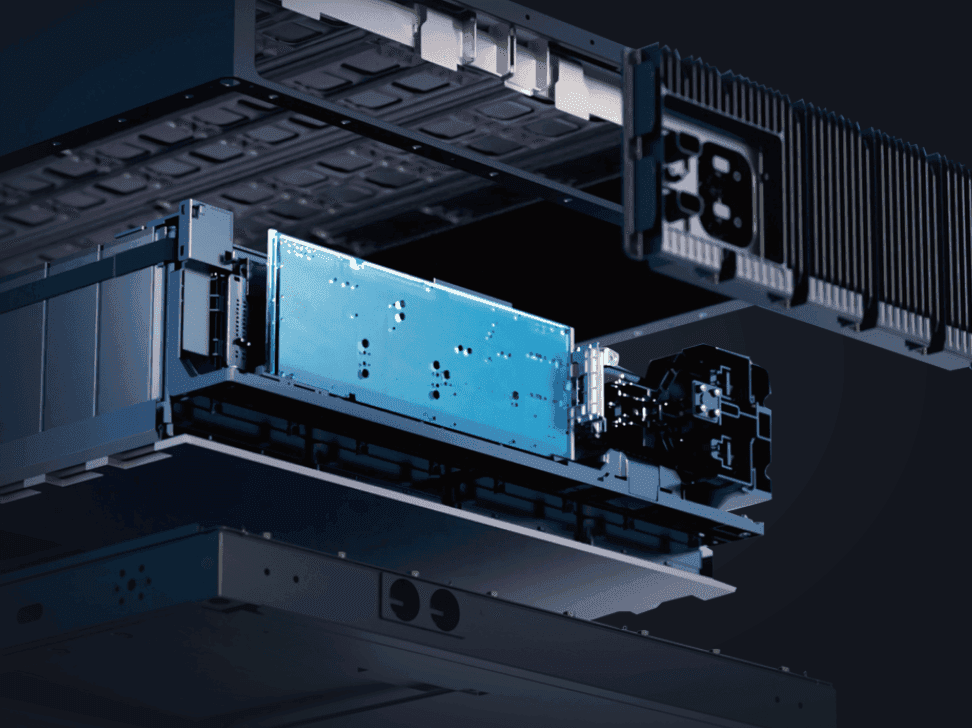
LUNA2000-241-2S1 operates as a comprehensive BESS (Battery Energy Storage System), integrating battery modules, a battery management system (BMS), power conversion system (PCS) and supervisory control. This enables it not only to store energy, but also to deliver it precisely according to the operation’s current needs.
The result is greater control over consumption, the ability to reduce demand peaks and optimise the use of self-generated solar power.
Specifications that make sense in real-world operation
For businesses, it is essential that battery storage be not only technologically advanced, but also practical to use. In this respect, LUNA2000-241-2S1 offers a combination of specifications suited to real operational needs.

Its 241 kWh capacity and 108 kW power make it suitable for the energy needs of medium-sized and larger facilities. A round-trip efficiency of 91.3 % keeps losses during energy storage and use low.
Another key advantage is the ability to use the full capacity range (0–100 %), which increases flexibility in managing consumption. The system continuously monitors the state of charge, temperature and load of individual modules, and optimises operation to ensure stability and long-term sustainability.
Operational stability as a key benefit
In many sectors, the primary goal is not to save costs, but to ensure business continuity. A short outage can halt production, result in lost contracts or damage equipment.
This is where the system’s ability to operate in so-called grid-forming mode plays an important role. This means the battery storage system can actively stabilise the grid and ensure a seamless transition between connection to the distribution grid and island mode.
In practice, this means switching in milliseconds without interrupting the power supply. This is a critical specification for manufacturers, logistics companies and service providers with high energy availability requirements.
Power quality and rapid response
Alongside energy availability, its quality is also becoming increasingly important. Modern industrial operations are sensitive to voltage fluctuations and harmonic distortion, which can affect not only product quality but also equipment lifespan.
LUNA2000-241-2S1 operates with low total harmonic distortion (THDi), making it suitable for demanding applications. It also offers a response time of tens of milliseconds, enabling it to react immediately to changes in load.
Operational economics: more than just savings
Two metrics are increasingly used to assess energy solutions today.
The first is LCOE (Levelized Cost of Energy), which describes the cost of energy produced. The second is LBOE (Levelized Benefit of Energy), meaning the actual benefit energy brings to a company’s operations.
LUNA2000-241-2S1 contributes to both. It helps reduce costs through efficient energy use, while also increasing energy’s value – for example, by ensuring operational stability, enabling a response to electricity prices or optimising peak power demand.
Intelligent management as a competitive advantage
Modern battery systems also incorporate advanced control, often using artificial intelligence. This makes it possible to optimise operation according to current conditions – for example, by monitoring electricity price trends, managing peak consumption or combining different operating modes.
For companies, this means energy is no longer a static cost item, but a dynamic tool that can be actively managed.
Safety and robustness for industrial environments
Safety is essential for large-scale battery systems. LUNA2000-241-2S1 combines stable LFP cells, advanced monitoring and design features that enable it to handle exceptional situations.
The system is designed to operate across a wide range of conditions and meets the demands of industrial applications, where uncompromising reliability is essential.
Flexibility as the new standard
In the future, companies’ ability to respond to changes in the energy system will become increasingly important. Battery storage enables participation in flexibility services and real-time consumption optimisation.
For companies, this means not only savings, but also new opportunities. Energy is gradually becoming a resource that can be actively managed and used as part of a competitive advantage.
Translation disclaimer
This article is a machine translation of the Czech original and has not yet been fully reviewed. In case of any doubt, please refer to the Czech version.