Political failure or technical limit? German batteries are running up against grid limits

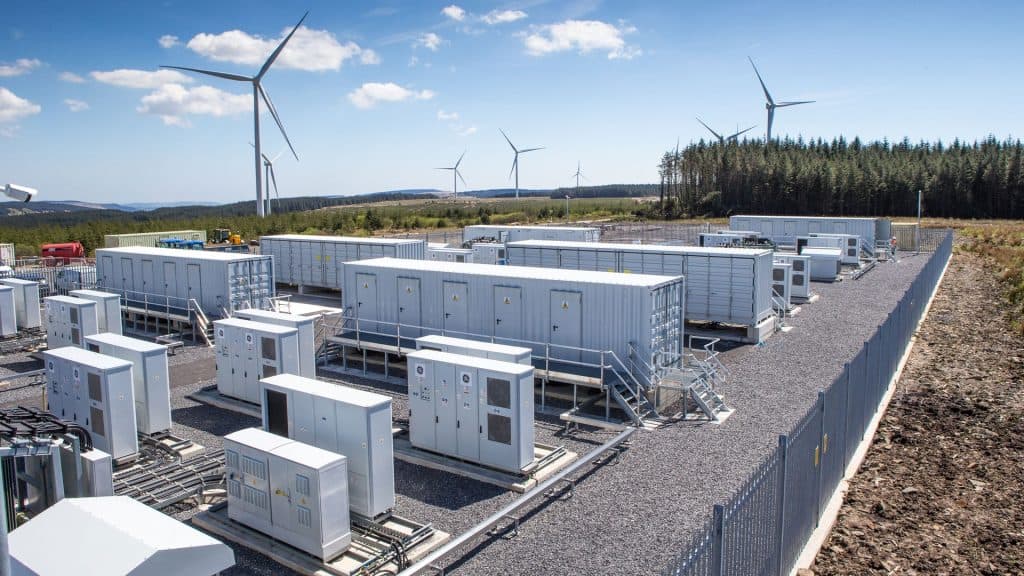
Distribution system operators in Germany have been grappling in recent years with a rapid surge in new battery storage projects. Almost 10,000 projects are already awaiting approval for future grid connections. Grid operators say caution is warranted, however, as connecting all the potential storage facilities could simply overload the electricity system. Expanding energy storage, including battery storage, is one of Germany’s key priorities given the continuously growing capacity of renewable energy sources.
Germany has significantly increased its installed wind and solar power capacity in recent years and decades, bringing with it greater demands for balancing their intermittent generation. Battery storage is expected to play a key role in this area, thanks in particular to how relatively quickly and easily it can be built. Battery storage also offers considerable flexibility and, in addition to providing ancillary services, can help balance price differences throughout the day.
Almost 10,000 such projects are now at various stages of development. According to Clean Energy Wire, the battery boom of recent years is particularly evident in the state of Bavaria. According to local distribution system operator Bayernwerk Netz, the volume of connection applications rose from around 1,000 MW in total in autumn 2023 to 80,000 MW at the start of this year. In the Munich area alone, more than 200 connection applications are awaiting approval, according to the operator.
Caution is warranted
German distribution system operators are warning, however, that caution is warranted. Connecting all the projects in the queue would make little sense from the perspective of operating the grid. During periods of peak demand, such a large number of battery storage facilities would overload their networks. According to Bayernwerk Netz, battery storage facilities are becoming significant consumers of electricity. In some areas, the company says, they could even worsen the situation by creating a capacity shortage.
Some battery storage developers argue, however, that the problem with grid capacity is a political failure, not a technical one. Georg Gallmetzer, CEO of Eco Stor, a company focused on developing large-scale storage facilities, told Clean Energy Wire that Bavaria ranks near the bottom among Germany’s states in processing connection applications.
Gallmetzer, by contrast, pointed to Bollingstedt, the largest battery storage project in Germany, located in the northern state of Schleswig-Holstein. He said the project shows that distribution system operators and developers can agree on rules that ensure storage facilities are commercially viable while also protecting the stability of the distribution grid.
Translation disclaimer
This article is a machine translation of the Czech original and has not yet been fully reviewed. In case of any doubt, please refer to the Czech version.