25 September 2026, 09:51
Loading...
Analysis: Doubts persist over emissions reporting in Czechia. Power plants cut emissions by using "measurement error"

Zuzana Vrbová
22 September 2020, 10:38
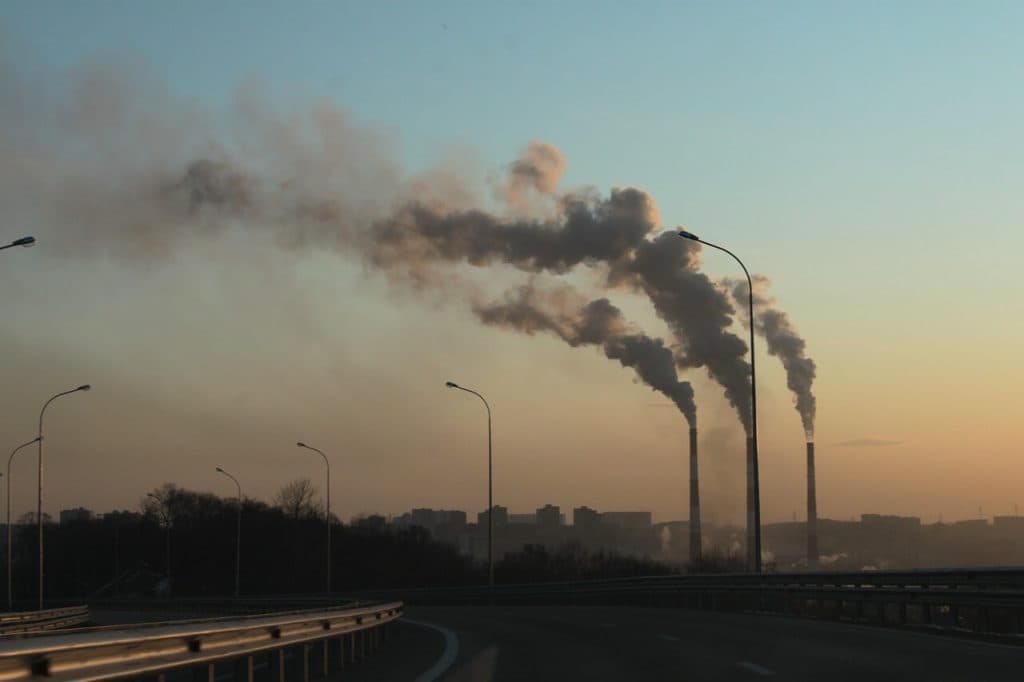
The public does not have complete and truthful information about emissions of hazardous substances and greenhouse gases produced by the Czech energy sector and industry. This is at least suggested by an analysis prepared by law firm Frank Bold.
According to the company, which has long focused on environmental and energy issues, greater emissions reductions are being hindered by shortcomings in Czech legislation. These include, above all, vague rules for emissions reporting, the inconsistency and lack of teeth of state authorities and the institutions they administer, and the unavailability of emissions information.
Frank Bold's analysis focused on pollutants including NOx, SO2, mercury and CO2. Among other things, it notes that air pollution in Czechia causes around 10 thousand premature deaths every year and that as many as 87.3 % of the country's population lives in areas where ambient air quality limits are exceeded in the long term.
Legislative loopholes
The law firm focused primarily on legislative loopholes that plant operators can use to reduce their reported emissions. These include in particular the option to deduct up to 40 % of measured emissions as a “measurement error” or to report lower mercury emissions due to a less accurate measurement method.
For some substances, it is possible to deduct a deviation stipulated by decree. Specifically, this amounts to 40 % for mercury and 30 % for dust, and 20 % for nitrogen oxides and sulphur dioxide. Frank Bold points to the need to update the decree, which was drawn up at a time when emissions measurement methods were not very accurate.
According to the company, these legislative shortcomings were highlighted by the operators of some power plants themselves, which applied for exemptions from a rule requiring everyone to use more rigorous measurement methodologies from August next year. The changes in methodology should therefore substantially increase the operators' reported mercury emissions values.
For other pollutants, the problem with reporting, according to the law firm, lies for example in the fact that authorities require only an annual average of emissions volumes. It is therefore not checked whether emissions limits were exceeded in certain months of the year. As Frank Bold notes, the public also has no access to data on dust, SO2 and NOx emissions.
Applications for exemptions
As Frank Bold points out, the Chvaletice power plant, for example, was granted an exemption from compliance with limits on mercury emissions in September (Opatovice is now applying for one). This allows it to release 300 kg more mercury into the air annually than it otherwise would.
In applications for exemptions, operators often argue that the necessary measures are too financially demanding and offer limited environmental benefits. However, the Ministry of the Environment estimates that one kg of mercury released into the air causes damage of 600 thousand to 1.3 million Czech crowns.
Translation disclaimer
This article is a machine translation of the Czech original and has not yet been fully reviewed. In case of any doubt, please refer to the Czech version.
Sdílejte článek prostřednictvím:
You might also like
24 September 2026, 11:23

24 September 2026, 10:30
24 September 2026, 06:56