
8 November 2026, 20:02
Loading...
EU tightens greenwashing regulation. Claims that products are “CO2 neutral” will have to be substantiated

Zuzana Vrbová
26 September 2023, 13:18
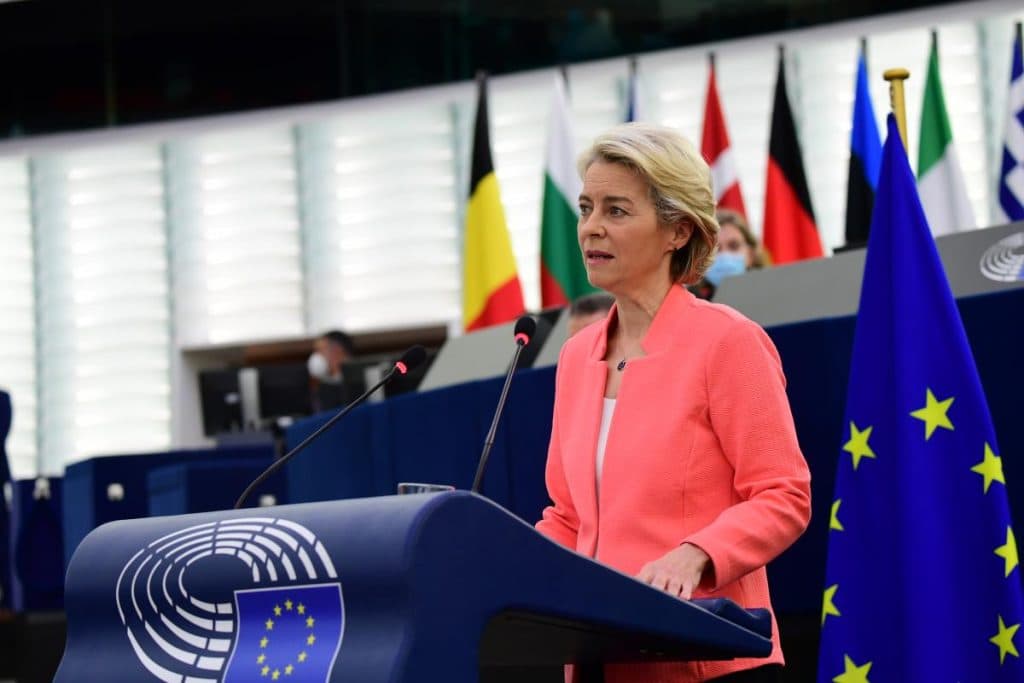
The European Union has approved a directive on environmental claims. It aims to prevent the use of environmental slogans for so-called “greenwashing”. Companies using sustainability claims in their marketing will have to substantiate them properly.
From 2026, European companies will no longer be able to mislead consumers with environmental claims about their products. As reported by Euractiv, the European Union has adopted a new directive in response to the need to prevent greenwashing—that is, when companies use sustainability claims to sell their products. Last week, the Union moved towards formal approval of legislation that will prohibit companies from this practice.
The European Commission proposed the directive on empowering consumers in March 2022. Until then, environmental claims were virtually unregulated, and companies could say almost anything about their products.
Claims such as “climate-neutral”, “nature-friendly” or “from sustainable farming” will now be regulated, and companies will have to demonstrate, in line with European standards, the basis on which they use these labels. EU member states will have two years to implement the new rules.
Claims that will be prohibited include general environmental claims that are not substantiated. Claims based on emissions offsetting will be banned entirely, with no exceptions.
“There is no such thing as ‘carbon-neutral’ or ‘CO2-neutral’ cheese, plastic bottles, flights or bank accounts. Carbon-neutral claims are greenwashing, plain and simple, and should no longer be used,” said Ursula Pachl, deputy director of the European Consumer Organisation.
Retailers will also have to declare a product’s expected lifespan. The European Union says it is important for consumers to be informed about how long, for example, a washing machine or television is expected to last. The Union plans to continue monitoring how companies respond to the new rules and whether they try to circumvent them.
The Union plans two further measures to protect consumers in this area. However, some proposals are expected to be significantly weakened, such as those aimed at improving animal-farming conditions. Some conservative MEPs in Brussels argue that they would place increased, unjustified demands on farmers and other companies in the supply chain.
Translation disclaimer
This article is a machine translation of the Czech original and has not yet been fully reviewed. In case of any doubt, please refer to the Czech version.
Sdílejte článek prostřednictvím:
You might also like

8 November 2026, 13:59

8 November 2026, 08:10
7 November 2026, 17:23