
28 October 2026, 15:10
Loading...
Czech minister Síkela: EU states should avoid measures that could drive up gas prices

oEnergetice.cz, ČTK
4 March 2024, 16:53
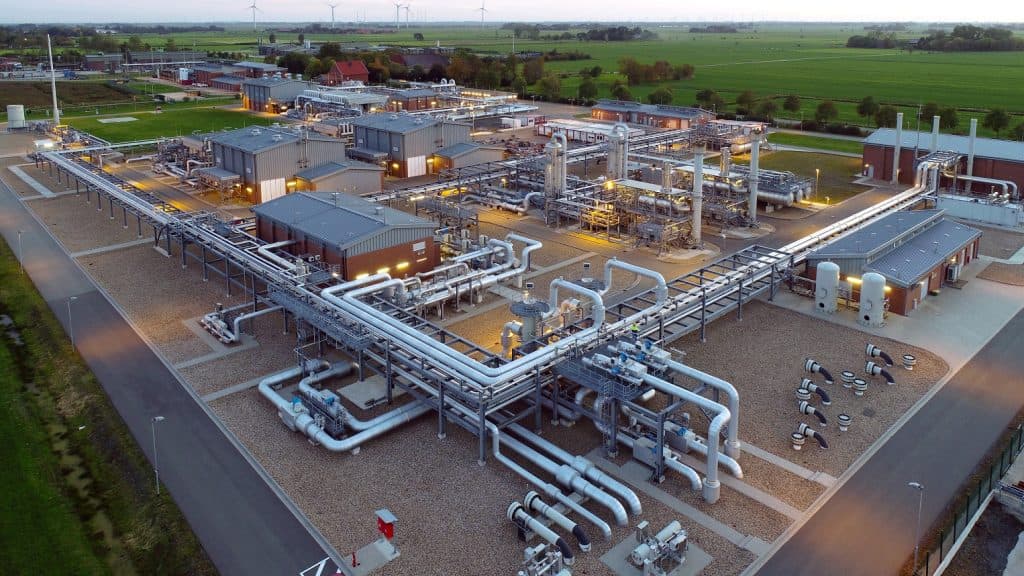
Brussels, March 4 (CTK correspondent) – European Union countries should avoid unilateral measures that could raise gas prices for future consumers. Czech Industry Minister Jozef Síkela said this at a meeting in Brussels. That is why he wants to discuss with his counterparts from other member states today the abolition of a fee Germany charges for the transit of natural gas through its territory. German State Secretary Sven Giegold said, however, that the fee is non-discriminatory because German companies and consumers also pay it. Berlin is nevertheless prepared to hear and respond to the Czech complaint, he said.
Europe’s dependence on Russian gas had long been a tool that Russian President Vladimir Putin used to try to control and blackmail EU member states, Síkela said. „After Russia’s aggression, Europe came together and coordinated its actions, and we managed to take this weapon away from Putin. But we must remain alert and bear in mind that gas can still be used as a weapon against us,“ the Czech minister added, referring to Russia’s invasion of Ukraine.
Against this backdrop, he wants to discuss further ways to strengthen the security of Europe’s gas market at today’s meeting. Efforts to get Germany to abolish the gas transit fee are also part of this. Other countries, including Poland, Austria, Hungary and Slovakia, support the Czech initiative.
According to earlier information from the Ministry of Industry and Trade (MPO), the German fee, which is intended to cover the cost of storing gas in storage facilities, amounts to 1.86 euros (more than CZK 47.15) per megawatt-hour for all gas exported from Germany. According to the ministry, Italy and other countries are considering introducing a similar fee.
The Czech industry minister said he would seek to persuade Germany to stop charging the fee. He hopes the European Commission will not need to intervene. „I am firmly convinced that it would be better to reach an agreement before any intervention takes place, and I firmly believe we can reach one,“ Síkela said.
The Czech minister is expected to discuss the issue directly with German Economy Minister Robert Habeck soon. Today in Brussels, only State Secretary Sven Giegold is present. He told journalists that he was prepared to hear his counterparts’ concerns and respond to them. „I would like to emphasize one point: this fee is charged to everyone, including German companies and consumers, so it is non-discriminatory,“ Giegold said. He added that it contributes to the security of gas supplies. Germany would nevertheless welcome any Europe-wide solution to the problem, he said.
According to Spanish Energy Minister Teresa Ribera, the European Union should agree on how its member states can reduce imports of Russian liquefied natural gas (LNG). This should be a common position for all 27 member states. If Spain alone decides to reduce or ban gas imports from Russia, the impact will be limited because „supplies can easily be redirected to another EU port“.
Since Moscow’s 2022 invasion of Ukraine, gas imports from Russia to Europe have fallen sharply, but the same is not true of Russian liquefied natural gas (LNG) imports. The European Commission (EC) has proposed that the 27 member states end their dependence on Russian fossil fuels by 2027.
EU countries have not yet imposed sanctions on imports of Russian gas or LNG, on which countries including Austria and Hungary still depend heavily. Lithuania is now proposing that the European Commission go further and introduce legislation setting 2027 as a firm deadline for ending Russian supplies.
Translation disclaimer
This article is a machine translation of the Czech original and has not yet been fully reviewed. In case of any doubt, please refer to the Czech version.
Sdílejte článek prostřednictvím:
You might also like

28 October 2026, 13:08

28 October 2026, 11:10

28 October 2026, 09:08
