
28 October 2026, 15:10
Loading...
Russian gas deliveries to the EU fell below 15% in 2023, LNG imports surged

Lukáš Lepič
26 February 2024, 17:40
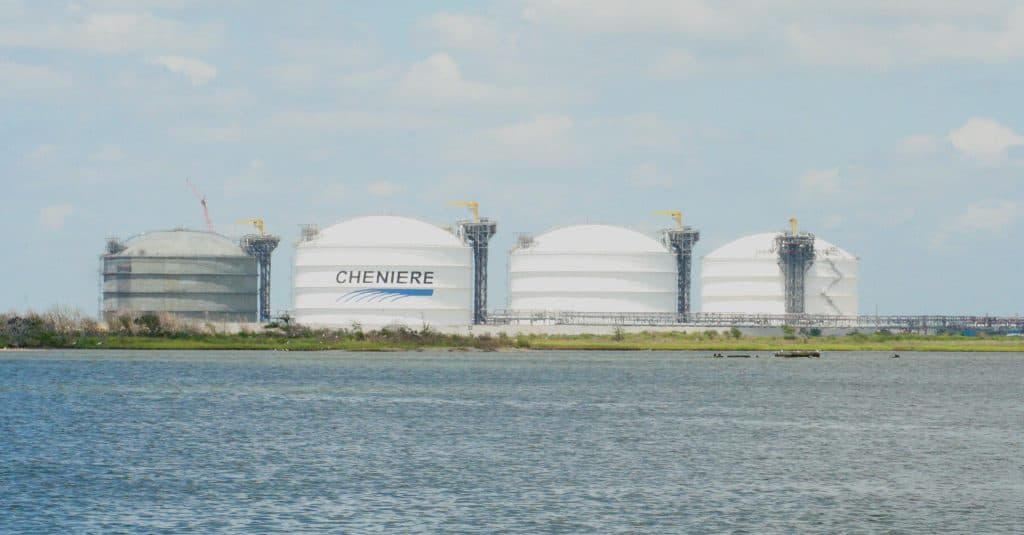
Russian gas accounted for more than 40% of EU imports in 2021, but less than 15% in 2023. According to EU authorities, the sharp decline over the past two years was made possible primarily by a surge in LNG imports and an overall reduction in gas consumption. The United States was the largest LNG supplier, with total deliveries nearly tripling compared with 2021.
Russia’s invasion of Ukraine forced many countries to place greater emphasis on energy security and diversifying supplies. Diversification is a lengthy and costly process that requires investment in infrastructure. The crisis, however, forced European countries to accelerate processes that could otherwise have taken several years. The energy crisis peaked in August 2022, when energy commodity prices reached record highs and households and businesses across the EU felt the impact of high energy bills.
After two years, the result is a reduction in natural gas imports from Russia via pipelines and a significant increase in imports of liquefied natural gas (LNG) from alternative suppliers. According to EU data, the share of Russian gas in total EU imports fell from more than 40% in 2021 to less than 15% in 2023. Russian gas accounted for only around 8% of total pipeline imports.
The share of other countries, by contrast, grew. Norway, a long-standing and reliable partner, supplied almost 30% of all imports. Total deliveries from the country rose by around 10.4% compared with 2021. Other suppliers include North African countries, the United Kingdom and Qatar.
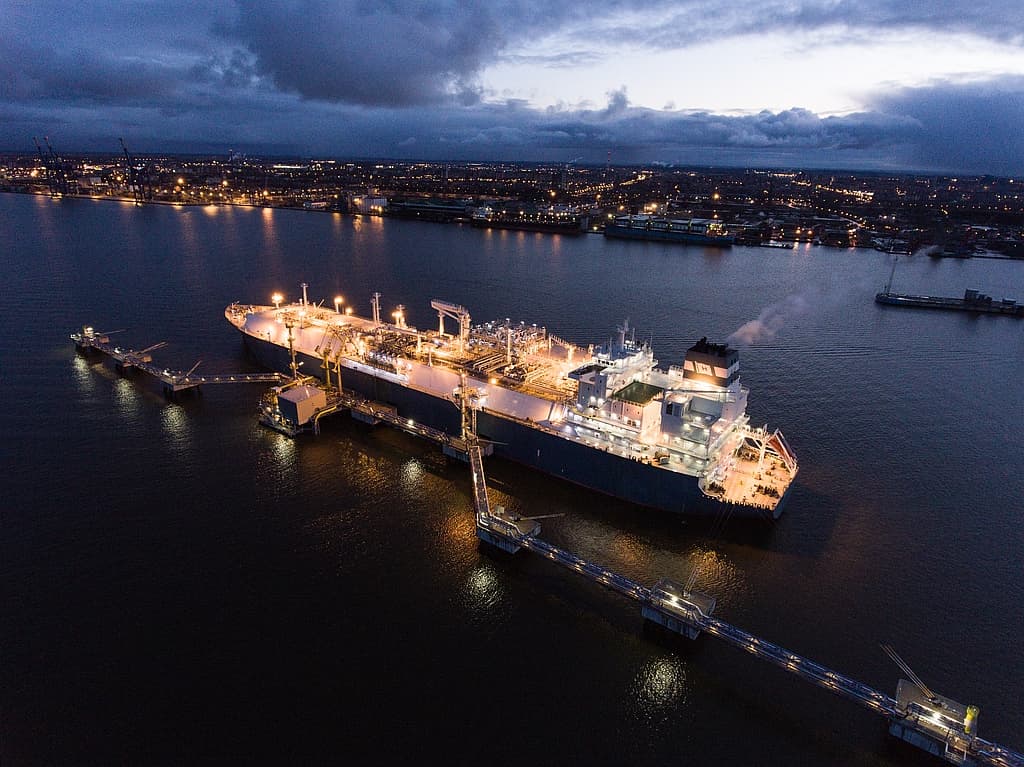
FSRU Independence, delivered to Klaipėda, Lithuania, in March 2014. Source: Wikimedia Commons / AB Klaipėdos Nafta/ CC BY-SA 4.0
LNG deliveries to Europe on the rise
The main growth in imports from alternative suppliers came from liquefied natural gas. This was made possible, among other things, by the rapid commissioning of the necessary infrastructure. According to statistics from Gas Infrastructure Europe (GIE), the association representing European gas infrastructure operators, there were 22 LNG terminals in EU member states (EU27) at the end of 2022. Another 15 are under construction, in the planning phase or being commissioned.
Floating terminals also played a role. According to S&P Global, the rapid deployment of floating storage and regasification units (FSRUs) in the region was a key factor in easing the energy crisis in 2022 and helped drive a 60% increase in LNG import volumes last year.
Thanks to investment, the EU’s LNG import capacity increased by 40 billion cubic metres (bcm) in 2023, with a further 30 bcm expected to become available in 2024. The EU imported more than 120 bcm of LNG in 2023.
The United States was the largest supplier, accounting for almost 50% of imported LNG. Imports from the US thus nearly tripled compared with 2021. France, the United Kingdom, the Netherlands and Spain were the largest recipients of US supplies.
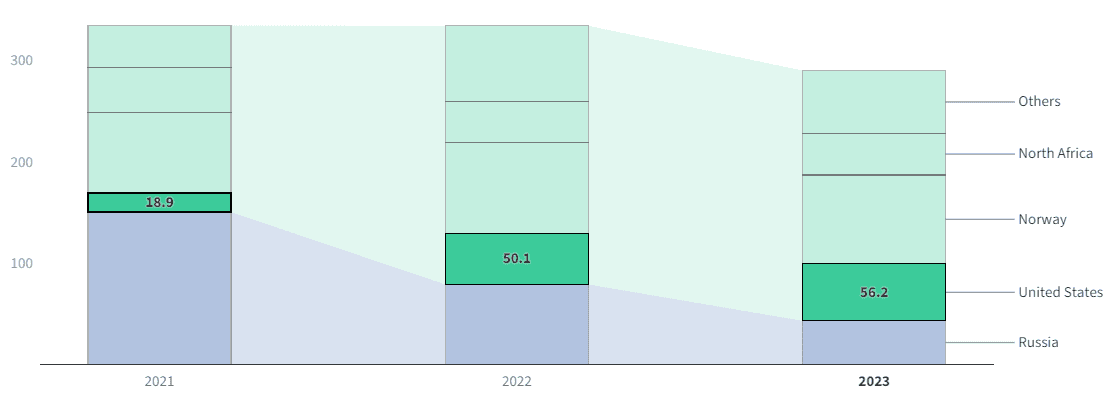
Gas deliveries from the EU’s main partners in 2021–2023 (bcm). Source: European Commission based on ENTSO-G and Refinitiv
Translation disclaimer
This article is a machine translation of the Czech original and has not yet been fully reviewed. In case of any doubt, please refer to the Czech version.
Sdílejte článek prostřednictvím:
You might also like

28 October 2026, 13:08

28 October 2026, 11:10

28 October 2026, 09:08
