4 November 2026, 14:17
Loading...
PERC vs. TOPCon: How did this year's Czech solar panel tests turn out?
oEnergetice.cz
12 September 2023, 10:34
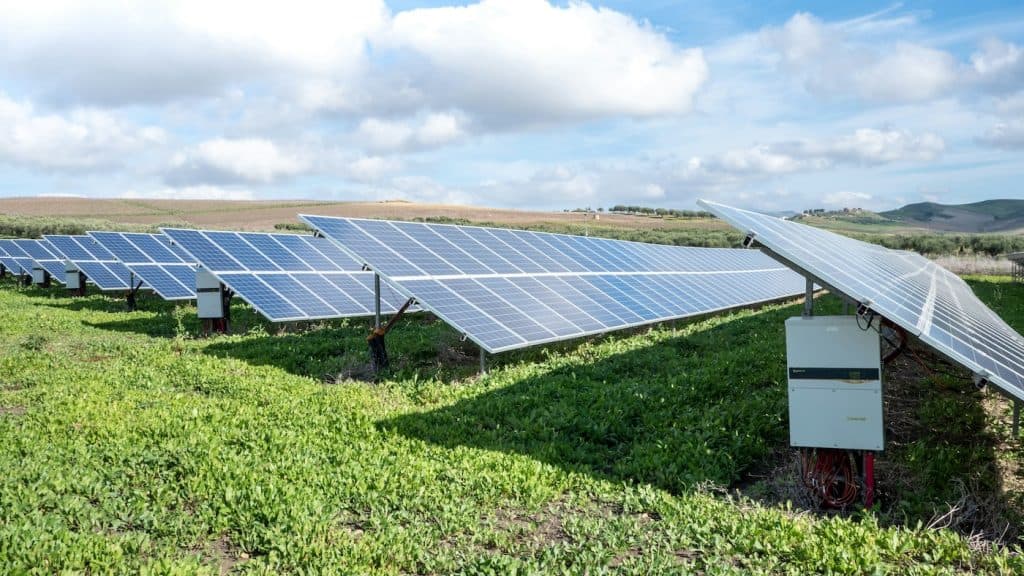
The deciding factor when choosing panels should not be price alone, but above all how they perform in real-world conditions. What did recent tests of photovoltaic panels show? Is it worth investing in traditional PERC panels or should you opt for the new-generation TOPCon panels instead?
Georg Touloupas, a leading photovoltaic expert and technical director at independent certification agency Clean Energy Associates, will answer these questions during his presentation at the Smart Energy Forum conference in Prague in October.TOPCon panels are emerging as market leaders
To test new photovoltaic technologies under real-world conditions, independent testing organization Clean Energy Associates (CEA) tested photovoltaic panels this year not only in the laboratory but also in real-world conditions.
The aim of the tests was to compare two panel technologies: the dominant PERC technology and the emerging TOPCon technology, which is becoming increasingly popular with investors. The market share of TOPCon panels continues to grow and this year has already exceeded 15%. Most experts expect TOPCon to become the new dominant photovoltaic technology by 2025.
The structure of a TOPCon solar cell consists of a thin oxide layer inserted between a transparent conductive oxide layer and a crystalline silicon layer. Higher efficiency allows a solar panel to capture more energy while remaining the same size. The maximum efficiency of TOPCon cells is approximately 29%, while PERC cells reach approximately 24%.
A unique testing program
In 2023, independent testing company Clean Energy Associates (CEA), in cooperation with PV Magazine, launched comprehensive testing of photovoltaic panels. The tests focused on quality and performance under outdoor and indoor conditions. The aim is to compare individual panels objectively and independently, selecting them at random based on their serial numbers.
From a list of at least 2000 units nominated by the manufacturer, 5 panels are selected and then put through rigorous testing.
Testing is carried out at a modern laboratory in Xi'an, China, with Clean Energy Associates (CEA), Gsolar and AP Systems taking part. CEA is a renowned international auditing firm that has audited more than 125 manufacturers in the photovoltaic sector.
How is the testing carried out?
The supplier submits the serial numbers of at least 2000 panels from the same product line. CEA experts then randomly select 5 panels to be sent for testing.
The panels are tested under low irradiance. The tests include PID, outdoor and LID testing. The final score is recorded and then compared.
What parameters were assessed during the measurements?
The experts monitored data from the weather station, the relative yield of each technology, and the total energy yield of the panels being tested.
When interpreting the weather station data, they assessed irradiance levels and ambient temperature. At temperatures of 22 °C, daily irradiation exceeded 6 kWh/m2.
The lowest readings, by contrast, were recorded at 2 °C, when the yield remained below 1 kWh/m2, as shown in the figure below.

Source: Clean Energy Associates
How did the individual panels perform in the tests?
Another parameter assessed was the relative yield (i.e. the amount of energy produced per 1 kWp of installed capacity) of each technology. Bifacial monocrystalline N-TOPCon panels achieved the highest values.
Monocrystalline PERC panels performed worst, with a yield of exactly 100%, while the highest yield was 113.04%, achieved by bifacial monocrystalline N-TOPCon panels, as shown in the graph below.

Source: Clean Energy Associates
Which panels achieved the best results in the tests? Why are the two largest panel manufacturers switching from PERC to TOPCon panels? What recommendations do representatives of a leading certification authority have for investors in photovoltaic power plants?
You can discuss these topics with Georg Touloupas, who is Senior Technical Director at CEA, at the specialist photovoltaic conference Smart Energy Forum in Prague in October.Translation disclaimer
This article is a machine translation of the Czech original and has not yet been fully reviewed. In case of any doubt, please refer to the Czech version.
Sdílejte článek prostřednictvím:
You might also like

4 November 2026, 12:34


4 November 2026, 09:09