
8 November 2026, 20:02
Loading...
Challenges for German offshore wind: Curtailment and slow development

Jan Budín
2 February 2024, 08:57
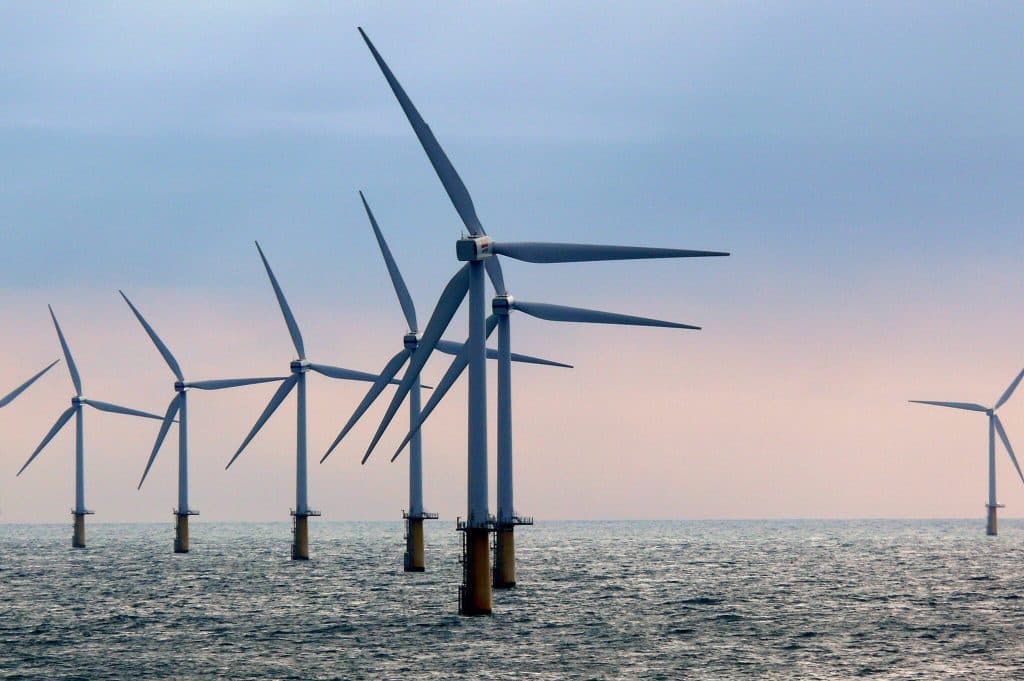
Although Germany recorded a record year last year in terms of newly installed renewable energy capacity, the offshore wind sector still lags significantly behind onshore wind farms and solar power plants. In addition to a lack of new projects, operators of existing ones are struggling with electricity curtailment caused by insufficient transmission grid capacity.
Offshore wind farms are expected to become one of the pillars of Germany's electricity system in the future, thanks to their relatively stable power generation. Germany currently has around 8.5 GW of offshore wind capacity installed. This is set to rise to 30 GW by 2030 and to 70 GW by 2045.
However, according to German associations, meeting these targets will require changes to existing operating support rules as well as the necessary regulatory adjustments.
"Political targets must be translated into projects that win support in auctions and into investment decisions,"the BWE, BWO and VDMA associations said in a joint statement, according to the international news outlet Clean Energy Wire.
Without these measures, Germany is unlikely to achieve the required pace of offshore wind development, which should average 3.1 GW of new capacity per year in the coming years. By comparison, Germany installed 257 MW last year, and the figure is expected to be around 700 MW this year.
Generation curtailment
Germany's offshore wind sector is facing not only a lack of new projects but also forced generation curtailment caused by insufficient transmission capacity. According to German transmission system operator TenneT, offshore wind farms generated 19.2 TWh of electricity last year, down 9% year on year.
TenneT CEO Tim Meyerjürgens said, according to the international news outlet Clean Energy Wire, that transmission grid development had finally accelerated over the past two years, but that "many lost years" were now affecting electricity generation from these sources, as their output had to be curtailed due to a lack of transmission capacity in the grid.
Another reason for curtailing offshore wind generation in the North and Baltic seas is the shortage of large dispatchable power plants in northern Germany that could reduce their output when needed. Instead of these power plants, it is the large offshore wind farms that are being curtailed, Meyerjürgens said.
Translation disclaimer
This article is a machine translation of the Czech original and has not yet been fully reviewed. In case of any doubt, please refer to the Czech version.
Sdílejte článek prostřednictvím:
You might also like

8 November 2026, 13:59

8 November 2026, 08:10

7 November 2026, 17:23