
17 October 2026, 13:09
Loading...
Deutsche Bank: New German government's energy policy is more attuned to reality

Jan Budín
16 May 2025, 06:30

The energy policy of Germany's new government, which is seeking an optimal balance between costs, security of supply and climate protection, is promising and more attuned to reality, according to Deutsche Bank Research (DBR). The somewhat vague statements and lack of concrete targets in the signed coalition agreement need not be a disadvantage, DBR says. It argues that energy and climate targets announced in the past were often at odds with technical and economic realities.
Many parts of the coalition agreement state that energy investments should "serve" the energy system, be considerate of the electricity grid and be geared towards electricity demand.
According to DBR, these statements suggest that the ambitious targets for renewable energy development set by previous governments may be adjusted to better reflect current and future electricity demand and the pace of grid expansion. The bank nevertheless stressed that support for the development of renewable energy remains strong.
One of the new government's goals is to reduce the end-user price of electricity by at least 50 EUR/MWh, providing financial relief worth 10 billion euros a year for industry and around 6 to 7 billion euros a year for households.
"The cost-effectiveness of the energy transition should play a greater role, with a focus on concerns about maintaining the competitiveness of industry," Deutsche Bank said in its report.
Breaking up the super-ministry
One clear signal of how the new government will approach energy and climate policy is the division of responsibilities within the Federal Ministry for Economic Affairs and Climate Action, which was headed by Robert Habeck of the Green Party.
The climate portfolio was taken away and returned to the Ministry of the Environment, now headed by Carsten Schneider (SPD), formerly the minister for eastern Germany. He is now responsible for meeting climate targets and representing the country at international climate negotiations.
Katherina Reiche (CDU), a former energy industry executive, took over the Ministry for Economic Affairs and Energy, which no longer has climate-related responsibilities. In her inaugural speech on 7 May, Reiche stressed the need for a more pragmatic approach to renewable energy development, calling its growth to date a success but saying it had not been sufficiently aligned with transmission grid expansion.
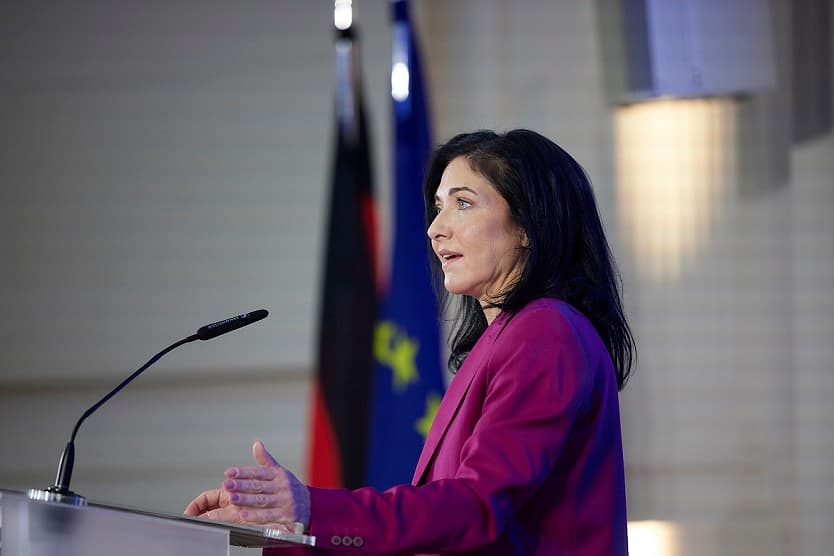
Source: Federal Ministry for Economic Affairs and Energy: Katherina Reiche, Federal Minister for Economic Affairs and Energy
Against the backdrop of a stagnant economy, Reiche highlighted the need to stabilise or reduce high electricity prices, particularly for industry. She also plans to review grid charges and the use of reserve power plants. She warned against underestimating systemic risks, as illustrated by the recent power outage on the Iberian Peninsula.
The new German Minister for Economic Affairs and Energy aims to present concrete milestones for the energy transition before the summer recess, as stipulated in the coalition agreement.
Translation disclaimer
This article is a machine translation of the Czech original and has not yet been fully reviewed. In case of any doubt, please refer to the Czech version.
Sdílejte článek prostřednictvím:
You might also like




16 October 2026, 10:16