
17 October 2026, 13:09
Loading...
German Uniper changes course: More gas and fewer renewables by 2030

Jan Budín
15 August 2025, 10:50
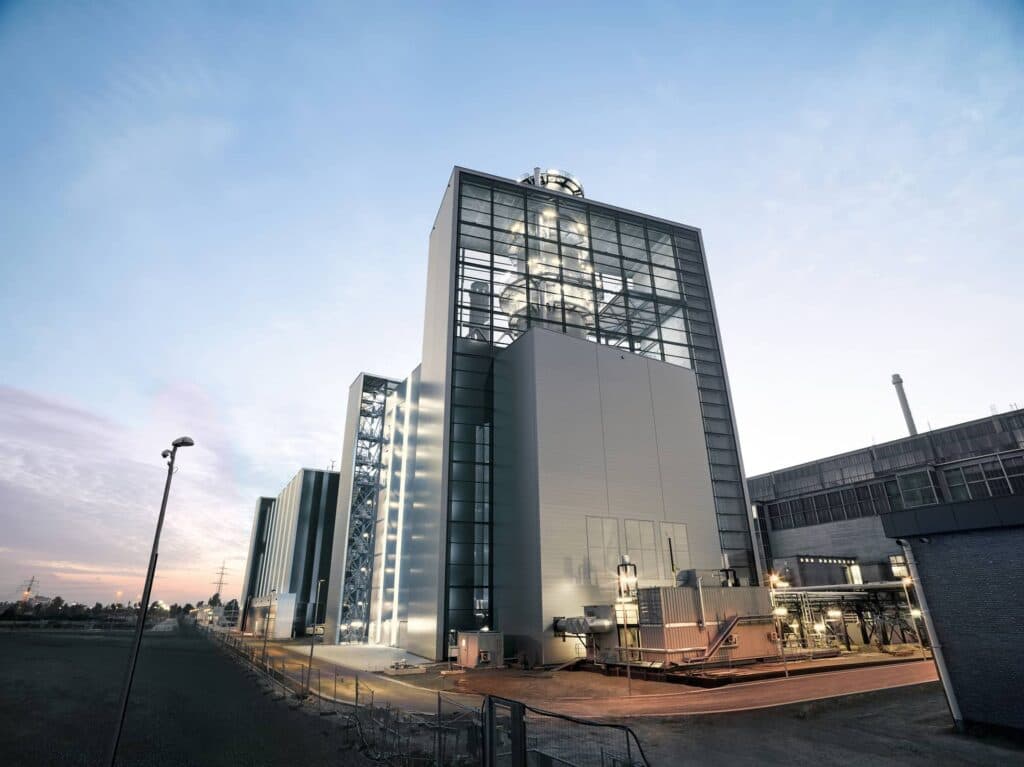
German state-owned energy company Uniper is scaling back its ambitions for renewable energy development. While its previous target for 2030 was for at least 80% of its generation assets to be “green”, the company is now targeting at least 50% renewable, low-emission or “decarbonisable” sources. Clean Energy Wire reported.
According to Clean Energy Wire, Uniper CEO Michael Lewis said that the sources expected to make up at least half of the company’s generation assets in 2030 will also include gas-fired power plants that could be converted to hydrogen or retrofitted with CO2 capture and storage technology in the future.
“The energy transition will have to proceed a little more slowly than we previously expected,” Lewis said, pointing to challenging market and regulatory conditions.
The parties in Germany’s coalition government agreed in their coalition agreement to install up to 20 GW of new power plant capacity to ensure electricity supplies during periods of low renewable energy generation. In the middle of this year, Economy Minister Katherina Reiche said that at least the first 5 GW should be included in an auction by early 2026. Uniper also plans to take part in these auctions.
“This means that by 2030 we will have more gas-fired power plants in our portfolio than we previously expected. We are focusing on these flexible sources because the German government will need them,” Lewis added.
Need for new dispatchable capacity
While the German government is planning to build up to 20 GW of new gas-fired power plants, progress has stalled, mainly because the necessary legal framework is missing. As a result, these investments lack sufficient legal certainty, deterring potential investors and operators.
The German network regulator BNetzA recently also called for the situation to be resolved urgently. It warned that without a legal framework for building new power plants, a significant shortfall in dispatchable capacity could emerge from the mid-2030s.
“If sufficient dispatchable generation capacity is unavailable, grid frequency cannot be kept stable in the interconnected European grid, putting system security at risk,” BNetzA said.
The regulator made the comments in a statement responding to a recent report assessing the stability of the German electricity system, prepared by the country’s transmission system operators. In the statement, BNetzA grouped the operators’ 37 specific recommendations into eight thematic areas, identifying three as priorities amid pressure to find solutions quickly.
These include ensuring short-term flexibility in the system, rapidly securing new dispatchable generation capacity, and amending the legal framework for building backup generation.
The report also warns that without these steps, it will become increasingly difficult to maintain stable grid operation, particularly during periods of low renewable energy generation and peak demand.
Translation disclaimer
This article is a machine translation of the Czech original and has not yet been fully reviewed. In case of any doubt, please refer to the Czech version.
Sdílejte článek prostřednictvím:
You might also like




16 October 2026, 10:16