22 September 2026, 14:20
Loading...
LNG infrastructure development in Germany faces activist protests over environmental impact concerns

Eduard Majling
29 September 2022, 13:42
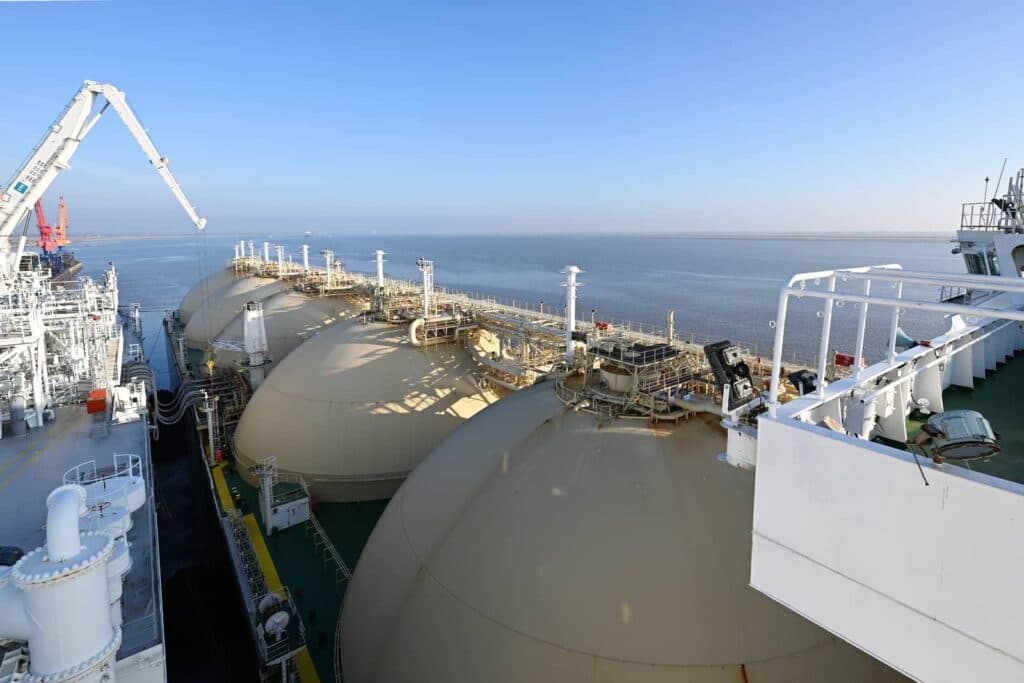
With the sharp decline in natural gas supplies from Russia, a number of European countries have revived projects to develop import capacity for liquefied natural gas (LNG). From this perspective, not only the construction of new terminals will be crucial, but also pipelines to connect the terminals to the gas infrastructure. However, these plans may face opposition from local groups, as is the case in northern Germany.
Securing alternative routes for natural gas supplies to Europe to replace Russian gas has become a priority for a number of European countries in recent months, particularly Germany, which has not received any gas through the Nord Stream 1 pipeline for several weeks. In addition to the short-term solution of leasing floating LNG terminals (FSRUs), plans to build conventional import terminals have been revived, although their implementation is more time-consuming.
One such project is the terminal near the German town of Brunsbüttel, where a floating terminal is to be built first and is expected to begin operations around the turn of the year, followed by a conventional onshore terminal by 2026.
As the site currently lacks sufficient connections to the rest of the German gas network, new pipelines will also need to be built alongside the terminals. Initially, the use of the floating terminal's capacity will therefore be limited from a maximum of 5 billion cubic metres of gas per year to around 3.5 billion cubic metres.
In addition to the construction of a shorter pipeline of around 3 kilometres in the initial phase of the project, which is also scheduled for completion around the turn of the year, a longer 55-kilometre pipeline is planned to enable full use of the terminal by connecting it to the German network. Construction of this pipeline is expected to begin in November this year, with commissioning planned for December 2023 under current plans.
However, these plans could face opposition from local activists, who are concerned about the impact of pipeline construction on the local heathland. The planned route crosses the heathland, from which water will have to be pumped out during excavation work. According to Ralf Hübner, who works for an environmental protection association in the Hetlingen district, this could lead to serious damage.
"Heathland is not a sponge. Once the water disappears from it, it takes a very long time to return to its original state," Hübner said according to the German daily Süddeutsche Zeitung.
With the urgent need to secure alternative routes for natural gas supplies, according to Clean Energy Wire, Germany has reduced the legislative requirements related to LNG infrastructure development. In addition to the direct impact of its development, German environmental groups also fear its long-term impact, as it may reduce pressure to develop renewable energy sources.
Thanks to legislative changes intended to enable the faster construction of terminals and related infrastructure, deadlines for public consultation processes have been shortened. According to Hübner, the public had just two weeks to review the extensive documentation and submit objections.
"It is 700 pages in official German, produced by experts. We are only volunteers, and it is almost impossible to do," Hübner commented on the difficulty of the public consultation process.
Translation disclaimer
This article is a machine translation of the Czech original and has not yet been fully reviewed. In case of any doubt, please refer to the Czech version.
Sdílejte článek prostřednictvím:
You might also like
22 September 2026, 12:50
22 September 2026, 06:09
21 September 2026, 15:25