
28 October 2026, 15:10
Loading...
Lake at former coal mine in eastern Germany could serve as a heat source

Eduard Majling
10 April 2024, 19:28
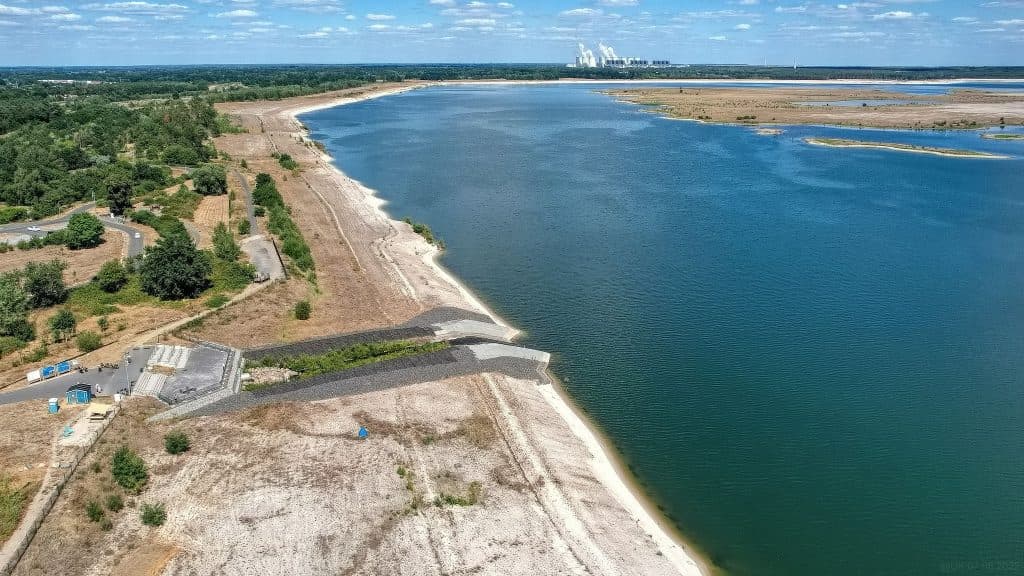
The growing use of heat pumps is not limited to households and businesses; they could also play a greater role in district heating. In addition to using waste heat from wastewater, a concept being discussed in Czechia, for example, lakes could also serve as a source of heat. One candidate is an artificial lake at a former coal mine near the German city of Cottbus. In the future, heat pumps could replace heat supplied to the local district heating network by a nearby lignite-fired facility.
Heat pumps are currently seen as one of the main ways to replace fossil fuels in heating. However, they do not have to be installed directly at consumers’ premises; they can also supply heat through district heating networks. In this case, they can make use of large sources of low-grade heat, such as wastewater or lakes.
One such project is taking shape in eastern Germany, near the city of Cottbus in the German part of Lusatia. According to Clean Energy Wire, the city is considering building heat pumps that would extract heat from Lake Ostsee. It is the largest artificial body of water in Germany, created by flooding a former lignite mine.
According to the outlet, heat pumps connected to the lake could cover up to 40% of the local district heating network’s needs. Around half of the city’s 100,000 residents are connected to the network. The cost of building the facility is estimated at around 80 million euros.
During a visit to the city, German Foreign Minister Annalena Baerbock said, according to the outlet, that the project was a good example of Germany’s ambition to end coal-fired power generation in the coming decade. Baerbock said the government would now coordinate efforts to secure funding at the regional, national and European levels.
“That means investing in alternatives, and this year we need to lay the financial foundations,” the minister added.
Translation disclaimer
This article is a machine translation of the Czech original and has not yet been fully reviewed. In case of any doubt, please refer to the Czech version.
Sdílejte článek prostřednictvím:
You might also like

28 October 2026, 13:08

28 October 2026, 11:10

28 October 2026, 09:08
