
28 October 2026, 15:10
Loading...
Prague to prepare a CZK 7.7 billion energy centre using wastewater heat

oEnergetice.cz, ČTK
2 April 2024, 12:27
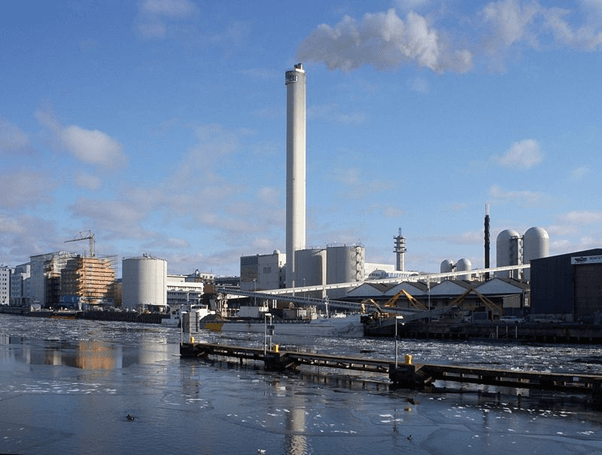
The Prague Water Management Company (PVS), which is owned by the capital, will begin preparing the construction of an “energy centre” that will use heat recovered from wastewater to provide heating for around 200,000 people in the future. Prague city councillors approved the plan today. Construction costs are estimated at CZK 7.7 billion excluding VAT, in two phases, according to a 2022 estimate. The centre is intended to reduce the city’s dependence on heat generated by burning fossil fuels.
The energy centre is to use heat exchangers to recover surplus heat from wastewater processed at the Central Wastewater Treatment Plant (ÚČOV) on Císařský Island, thereby reducing the capital’s dependence on gas and the Mělník lignite-fired power plant, which heats a large part of Prague’s homes.
PVS has already commissioned a feasibility study for the project, which city councillors took note of today. According to the approved document, the facility’s first of two lines at the ÚČOV will be able to supply heat to around 100,000 people in the Juliska and Veleslavín areas. This first phase of the centre is estimated to cost CZK 5.5 billion excluding VAT.
The energy centre’s second line would provide heating, among other places, to the planned district on the site of the Bubny-Zátory brownfield. The district is expected to have 25,000 to 30,000 residents, while the heat produced will be sufficient for another 100,000 people, so the city will also seek customers for the remaining capacity.
According to the document, both parts of the energy centre could enter service in 2029 or 2030. PVS expects that a grant covering up to 40 to 45 percent of investment costs could be obtained for the construction. Following today’s decision by the city councillors, the company will begin preparing materials for an environmental impact assessment (EIA), documentation for the zoning decision and a grant application.
Developing the city’s own heat sources is part of its climate strategy, approved in 2021. “It also fits into the overall heating strategy that the City of Prague is currently drawing up,” said Jan Chabr (TOP 09), chair of the Prague City Council’s energy committee. He added that, given the new regulations, it is important for low-emission buildings to be connected to environmentally friendly heat sources. “By making it possible to use waste heat and connect it to the central heating network, new buildings will be able to meet legislative requirements easily,” he said.
The capital currently depends to a large extent on heat from Mělník, which is generated by burning coal in an environmentally harmful way. According to earlier information, around 230,000 Prague households are currently heated by district heating, 90,000 use electricity, 210,000 have local gas boilers and 40,000 are served by block-level gas boiler houses.
Translation disclaimer
This article is a machine translation of the Czech original and has not yet been fully reviewed. In case of any doubt, please refer to the Czech version.
Sdílejte článek prostřednictvím:
You might also like

28 October 2026, 13:08

28 October 2026, 11:10

28 October 2026, 09:08
