
8 November 2026, 13:59
Loading...
Czechia is falling behind in hydrogen mobility, companies call for greater state support

oEnergetice.cz, ČTK
22 June 2023, 15:37
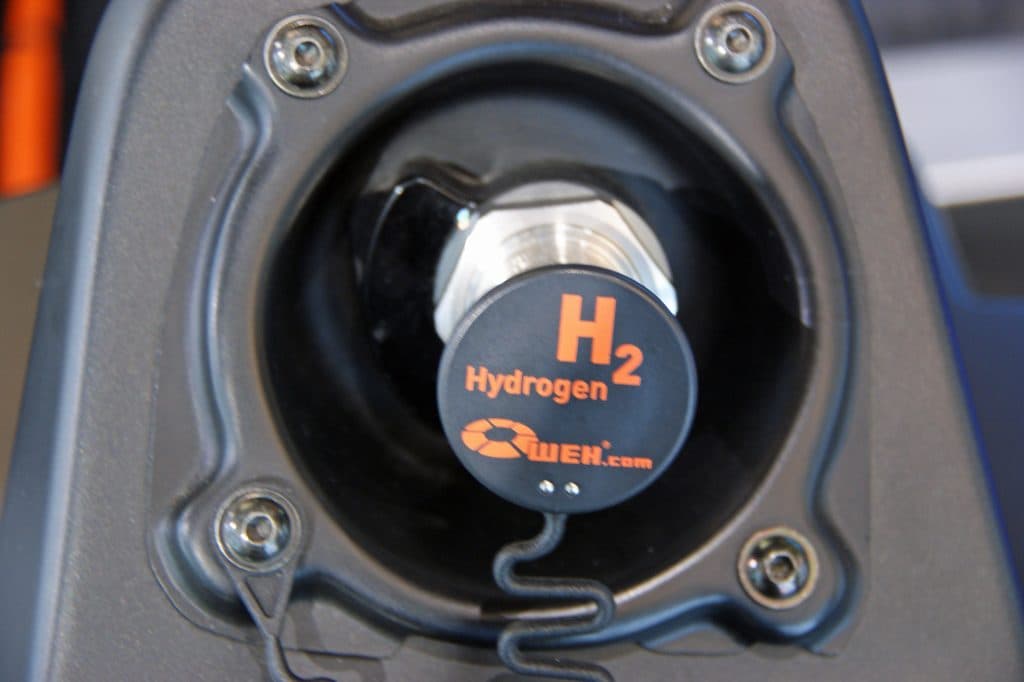
Czechia is falling behind in hydrogen mobility. There are currently three hydrogen filling stations in the country, compared with more than 100 in neighbouring Germany, for example, with more being added rapidly. Hydrogen and vehicle manufacturers and distributors say the state lacks a well-developed strategy for using hydrogen in transport and the economy. They have therefore called on the government to actively support the development of hydrogen infrastructure in the country, for example by supporting the construction of filling stations or amending legislation. Representatives of four multinational companies that have jointly formed the Hydrogen Mobility Initiative said this at a press conference today.
There are currently three hydrogen filling stations in operation in the Czech Republic. The first opened in Ostrava the year before last, the second this year in Prague’s Barrandov district, and the third this week at a Čepro depot in Mstětice near Prague. In many countries, however, development is significantly faster. In 2022, 130 hydrogen stations were opened worldwide. At the end of last year, more than 800 stations were in operation globally, around a third of them in Europe.
According to manufacturers and distributors, the use of hydrogen is on the rise worldwide. They pointed out that the EU plans to produce ten million tonnes of renewable hydrogen by 2030 and import the same amount from non-EU countries. „Czechia has fallen behind in this respect, and it is time for the Czech Republic to have a clear, detailed and long-term plan for hydrogen sources and uses, support hydrogen technology with incentives, promote the development of hydrogen infrastructure and thereby encourage the use of hydrogen in transport,“ said Martin Peleška, managing director of Toyota and Lexus in the Czech Republic.
The initiative mentioned above was established in response. It brings together the multinational companies Alstom, Toyota, Orlen Unipetrol and Air Products. In an open letter, the companies have now called on the government to actively support the rapid development of hydrogen mobility in the Czech Republic. They set out targets that they believe Czechia should achieve over the next five to ten years. In addition to building 50 filling stations, which, if suitably located, would enable zero-emission operation for around 50,000 passenger cars, 500 buses, 500 trucks and 50 trains, they cite necessary legislative changes, support for research and development, the use of EU subsidies and the inclusion of hydrogen in the Czech Republic’s energy mix. The companies also signed a memorandum today, pledging to cooperate on local projects and offering to work with the state.
„It is essential to create the necessary conditions and support for the development of renewable hydrogen production, the construction of hydrogen infrastructure and the connection of the Czech Republic to the European transit network,“ said Maciej Romanów, a member of the board of Orlen Unipetrol.
Hydrogen fuel cell vehicles are essentially electric cars that obtain electricity not from batteries but from the reaction between hydrogen and oxygen. Their only waste product is pure water. According to Transport Minister Martin Kupka (ODS), up to 50,000 hydrogen-powered cars could be on Czech roads by 2030. Railways are another possible application for hydrogen in transport.
Translation disclaimer
This article is a machine translation of the Czech original and has not yet been fully reviewed. In case of any doubt, please refer to the Czech version.
Sdílejte článek prostřednictvím:
You might also like

8 November 2026, 08:10
7 November 2026, 17:23

7 November 2026, 13:37