9 October 2026, 06:22
Loading...
Long road from natural gas to green hydrogen, Czech industry representatives agree
Ekonews.cz
27 November 2024, 06:19
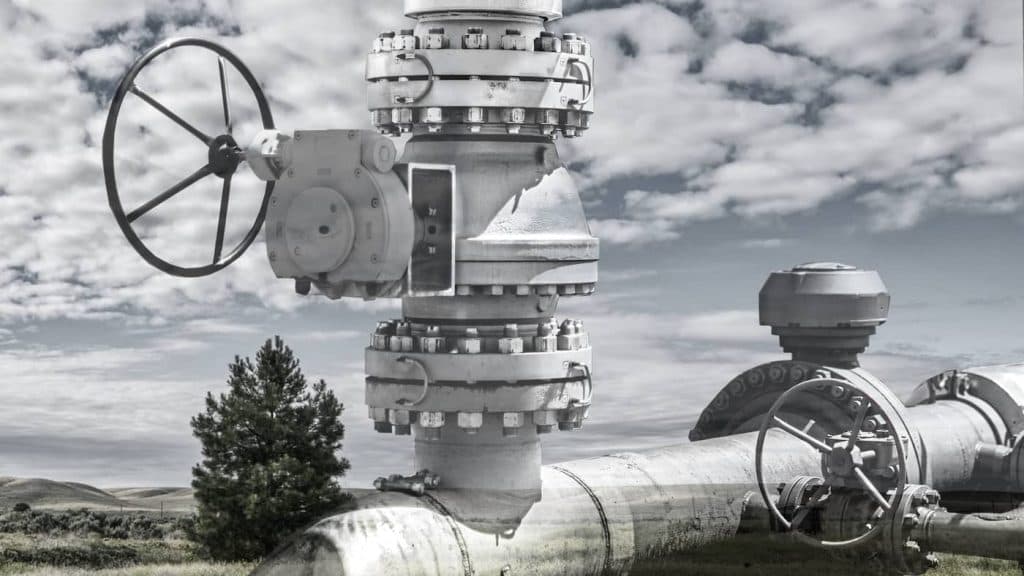
Natural gas has an irreplaceable role on the path towards making Czech industry greener, especially in sectors where decarbonisation through electrification is difficult, participants heard at an October panel discussion held by the Alliance for an Emission-Free Future.
Czech industry is tackling the transition from coal to less emissions-intensive sources. According to representatives of Czech business, natural gas is important in the shift to green hydrogen or biomethane for several reasons: it is readily available and its combustion releases roughly half the CO2 emissions of coal combustion. Czech natural gas infrastructure is sufficient, while prices are currently stable and have more or less returned to pre-war levels.
According to Jan Zaplatílek, head of the gas and liquid fuels department at the Ministry of Industry and Trade (MPO), gas flows have split into two main directions – gas now reaches Czechia not only via Germany but also via Slovakia. The Czech transmission system is oversized relative to current needs, as the country was long primarily a transit country. It is now becoming a destination country.
Around 40 percent of households in Czechia are connected to heat supplies from district heating plants and other centralised heat sources. However, half of district heating plants still use coal for heating, which needs to be replaced. According to Lenka Vaněk of ČEZ ESCO, switching to natural gas delivers enormous CO2 savings compared with burning coal.
At the same time, however, natural gas remains a fossil fuel that will need to be replaced by green alternatives in the coming years, especially biomethane and green hydrogen. It is therefore necessary to take gradual steps towards the transition to natural gas and prepare both the network and customers for the future use of biomethane and hydrogen.
Gas as a stable source
Gas is a stable source that can be stored easily and is available all year round. According to Lenka Vaněk of ČEZ ESCO, it will therefore play an important role in balancing the grid, when a fast-responding source is needed that can be switched off when there is sufficient energy from solar panels and wind turbines. Vaněk sees the greatest benefit precisely in combining technologies such as cogeneration units with heat pumps, photovoltaics, batteries or the use of solar energy to charge electric vehicles.
The ORLEN Unipetrol group is also addressing the switch to gas. According to Martin Růžička, who is responsible for decarbonisation at the group, gas is a key component in kick-starting it. Energy production and the associated shift from coal to gas would mean roughly a 25% reduction in the company's direct emissions. Růžička said the transition from natural gas to green hydrogen or biomethane will then be relatively straightforward.
Big plans for biomethane
Czechia has big plans for biomethane, which is often described as the fuel of the future because it is the most readily available low-emission gas. Biomethane has the same properties as natural gas, can be distributed through natural gas networks or used to fuel CNG vehicles. It is also cleaner than natural gas and can be produced domestically.
By 2030, biomethane is expected to replace 15 to 20 percent of current natural gas consumption, corresponding to production of 500 to 700 million cubic metres. Current production, however, amounts to only around 1.2 million cubic metres. There are currently only seven biomethane plants in the Czech Republic, and their output is also traded abroad. The country also has more than 500 biogas plants, of which around 230 are sufficiently close to the gas network and could potentially be converted to produce and inject biomethane. However, this is not yet economically viable.
According to Jan Zaplatílek of the MPO, this could be changed by state support available to both existing biogas plants and those yet to be planned. Funds from the programme will be paid in the form of a green bonus over twenty years. However, Zaplatílek said it remains to be seen whether this support will be sufficient to speed up the conversion of existing plants or the construction of new biogas facilities. He also questioned whether the EU's biomethane targets are realistic, given that current consumption across the EU-27 accounts for only a few percent.
Green hydrogen in its infancy
The future also envisages a gradual shift to green hydrogen, which has been included in the Energy Act since the start of the year. The Energy Act mentions it for the first time among gases that can be distributed through the gas system, meaning hydrogen is now placed within the same legal framework as natural gas. The amendment also provides for greater support for green hydrogen, which should enable faster certification and the use of green hydrogen in the energy network.
However, debate participants said the use of hydrogen is a long-term undertaking and infrastructure development is still in its infancy. Nevertheless, the inclusion of green hydrogen in the Energy Act signals that the state envisages its role in the energy sector and that more substantial investment in the use of this low-emission gas can begin. Hydrogen is a stable energy carrier that can be transported and distributed over long distances with virtually no losses. For industry or district heating, which use direct-combustion technology, gas is essentially indispensable.
This article is partnered by the Alliance for an Emission-Free Future.Republished from the online portal EkoNews.cz, a website covering business and sustainability.
Translation disclaimer
This article is a machine translation of the Czech original and has not yet been fully reviewed. In case of any doubt, please refer to the Czech version.
Sdílejte článek prostřednictvím:
You might also like

8 October 2026, 10:05