
28 October 2026, 15:10
Loading...
China invests heavily in green hydrogen despite rising costs

Lukáš Lepič
8 April 2024, 07:54
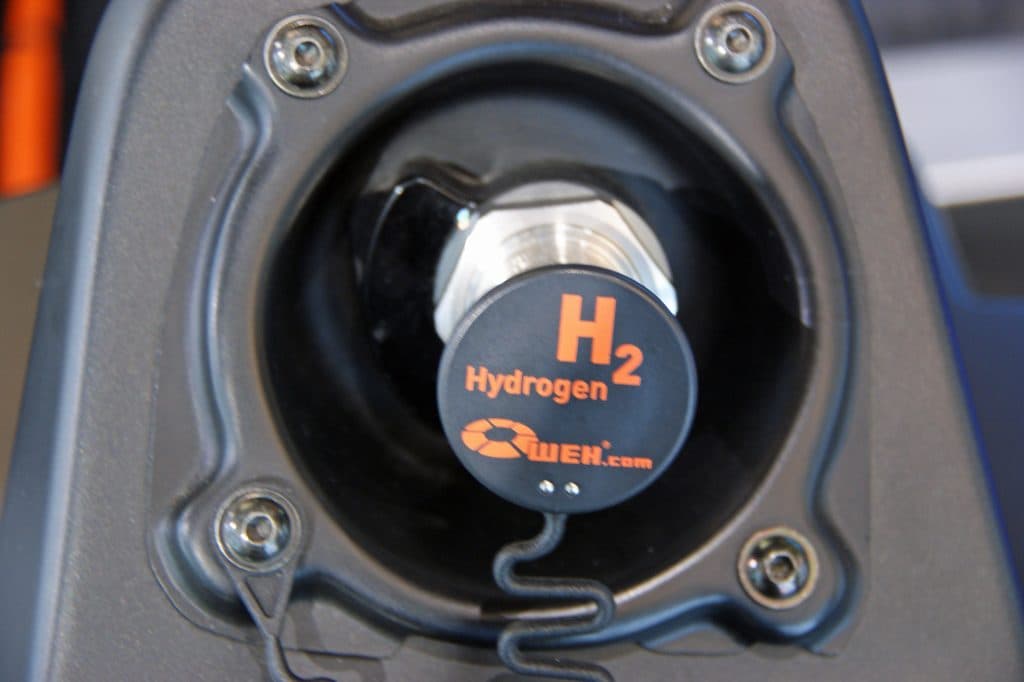
Despite high inflation in 2023, green hydrogen project development continued in China. The country has taken the global lead in planned and already operational green hydrogen production capacity. Last year alone, China approved a total of 64 projects with planned investment of more than EUR 52 billion. In addition to production, Chinese companies are also focusing on developing a vertically integrated chain that will ensure stable offtake.
According to consultancy Deloitte, global announced green hydrogen production capacity reached 120.5 million tonnes per year at the end of 2023. A large share came from export-oriented countries and markets, particularly in North Africa. Egypt, for example, announced plans to develop a green hydrogen project worth four billion dollars and build capacity to produce 600 000 tonnes of green ammonia per year.
However, only 2 % of announced projects are either operational or under construction. According to the International Energy Agency’s (IEA) hydrogen project database, China currently has the largest capacity in operation and under construction. It is followed by Saudi Arabia and Europe.
Almost 40 % of announced capacity is seeking to reach a final investment decision. However, many projects are facing delays compared with their original schedules due to difficulties securing financing or a lack of clear policy support. A significant rise in costs during 2023 and growing geopolitical uncertainty are among the reasons for frequent delays and even cancellations.
On the other hand, data suggest that China has probably been the least affected by the trend of project delays. Rapid development of green hydrogen production projects continues in the country. Most capacity is located in the northwestern and northeastern regions, such as Xinjiang, Inner Mongolia and Jilin. These provinces have relatively cheap and readily available renewable energy, which, alongside the capital costs of electrolysers, is the main cost component of green hydrogen.
According to data from the China Hydrogen Energy Industry Promotion Association, from January to November 2023 China signed, approved and announced a total of 64 green hydrogen projects with planned investment exceeding 410 billion RMB (52 billion EUR). Once operational, these projects are expected to increase total green hydrogen production to 2.35 million tonnes per year.
Billion-dollar projects for production and transport use
Energy, chemical and technology companies are involved in developing projects in China. Energy companies often draw on their wind and solar portfolios to develop integrated hydrogen and ammonia production projects. Chemical companies, meanwhile, often opt to upgrade their existing chemical operations to reduce emissions while integrating green hydrogen.
Planned investment volumes point to a strong appetite for investing in new projects, backed by government support. For example, Chinese multinational corporation State Power Investment Corp announced an investment plan worth 42 billion RMB (5.46 billion EUR) in northeastern China to produce fuel from hydrogen. The project plan includes a 3.5 GW wind farm and a hydrogen production facility with capacity of 164 000 metric tonnes per year.
Chinese multinational Sany Group recently established the largest green hydrogen production and refueling station in the Changsha Economic Development Zone in Hunan province in central China. It also began testing refueling for heavy-duty hydrogen-powered trucks at the station.
The station has hydrogen production capacity of 2 000 cubic metres per hour and refueling capacity of 2 000 kg per day. At full operation, it can refuel more than 100 hydrogen-powered commercial vehicles per day.
Companies in the country are therefore focusing not only on green hydrogen production, but also on creating a fully vertically integrated chain. In addition to addressing technical challenges and securing low electricity prices, ensuring stable offtake is crucial to making projects economically viable.
Translation disclaimer
This article is a machine translation of the Czech original and has not yet been fully reviewed. In case of any doubt, please refer to the Czech version.
Sdílejte článek prostřednictvím:
You might also like

28 October 2026, 13:08

28 October 2026, 11:10

28 October 2026, 09:08
