
28 October 2026, 15:10
Loading...
European gas prices fall on expectation of shorter outage in Norway

oEnergetice.cz, ČTK
4 June 2024, 15:40
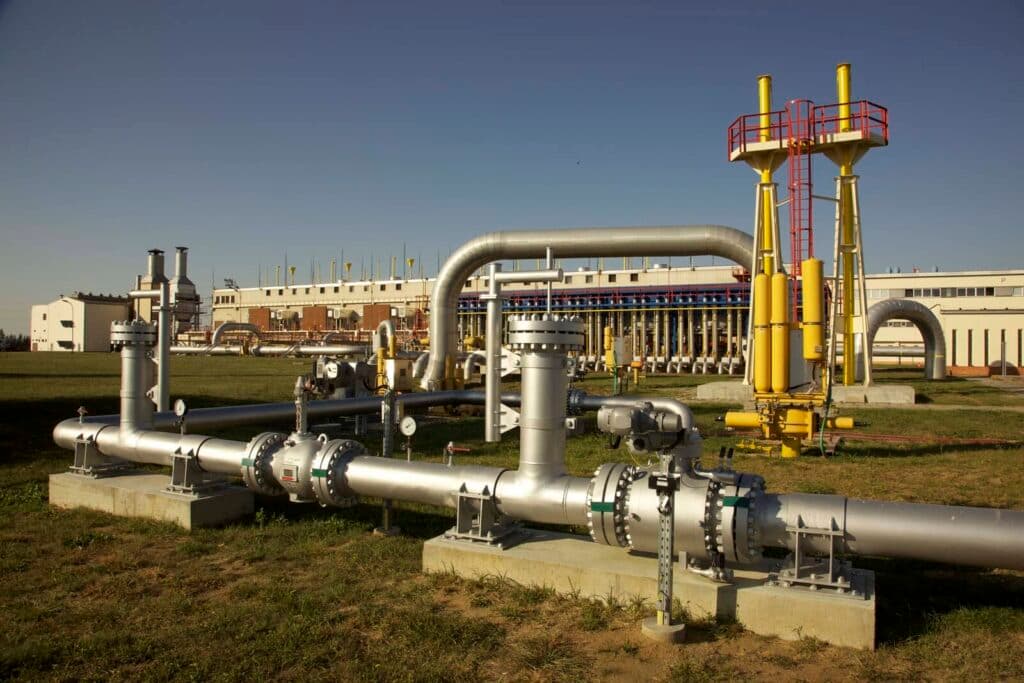
The wholesale price of gas for the European market is falling from this year’s high, reached on Monday. Shortly after noon today, it was down about three percent to below 35 euros (865 Kč) per megawatt-hour (MWh). Reports that the outage at a platform off Norway would be shorter than expected helped ease the situation. Norway is now a key gas supplier to Europe.
On Monday, the price briefly rose above 36 euros/MWh, its highest level since last December. This was a reaction to news of an unplanned disruption to gas supplies from the Sleipner Riser platform off Norway’s west coast.
Shortly after noon today, the futures contract for gas to be delivered next month was down nearly three percent at the virtual Title Transfer Facility (TTF) trading hub in the Netherlands, standing just above 35 euros per megawatt-hour. In the morning, it fell below 35 euros/MWh. The TTF price is a benchmark for the European gas market.
“Europe is now more dependent than ever on Norwegian gas. With Russian gas pipelines now a thing of the past, attention is focused on announcements from Gassco, which operates Norway’s offshore network,” consultancy Auxilione said, according to a report cited by Reuters.
Norway became Europe’s main gas supplier in 2022, replacing Russia. This followed a political decision by Europe to start rejecting Russian gas in 2022 because of Russia’s military invasion of Ukraine in late February that year. However, the European Union had already been seeking to reduce its dependence on Russian commodities well before the war in Ukraine.
Gassco said this morning that the problem at the Sleipner Riser platform would be resolved in about two days. The company’s announcement is helping ease market concerns that the problem could be prolonged.
“The market was expecting more prolonged difficulties,” a trading source said.
Despite the drop, prices remain elevated, partly due to demand for liquefied natural gas (LNG) in Asia. This is driven by a heatwave, concerns about Russian gas supplies to Austria and slower-than-expected growth in exports from North America,” said analyst Norbert Rücker of Julius Baer. “We believe these concerns are exaggerated, as gas flows should return to normal,” he added. He also said there was enough gas in storage.
Europe’s dependence on LNG imports was a question of price, not supply, Rücker said. According to data from Gas Infrastructure Europe (GIE), European gas storage facilities were most recently 70.49 percent full. On the European emissions allowance market, the benchmark contract price was down 0.41 euros to 74.17 euros per tonne.
Wholesale gas prices began rising more sharply in autumn 2021, before the war in Ukraine. Some economists attribute this to the European Green Deal, under which the European Union set a timetable for a rapid shift away from fossil fuels. In summer 2022, after the war in Ukraine began and the EU started rejecting Russian gas, the price of the commodity at the TTF briefly exceeded 300 euros per megawatt-hour.
Translation disclaimer
This article is a machine translation of the Czech original and has not yet been fully reviewed. In case of any doubt, please refer to the Czech version.
Sdílejte článek prostřednictvím:
You might also like

28 October 2026, 13:08

28 October 2026, 11:10

28 October 2026, 09:08
