
28 October 2026, 15:10
Loading...
Gas remains the dominant source of electricity generation in the US

Eduard Majling
29 February 2024, 10:46
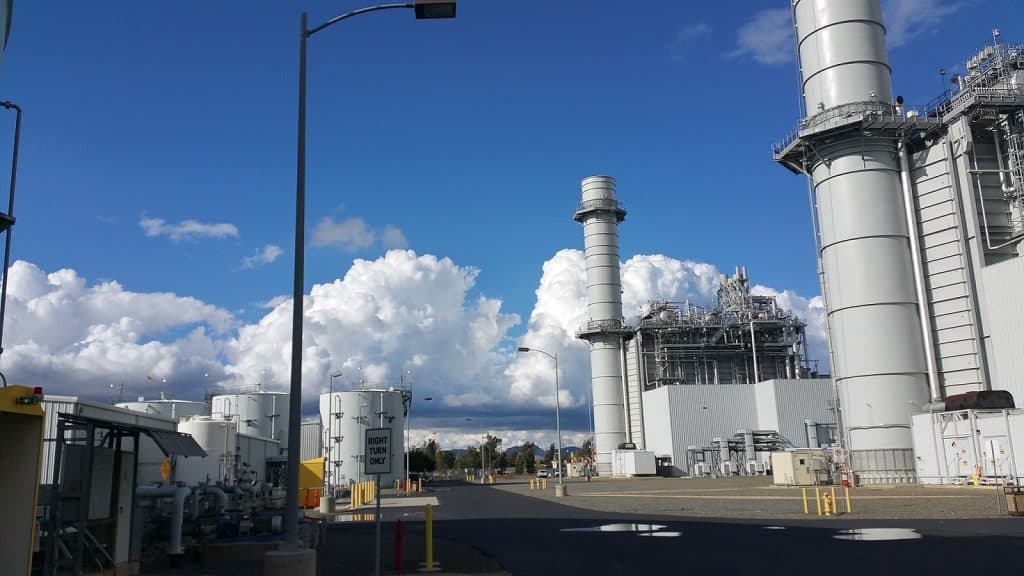
Although the United States has expanded its use of renewable energy sources in recent years, it has also expanded its use of gas. The growth of domestic gas production, which has pushed prices down on the US market in recent years, is also squeezing coal out of the market. Last year, gas accounted for more than 40% of electricity generation, and it ranked second to solar PV in new capacity additions.
Over the past decade, natural gas has established a dominant position in US electricity generation, previously held by coal. Last year, according to the US government agency, the Energy Information Administration (EIA), natural gas accounted for 43% of electricity generation in the US. The EIA’s statistics generally cover power plants with an installed capacity of at least 1 MW, so the data may not include generation from small-scale solar PV.

Share of sources in US electricity generation in 2023. Source: EIA
In addition to low generation costs, thanks to relatively cheap gas on the US market, gas-fired plants offer a range of technologies to meet different needs. Most generation comes from combined-cycle gas plants, which are not as flexible as combustion turbines but achieve significantly higher efficiencies. Combined-cycle plants also account for most of the capacity of gas-fired plants in the US.
Thanks to their relatively high efficiency, combined-cycle gas turbines (CCGTs) often operate in baseload mode, providing a steady supply of power. To meet peak demand, operators more often use simple-cycle gas turbines (SCGTs), steam turbines (STs) or internal combustion engines (ICEs). Strong demand for gas-fired plants helped increase their installed capacity by 9.3 GW last year, according to the EIA. Most of the newly commissioned capacity came from combined-cycle plants (7.4 GW), followed by gas turbines (1.8 GW) and internal combustion engines (0.1 GW).
Plant type and age, as well as location, affect how plants operate
Different types of gas-fired plants achieve different efficiencies when generating electricity, and they also have different capacity factors. Nationwide, the capacity factor of combined-cycle plants in the US was 56% in 2022. Plant age is reflected in capacity factors: the most modern plants, commissioned from 2014 onwards, reached 66%, while the oldest plants, from the 1980s and 1990s, reached just 36%.

Utilization of gas-fired plants by type and age in the case of combined-cycle plants (year operations began: group #1 between 1980–1998, group #2 between 1999–2013 and group #3 from 2014 onwards). Source: EIA
By contrast, plants such as combustion turbines, steam turbines with gas-fired boilers, and internal combustion engines are used mainly to meet peak demand. According to the EIA, their capacity factors did not exceed 20%.
The utilization of gas-fired plants also varies by region in the US. Combined-cycle plants have the highest utilization in the densely populated eastern US. In contrast, Texas recorded the highest average capacity factor for gas turbines in 2022. Higher electricity demand during the summer and winter of 2022 contributed to this, as did the variable output of the state’s large wind fleet.

Utilization of gas-fired plants in the US in 2022 by region. Source: EIA
Translation disclaimer
This article is a machine translation of the Czech original and has not yet been fully reviewed. In case of any doubt, please refer to the Czech version.
Sdílejte článek prostřednictvím:
You might also like

28 October 2026, 13:08

28 October 2026, 11:10

28 October 2026, 09:08
