
28 October 2026, 15:10
Loading...
Grangemouth: Key Scottish refinery faces an uncertain future

Libor Láník
7 May 2024, 11:08
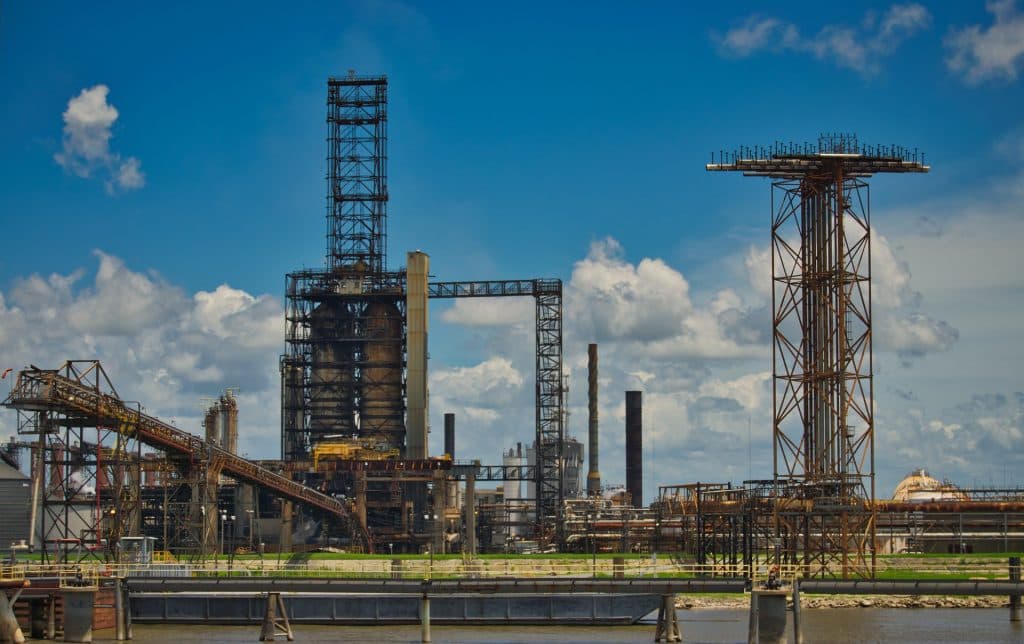
The more than century-long history of the oil refinery at Grangemouth is drawing to a close. Its owner, Petroineos, intends to end operations at the oil facilities by 2025, but recently more and more voices have been calling for the traditional site to be saved. What does the future hold for Grangemouth, one of the first refineries in the UK?
The Grangemouth complex, located at the mouth of the River Forth, is a landmark in central Scotland. It is also one of the last six major refineries in the UK. The first oil activities here date back to 1919, and the refinery itself was established five years later under BP. The facility is currently capable of processing 150 000 barrels of oil a day.
That is not the complex’s only purpose. The sprawling site also hosts a petrochemical plant, which was established here two years after the Second World War. The post-war period in Grangemouth was marked by significant development, followed in the 1970s by a connection to the Forties Pipeline.
The new millennium found the complex changing hands in a transaction carried out by Ineos. The company, owned by Jim Ratcliffe, one of the UK’s richest men, acquired Grangemouth in 2005 for £5 billion. The refinery itself subsequently became a joint venture called Petroineos, co-owned by China’s PetroChina.
Possible scenarios for the future?
The refinery is due to cease operations by 2025, a move opposed by Scottish Labour. The party is concerned about the workers whose jobs are at risk, with the closure expected to result in the loss of up to 500 jobs.
“Grangemouth is one of Scotland’s key strategic assets, but it seems that neither of the Scottish governments is serious about protecting its future. Both our governments must come together around the table to discuss both urgent action and a genuine long-term plan to keep Grangemouth working,”said Daniel Johnson, a Scottish Labour politician.
There are essentially two possible scenarios for the future. Petroineos has previously proposed building a fuel import terminal on the site, through which petrol, diesel, aviation fuel and kerosene would be imported into Scotland. In a way, this would replace the refinery’s current role, as it is the main supplier of aviation fuel to Scottish airports and of petrol and diesel to Scottish filling stations. The question remains whether continued domestic production will be economically viable.
Scottish Labour, by contrast, intends to transform Grangemouth into a “home for the industries of the future”. Plans include building a decarbonisation hub alongside a carbon capture and storage project. As part of the discussions, the party set up a working group to coordinate public-sector initiatives. Trade unions have also voiced their support for workers. Grangemouth’s future will therefore be key to the direction of Scotland’s just transition (Just Transition).
Translation disclaimer
This article is a machine translation of the Czech original and has not yet been fully reviewed. In case of any doubt, please refer to the Czech version.
Sdílejte článek prostřednictvím:
You might also like

28 October 2026, 13:08

28 October 2026, 11:10

28 October 2026, 09:08
