Paris climate agreement: Will it remain just a piece of paper?
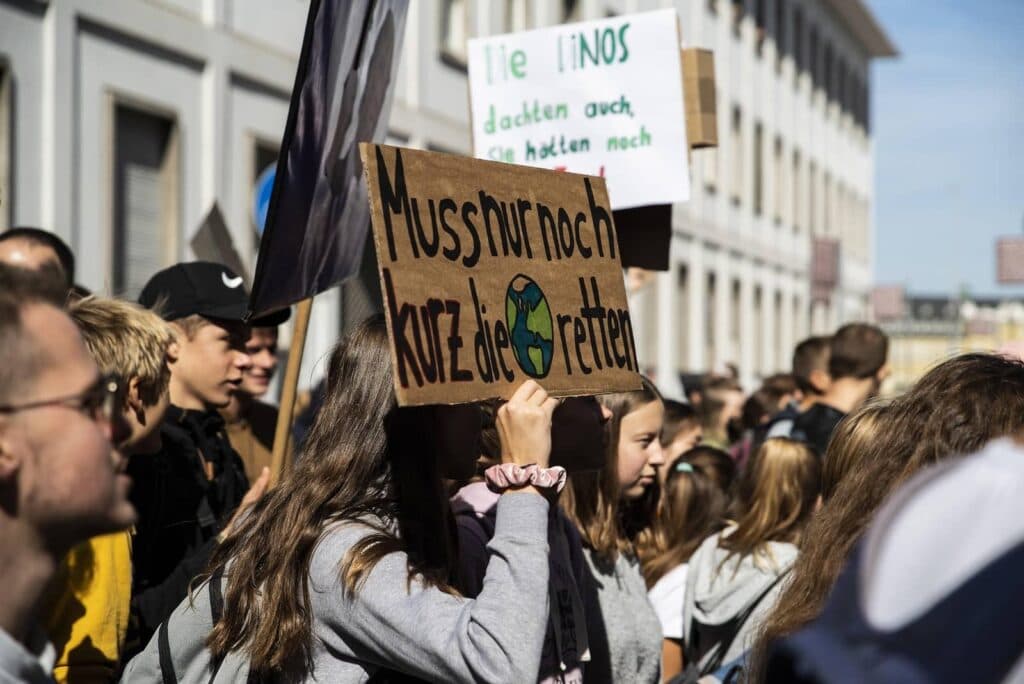
It is stupid and absurd; we cannot abide by it, Philippine President Rodrigo Duterte said of the Paris climate agreement from the end of last year. The man, whose statements evoke US presidential candidate Donald Trump, was the first head of state to signal that ratifying the agreement may not be straightforward.
The Philippines may not be the most influential player on the world stage, but observers say its stance could influence other Asian countries – especially poorer ones that fear the high costs of energy-sector reform. India is also in no hurry to ratify the Paris document. And the Philippines' position is surprising to many for another reason – this island nation itself faces adverse climate phenomena, hurricanes and anticipated heatwaves and storms.
London and Berlin in the crosshairs
But it is not only about ratification itself – most countries will probably approve it sooner or later. Major European countries that have so far led the drive for “green energy” – the UK and Germany – have also become targets of criticism from supporters of the Paris agreement. Although they do not question ratification in any way, they are allegedly taking steps that effectively run counter to its implementation. UN Special Envoy on Climate Change Mary Robinson criticised London and Berlin for subsidising fossil fuel industries.
Britain has in fact come under heavy fire from environmental activists and politicians, who say that following the referendum on leaving the European Union, the new government has completely sidelined the issue of climate change. “Let us not forget that the Brexit vote was not a vote on climate change,” said Christiana Figueres – the Costa Rican diplomat who worked on “climate diplomacy” within UN structures.
A warning from the Elders
The group of “wise elders”, The Elders (founded by Nelson Mandela and now chaired by Kofi Annan), warned that none of the ten largest greenhouse gas emitters has yet ratified the Paris agreement. And among the roughly 20 countries (mostly smaller islands) that have already done so, their combined share of global emissions is measured in tenths of a percent.
The Elders further criticised the G7 group of advanced economies for having so far failed to take decisive steps towards ending fossil fuel subsidies. The same applies to the G20.
Why the rush
As for the slow ratification of the agreement itself, whose goal is to keep the rise in average global temperature below 2 degrees Celsius by the end of the century (and ideally to 1.5 degrees), this need not necessarily be a tragedy. The original expectation was that the Paris agreement would not enter into force until 2020.
However, there is an effort to achieve at least a major breakthrough in approval of the document this year. Among other things, it sets a target of balance between emissions released and their absorption by nature in the second half of this century.
This urgency is linked to the approaching departure from office of two prominent politicians and supporters of the climate agreement – US President Barack Obama and UN Secretary-General Ban Ki-moon. Ban Ki-moon convened a special meeting of heads of state for 21 September, to be attended by participants in the UN General Assembly, in order to push ratification forward.
But there is also an entirely pragmatic reason for the rush. As the example of the new Philippine president (and perhaps the new government in London) has shown, the “good” will of participants in the Paris meeting may gradually fade.
Imagine Trump
Imagine, for example, that Obama were replaced by Donald Trump, even though that now appears unlikely given the trend in polling preferences.
“I sincerely hope that we will not face this problem,” Mary Robinson said. Trump even declared that he would scrap the Paris agreement altogether. He would of course be unable to do that, but he could theoretically “detach” the United States from it one way or another.
Many remember how George W. Bush's administration refused to ratify the Kyoto Protocol. Moscow saved the day then. The protocol entered into force thanks to its ratification by Russia.
For now, everyone points to the commitment by China and the US – the two key countries and the two largest emitters – to ratify the climate agreement by the end of this year. If the Americans manage this, even a potential new President Trump would have to wait four years for the option of withdrawing from the agreement.
In any case, for the Paris agreement to enter into force, it must be ratified by 55 countries accounting for at least 55 percent of global emissions.
Rich hypocrites?
The Philippine president has, however, revived a debate that is far from new and accompanies all the endless negotiations on international cooperation in the fight against global warming. “Rich hypocrites”, as Rodrigo Duterte calls developed countries, want to push much poorer states into spending enormous sums on a transition from “dirty” conventional energy to renewable sources. And this at a time when they have not yet completed their industrialisation.
Yet no one forced today's Western countries to burn less coal or limit emissions during their industrialisation. It would therefore be logical for the economically advanced world, which bears the main responsibility for pollution to date, to make a significant contribution to poorer countries' implementation of climate agreements.
Duterte has thus indicated after all that he does not rule out ratifying the Paris agreement – but under entirely different conditions.
Nuclear India's conditions
And it was the much larger and more significant India that signalled that it too sees fulfilling the Paris commitments as part of further “bargaining”.
India recently sent a message that its stance on the Paris document could be much more favourable if it were admitted to the organisation that enables trade in nuclear material for energy production (the Nuclear Suppliers Group – NSG). World powers have so far refused this.
The world's second-most populous country has a difficult position in this respect – it has not ratified the Treaty on the Non-Proliferation of Nuclear Weapons. But some may see another example of “the hypocrisy of the powerful” here – why should India give up nuclear weapons when the Chinese, Americans, Russians, British and French do not have to?
Western alarmism?
Some observers see “evil” coming from the West in the very theory of global warming. Development countries expert Vijay Jayaraj described the Philippine president's decision as correct, because it will allow the country to retain its important coal-fired power sector, which he says makes a significant contribution to local development.
Jayaraj described adapting to the “scientifically questionable alarmist agenda of the West” as nonsense. (Incidentally, Donald Trump claimed some time ago that global warming was invented by the Chinese to harm the competitiveness of US industry.)
What is happening in Britain
Distrust of the West may also be encouraged by criticisms such as those Mary Robinson directed at London and Berlin. In the case of the UK, she particularly objects to tax breaks for the oil and gas industry, “which will cost taxpayers billions of pounds by 2020”, while the UK government has cut support for renewables and energy efficiency.
Other critics cannot forgive Theresa May's new London cabinet for abolishing the ministry whose name included climate change as well as energy. This agenda was transferred to the Department for Business, Energy and Industrial Strategy.
Yet this step also has its “green” defenders – after all, it is entirely logical to link support for new “green” technologies with overall economic development and industrial innovation.
Complicated Europe
Germany's case is more complex, as even Mary Robinson acknowledges that Berlin is in many respects a leader in the transition to a green energy system and economy – including in its support for developing countries.
However, the senior UN representative objects to Germany's decision to pay power plants burning fossil fuels, including coal, to maintain their capacity in case it is needed. The fact is, though, that the Berlin government had to introduce this mechanism after it became increasingly clear that relying solely on renewable sources was not yet possible.
Europeans are “complicated” when it comes to ratification of the Paris agreement itself, too. The document will be considered approved in the European Union only once all 28 countries have expressed their consent (Britain is still a member). But as Scottish Member of the European Parliament Ian Duncan points out, who is actively involved in this issue, in federal Belgium alone this means approval by six different parliaments.
Supporters of the climate agreement still hope that two countries – the United States and China – will help secure its swift ratification. Together, they account for substantially more than one-third of global emissions – China for 20 percent and the US for 18 percent.
The author works as a consultant and energy projects specialist at the HATcom agency.
Lead photograph: Yann Caradec
Translation disclaimer
This article is a machine translation of the Czech original and has not yet been fully reviewed. In case of any doubt, please refer to the Czech version.