11 November 2026, 13:45
Loading...
Planned gas projects in the Western Balkans may pose risks to the region
Jana Červinková
3 April 2023, 17:25
According to research by nonprofit Global Energy Monitor and the CEE Bankwatch network of nonprofit organisations, planned gas projects in the Western Balkans pose economic and security risks to the region. Several have been promised EU funding, primarily in the form of loans. The news website Euractiv reported this.
In 2021, the six Western Balkan countries—Albania, Bosnia and Herzegovina, Kosovo, Montenegro, North Macedonia and Serbia—consumed a total of around 3.7 billion cubic metres (bcm) of natural gas. By comparison, gas consumption in Czechia is approximately 8.5 bcm per year. For a major gas consumer such as Germany, 3.7 bcm represents around 4% of annual consumption in 2021.
Several projects are planned in the region that would give natural gas a more prominent role. They have often been promised funding from the EU or the US. The aim is to bring Western Balkan countries closer to the EU, enable them to access the single market and potentially the global LNG market. However, according to research by Global Energy Monitor and CEE Bankwatch, strengthening the role of natural gas in the wake of the war in Ukraine would expose the region to price volatility and supply shortages.
“Fossil gas infrastructure built now would be a liability for the Western Balkans. It would either increase dependence on imports and lead to the need to use fossil fuels [the so-called lock-in effect], or result in stranded assets. If the EU and EU banks have learned from the recent supply problems, they must stop promoting fossil gas in the region,” said Pippa Gallop, Southeast Europe energy adviser at Bankwatch.
Most projects are still at the planning stage
Several major gas projects are being developed in the region. One example is an LNG terminal in Albania, which would be one of the first in the region. However, no more detailed, up-to-date information is available on its capacity or construction and commissioning schedule, although the project has been discussed.
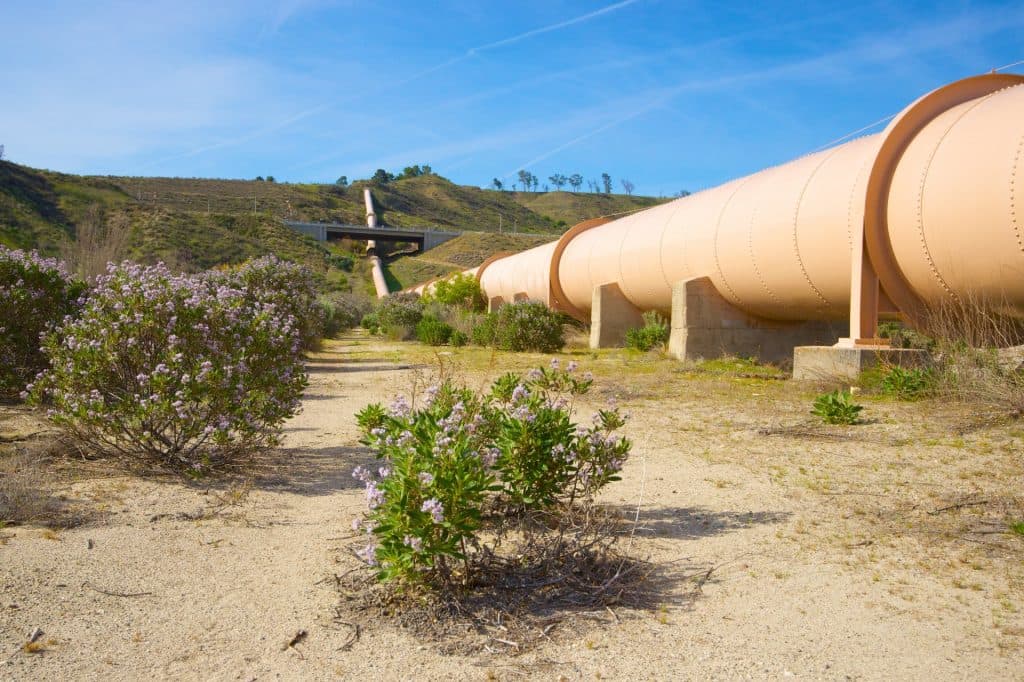
According to the research data, 2,715 km of pipelines are also planned for construction in the region. They would import gas from Greece, Croatia and other neighbouring countries. However, many of these projects have not reached a final investment decision and are still at the planning stage. Several have also been promised loans from the European Bank for Reconstruction and Development or through the EU’s Western Balkans Investment Framework platform.
One project whose construction has already begun is the interconnector between Bulgaria and Serbia. It is largely funded by the EU, and its gas is expected to come from Azerbaijan, flowing through the so-called Southern Gas Corridor.
The report by Global Energy Monitor and Bankwatch argues that the Western Balkans has significant potential for developing solar and wind power plants. Building gas infrastructure would undermine this potential. This could ultimately disrupt integration with and convergence towards the EU.
Translation disclaimer
This article is a machine translation of the Czech original and has not yet been fully reviewed. In case of any doubt, please refer to the Czech version.
The article continues for subscribers
Premium content
The rest of this article is available to premium subscribers only. Get access to all premium articles on oEnergetice.cz.
Best value: annual subscription
Monthly option 4 € / month
3.25 €/ month
You might also like

11 November 2026, 13:19

11 November 2026, 12:52
11 November 2026, 10:55
11 November 2026, 10:43