
1 November 2026, 16:09
Loading...
Poland after elections: Shift to green energy

Libor Láník
5 December 2023, 06:43
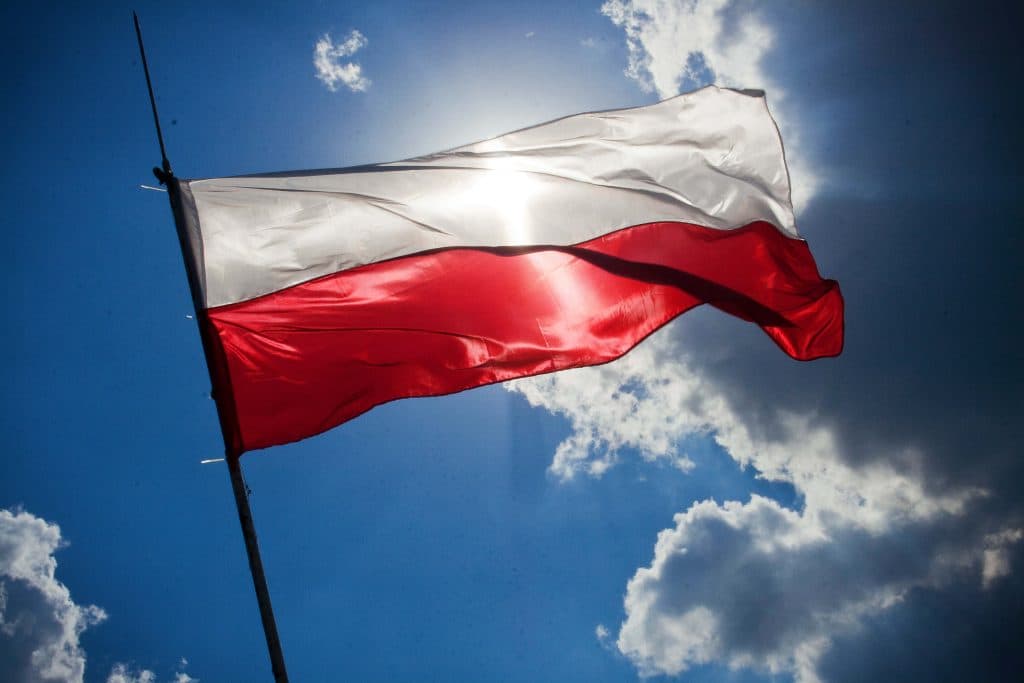
Following the October elections, Poland is changing its energy policy along with its government. It is now almost certain that outgoing Prime Minister Mateusz Morawiecki will not win a majority, while the incoming coalition is already preparing a proposal to change the energy sector. The main proposal is to continue freezing electricity and gas prices for the first half of next year. It also includes more ambitious changes to renewable energy, one of many differences from the previous government. These focus primarily on easing the rules for building wind farms, which were significantly tightened in the past.
"The main aim of the changes proposed in the amendment is to ensure cheap and clean electricity for Poles and restore our country's energy sovereignty." This is how Paulina Hennig-Kloska, a lawmaker for Poland 2050 and the likely future climate and environment minister in Donald Tusk's new government, described the plan. The returning prime minister expects to be appointed on December 13.
Poland is set for significant change under its new government, and it will be interesting to see how this plays out in the energy sector. Its first steps, including the proposed energy law, signal a sharp shift towards green energy. Under the PiS government, coal was considered a vital Polish interest that would be safeguarded until 2049. The ruling PiS frequently criticized the European Union and its climate policy in this context. Donald Tusk, an unequivocally pro-European politician, is in a sense breaking with the established discourse by arguing that moving away from fossil fuels—and protecting the environment—does not mean sacrificing one's own interests.
Poland is more dependent on coal than any other EU member state, with approximately 70 % of its electricity generated from fossil fuels. The strongest party in the incoming governing coalition, Civic Platform, plans a massive expansion of renewables by 2030. According to its vision, 68 % of energy will be generated from renewable sources.
Another significant change will be the approach to energy companies that could be described as "PiS state-owned enterprises." A long list of senior executives appointed under the previous government is expected to be replaced by the new one. According to the media, this could include Orlen CEO Daniel Obajtek. He recently opposed the proposed law in a letter to Polish President Andrzej Duda.
The proposal to pass the law originally included only the aforementioned freeze on electricity and gas prices. Polish politicians later added a liberalization of the rules for building wind farms. Critics say they are thereby circumventing legislation, even though the coalition itself criticized this strategy so strongly during the election campaign.
Under the proposal, the freeze on energy prices would be extended until June 2024. Most of the costs would be covered by the Orlen Group through a special levy. The amount paid by the Orlen Group would reach 14.5 billion zlotys (about 3.5 billion euros), representing around 93 % of the total costs. For Orlen, this is a consequence of complying with the European Commission's rules on an excess profits tax.
The aim is to maintain the current energy consumption limits and support the poorest individuals in tackling energy poverty.
As for wind farms, the law significantly changes the rules governing where they can be installed. For example, the current minimum distance from the nearest nature park—ten times the height of the turbine—would be reduced to 300 meters. The distance from residential buildings would also be reduced, depending on noise levels.
In response to this plan, PiS has voiced criticism and even raised the controversy of alleged deliberate land expropriation. The legislation will almost certainly be amended, but it is already clear that Poland is changing its energy course.
Translation disclaimer
This article is a machine translation of the Czech original and has not yet been fully reviewed. In case of any doubt, please refer to the Czech version.
Sdílejte článek prostřednictvím:
You might also like
1 November 2026, 07:59

31 October 2026, 12:55

31 October 2026, 08:21
30 October 2026, 20:16