30 September 2026, 12:13
Loading...
Poland launches nuclear mega-project: contract to be finalized by year-end

Martin Voříšek
30 September 2026, 06:17
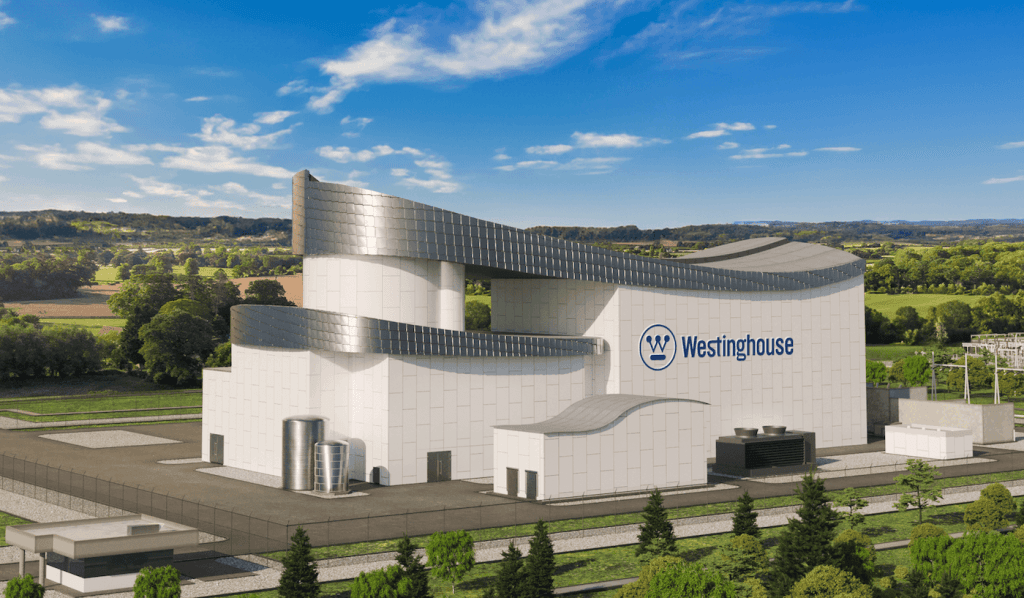
Polskie Elektrownie Jądrowe (PEJ), the company responsible for building Poland’s first nuclear power plant, has agreed with the Westinghouse-Bechtel consortium on the terms of the main contract for the construction of the new units. Negotiations are continuing, and both parties aim to conclude the contract by the end of this year. Meanwhile, the project is moving from the preparation phase to the first preparatory works at the site. What has happened so far around Poland’s first nuclear power plant?
Poland only definitively joined the group of countries seeking to build a new nuclear power plant in the European Union in October 2022. The Polish government then chose US company Westinghouse as its partner for the project in Pomerania. The project at the Lubiatowo-Kopalino site comprises three AP1000 units. It has also received important clearance from the European Commission. As in other countries, the state—not a private investor—plays the leading role in Poland’s nuclear sector. PEJ expects the first unit to enter operation in 2036.
After a lengthy pause, new information about the project is now emerging. Preparation of the so-called EPC contract, under which the Westinghouse-Bechtel consortium will build all three units, is expected to be completed by the end of the year. Construction is intended to be carried out on a turnkey basis.
From agreement on terms to a full EPC contract
The September agreement covers the main commercial and legal terms. According to PEJ, it lays the groundwork for further negotiations on the remaining provisions governing cooperation and the contract’s annexes. The consortium and the investor have both said they aim to complete the process by the end of the year. The agreement is therefore an important milestone, but not an announcement that the final construction contract has been signed.
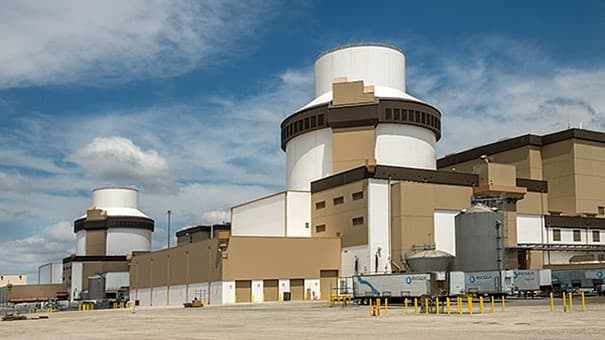
The AP1000 reactor is in operation at the Vogtle nuclear power plant, for example, and is also planned for the Polish nuclear power plant at Lubiatowo-Kopalino. Source: Georgia Power
Finalizing the contract is proceeding alongside site preparation and the permitting process. In March, PEJ submitted an application for a construction licence to Poland’s National Atomic Energy Agency and is preparing documentation for other required decisions. In August, it handed the site over to Bechtel, which took over coordination of the work and cooperation with subcontractors.
Site preparation gets under way as the supply chain expands
The first works at the site include preparing a large area, drainage and the construction of temporary infrastructure. Polish company Budimex is set to build, among other things, approximately 16 kilometres of temporary roads. Preparations also include drainage ditches and facilities for logistics and workers. The permitted works are scheduled to run from the third quarter of 2026 to the first quarter of 2029. For now, however, this is site preparation for later stages of the project, not the start of construction of the reactor units themselves.
More and more Polish companies are also becoming involved in the project. Bechtel, for example, has signed a contract with Polimex Mostostal to supply, install and commission two large assembly halls. They will be used to assemble oversized structural and mechanical modules that cannot be transported to the site as complete units because of their size and weight.
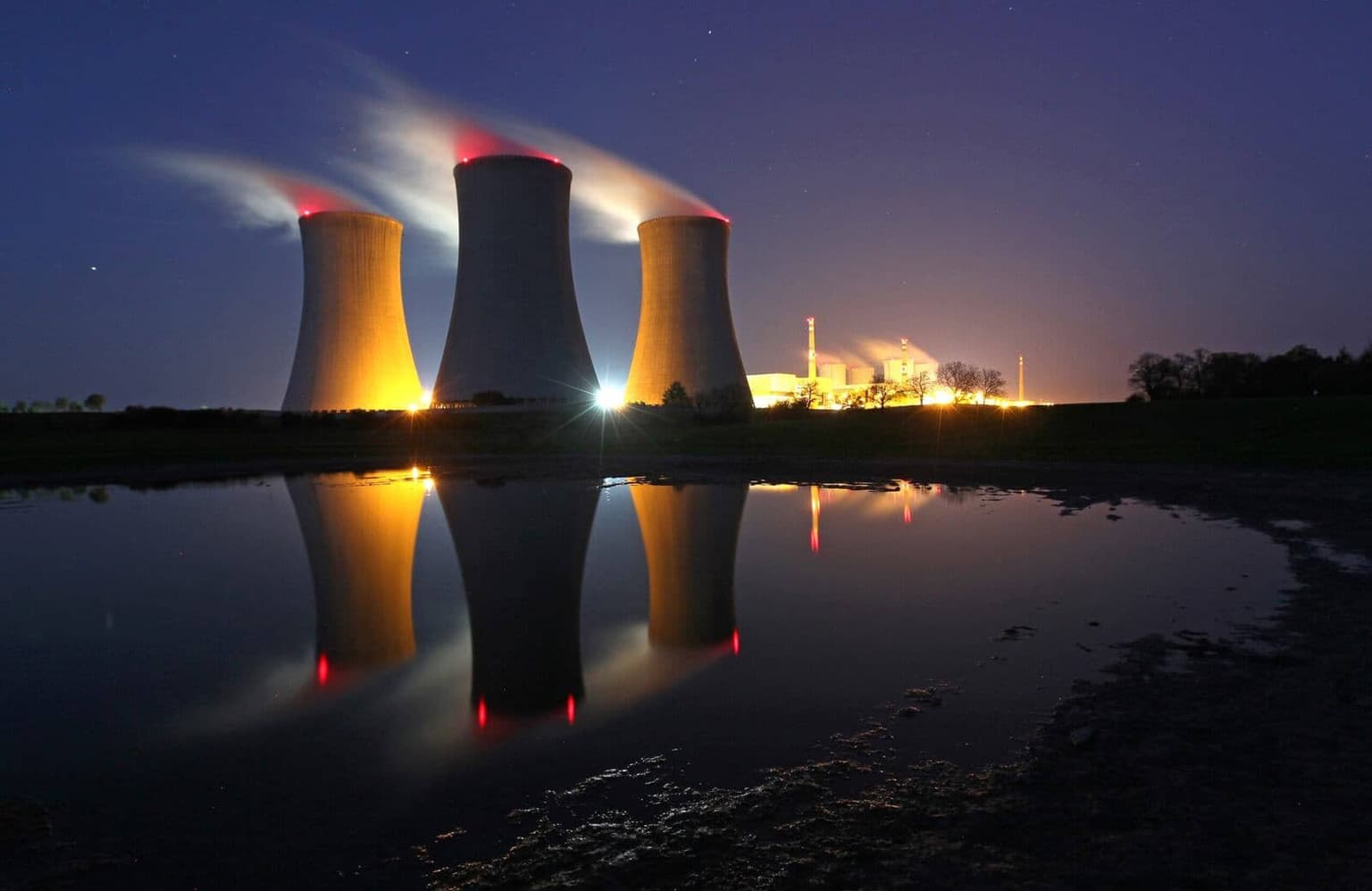
Dukovany nuclear power plant. Source: ČEZ
PEJ and the Polish government stress that involving domestic companies will provide experience that can also be used after the first plant is completed. According to a government statement, the total value of contracts awarded to Polish companies for the Lubiatowo-Kopalino project has exceeded 2.2 billion zlotys (note: total costs are estimated at between EUR 42 and 45 billion, or between 178 billion and 192 billion Polish zlotys, meaning the amount so far represents only around 1.1% of the total). This figure alone does not show what share of the plant’s total value will go to domestic suppliers.
Domestic suppliers are also expected to contribute to the Czech project to complete the Dukovany plant. The requirement that they account for 60% of the project became one of the main issues in the now-concluded tender. Experience gained through supplying and working on a domestic project is expected to help develop the capabilities of Czech industry for other nuclear projects around the world.
According to the latest information from KHNP’s head, 13 Czech companies have begun registering as potential suppliers for the project’s non-nuclear part. Through contracts signed in May committing the parties to future agreements, KHNP was expected to secure 30% of supplies.
Public support aims to reduce financial uncertainty; strike price estimated at up to EUR 114/MWh
The European Commission approved Polish state aid for the construction and operation of the plant at the end of last year. This is a necessary prerequisite for the EPC contract, because the agreement between the investor and the supplier alone does not address how the project will be financed or how it will bridge the long period between construction and the start of operation.
The approved support package is based on three instruments: direct state financial support (up to 30%), state guarantees for all debt financing for the project (the remaining 70% of financing is covered by a state guarantee, securing better loan terms), and a two-way contract for difference. The contract will run for 40 years, although Poland’s original proposal envisaged 60 years, as did the first notification for the completion of the Dukovany plant.
The conditions set by the European Commission also include restrictions on how the plant can sell electricity. Sales are to combine longer-term contracts with trading on the power exchange. The Polish government says that up to 30% of output will be sold through auctions and the remaining 70% on organised markets (exchanges).
The strike price under the contract for difference is not expected to exceed 500 zlotys per MWh (around EUR 115/MWh), slightly above the EUR 85–105/MWh range used in the base case of the Czech state aid notification for the two new units at Dukovany.
As in other countries, the project is being carried out by a company wholly owned by the Polish state. The government is therefore not only providing support but is also acting through PEJ as the investor and future owner of the plant. This model is well known across Europe. The United Kingdom, the Netherlands, France and the Czech Republic are taking a similar approach to nuclear power plant construction.
Second power plant: government seeks a different financing model
Poland is also preparing a second large nuclear power plant. The updated government nuclear programme published in June 2026 envisages two large power plants with a combined capacity of 6 to 9 GW. Bełchatów and Konin are the preferred locations for the second plant, designated EJ2. The government wants to select a strategic partner and technology in 2027, begin construction around 2032 and bring the first unit into operation around 2040.
The programme is still only a proposal awaiting further consideration by the government. Unlike the first plant, the structure of the investor has not yet been settled, and the project is at a very early stage.
The Polish government is seeking to ensure that the new project does not rely solely on public money. Competitive dialogue with potential partners is expected to cover not only the technology but also project financing. The government wants the strategic partner to contribute capital at an early stage. The involvement of future electricity buyers through corporate PPAs or ownership structures is also under consideration. The state will not disappear from the project altogether, however: the government expects public support to be needed in this case too, for example in the form of a contract for difference.
For its second plant, Poland is therefore seeking a different allocation of risks from that used for the Lubiatowo-Kopalino project, not a route without state support. The technology partner is expected to play a greater role before the state steps in, while the state will continue to help ensure that the project is financeable.
As noted, however, the project is at a very early stage, and Poland must convince investors that it will be worthwhile for them. Yet no recent nuclear power plant construction project has managed to meet this challenge. Poland’s second nuclear project could therefore also end up fully under state control.
Translation disclaimer
This article is a machine translation of the Czech original and has not yet been fully reviewed. In case of any doubt, please refer to the Czech version.
Sdílejte článek prostřednictvím:
You might also like
30 September 2026, 12:10
30 September 2026, 10:32
30 September 2026, 06:17
29 September 2026, 14:59