Serbia launches preparations for 500 MW of wind farms, plans to use coal sites

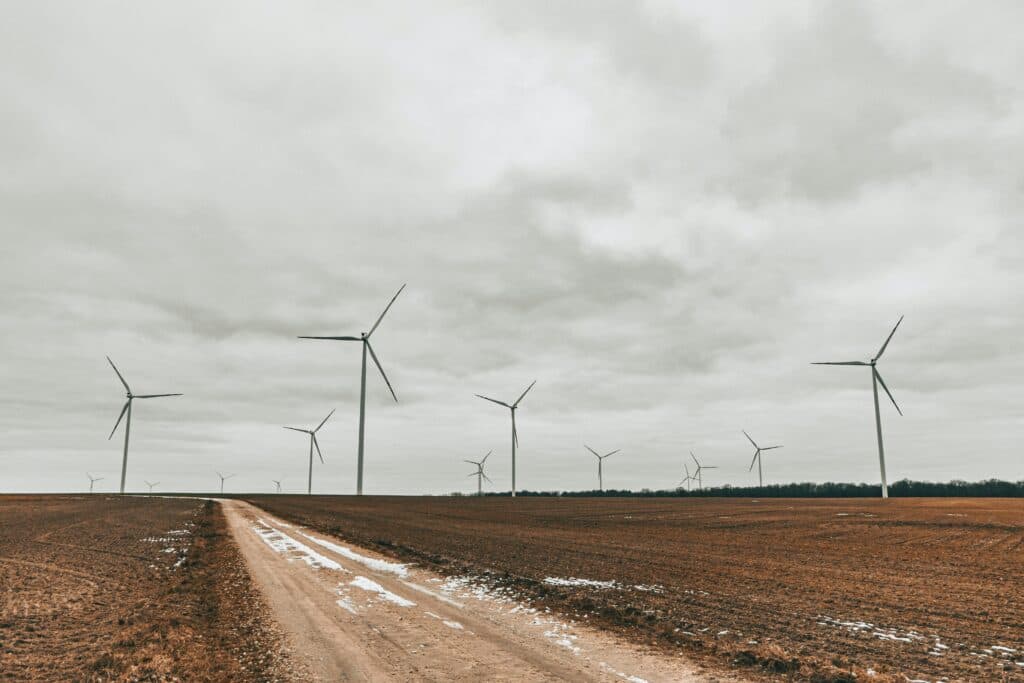
State-owned energy company Elektroprivreda Srbije (EPS) and the Serbian government are preparing to build wind farms with a capacity of 500 MW in cooperation with a strategic partner. Aleksandar Latinović, head of the auxiliary services department at EPS, announced this at the Korean-Serbian Forum for Strategic Energy Development in Belgrade. Alongside renewable energy projects, Serbia continues to build coal-fired power plants with Chinese support.
According to Latinović, the project to build wind farms with a total installed capacity of 500 MW is part of a broader plan to develop energy infrastructure by 2028.
Elektroprivreda Srbije currently operates power plants with a total installed capacity of 7 304 MW. Of this, 4 368 MW comes from thermal power plants and 2 936 MW from hydropower plants. The company's energy mix largely reflects Serbia's electricity generation, with around 91% of the country's electricity produced from coal and hydropower in 2023.
Using mine dumps for renewable energy
In recent years, EPS has sought to expand its activities into other areas of electricity generation. At the end of August, the company announced that the 66 MW Kostolac wind farm project, being developed on the site of a former mine dump, was entering its final stage.
The project is financed by a 110 million euro loan from the German development bank and 30 million euros in European Union grant funding provided through the Western Balkans Investment Framework (WBIF). This may be an effort by the country to meet European Union requirements.
Latinović also noted that Serbia's energy sector plans to focus on solar power in the future. A solar project with a capacity of 1,000 MW, equipped with battery energy storage systems (BESS) with a capacity of 200 MW, is expected to come online by 2029. The project is being developed in cooperation with Hyundai Engineering and UGT Renewables (UGTR).
The strategic partners are already preparing investment and technical documentation for the 1 GW solar power plant, and a grid connection agreement has been signed with transmission system operator Elektromreža Srbije (EMS). According to the schedule, the plant should be commissioned within four years.
Preparations for the construction of further solar projects are also underway. Tenders for the Kolubara A (78 MW) and Morava (42 MW) power plants are expected to take place next year, while the Klenovnik project (110 MW) is undergoing a feasibility study review. EPS recently launched its first solar power plant, Petka, on a coal waste dump. According to Latinović, it demonstrates the potential for using several thousand hectares of similar sites.
Strengthening balancing services and a controversial project with China
Alongside developing renewable energy sources, the company is also focusing on strengthening so-called balancing services provided by transmission system operators to ensure the balance of the transmission system. One example is the 350 MW Kostolac B3 coal-fired power plant, commissioned last year. It is located at the same site as the planned wind farm.
Latinović warned that integrating new renewable energy sources could lead both to a shortage of balancing services and to electricity surpluses. EPS has therefore launched a study examining the potential of hydrogen and heat storage. The aim is to optimize the use of surplus electricity, replace fuel oil in coal-fired power plants with hydrogen fuel, and reduce gas and coal consumption in heat production.
The project also shows that Serbia is trying to balance its international commitments and interests. While EPS is working with strategic EU partners and international corporations on renewable energy projects, the Kostolac B3 power plant has received strong Chinese support and financing. However, the project has also been dogged by a number of controversies over the permitting process.
Translation disclaimer
This article is a machine translation of the Czech original and has not yet been fully reviewed. In case of any doubt, please refer to the Czech version.




