
17 October 2026, 13:09
Loading...
Surprise comeback: German government and industry consider reviving Nord Stream 2

David Vobořil
14 February 2025, 06:34
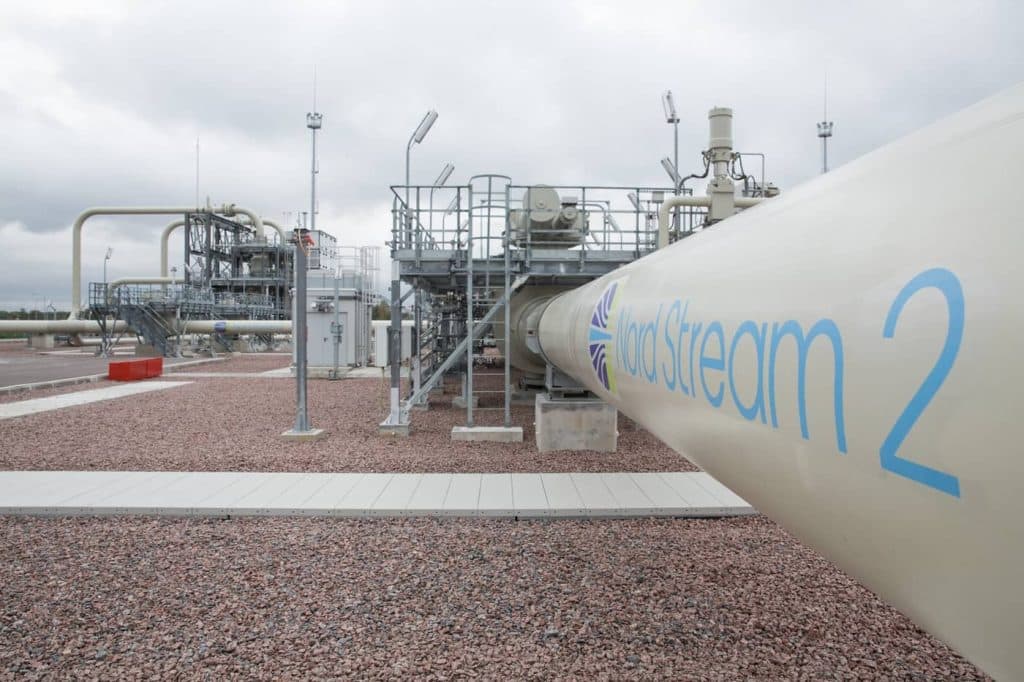
The German government and industry players are reportedly considering using parts of the Nord Stream 2 pipeline in the future to transport hydrogen from Finland. There is also speculation about the possible transportation of natural gas from Russia if a peace deal is reached between Russia and Ukraine. The Handelsblatt newspaper reported, citing sources familiar with government discussions. However, several government spokespeople told Handelsblatt that no talks about using the pipeline had taken place and that there are no plans to revive the project.
The controversial Nord Stream 2 pipeline, which runs along the bed of the Baltic Sea from Russia to Germany, was completed in 2021, but it was not brought into operation because of Russia’s war against Ukraine. An act of sabotage in 2022, which damaged one of the pipeline’s strings, also made the chances of putting it into operation practically zero.
According to the reported discussions, parts of the pipeline could be used in the future to transport hydrogen from Finland to Germany, Handelsblatt reported. Sources from the consortium planning a hydrogen pipeline project between countries around the Baltic Sea told the newspaper that it made no sense to let Nord Stream 2 decay on the seabed.
The idea of restarting the pipeline to transport natural gas was also reportedly proposed as one of the negotiating arguments in ceasefire talks between Russia and Ukraine, which could begin soon.
A German government spokesperson told Handelsblatt that while no formal talks about restarting the pipeline had taken place, the authorities “do not want to leave its future to chance”.
A Swiss court postponed its decision on the liquidation of insolvent Nord Stream 2 AG until 9 May, giving all parties involved more time to influence the project’s future, including investor and German state-owned energy company Uniper, Handelsblatt wrote.
The Danish Energy Agency granted Nord Stream 2 AG permission to preserve the pipeline infrastructure to reduce the resulting environmental and safety risks. The decision requires workers to install specially designed plugs at each open end of the pipeline to prevent further gas leaks and seawater from entering the pipes.
The damaged Nord Stream 2 string is estimated to still contain approximately 9-10 million cubic metres of natural gas, while the undamaged string remains filled with gas, the Danish agency said.
Translation disclaimer
This article is a machine translation of the Czech original and has not yet been fully reviewed. In case of any doubt, please refer to the Czech version.
Sdílejte článek prostřednictvím:
You might also like




16 October 2026, 10:16