25 September 2026, 09:51
Loading...
Thaw in relations: Merz and Macron announce closer energy cooperation and end to nuclear dispute
Adam Sosna
31 August 2025, 08:41
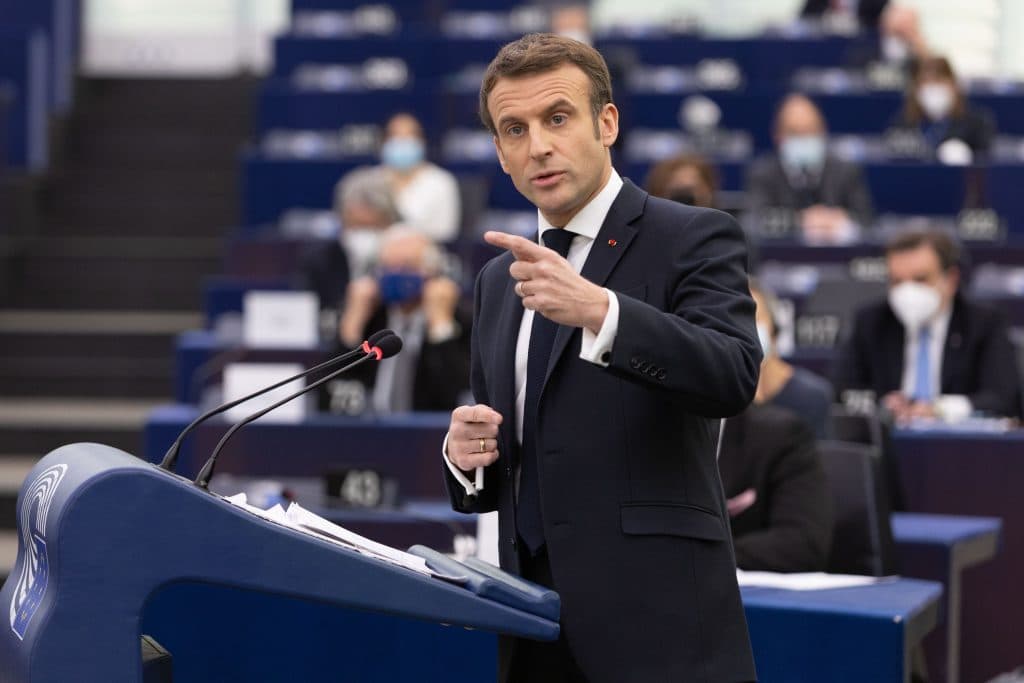
France and Germany agreed on Friday to better integrate their energy markets and find a common position on EU climate legislation. After years of bitter disputes over energy policy, this marks a significant thaw in bilateral relations. Both countries intend to end their long-running disputes, particularly over nuclear power, and step up cooperation on cross-border interconnections and EU legislation.
The renewed rapprochement between the EU's two largest economies came at a ministerial meeting in Toulon, attended by French President Emmanuel Macron and German Chancellor Friedrich Merz. Both leaders gave political backing to a new cross-border power line as well as the long-delayed southwestern hydrogen network linking Spain, Portugal, France and Germany.
The Toulon summit took place after years of disagreements over energy policy. At the heart of the disputes were traditionally subsidies for energy-intensive industry, as well as completely opposing views on nuclear energy. The outcome of the 25th meeting of the Franco-German Council of Ministers is now an effort to “settle political differences and support joint initiatives that can serve as a model for broader cooperation within the EU”, according to a press release.
The convergence of positions between the two European powers could indeed herald more effective energy cooperation among the EU-27. The announced “new economic agenda” of the two countries, encompassing defence, industrial and digital policy, also includes energy provisions. These specifically include a commitment to conduct a joint study with Poland by 2026 on optimising investment in power grids, as well as to strengthen their own Franco-German interconnection. The two countries also intend to work more closely on energy regulation, such as grid charges, with the aim of reducing Europe's excessively high energy prices. Berlin and Paris further pledged to “engage in cooperation” on reducing the administrative burden on businesses and aligning their climate policies.
In practice, this could lead to joint proposals to amend existing EU energy legislation, the statement adds. The forthcoming 2040 climate targets are mentioned explicitly.
Germany's new position on nuclear power
Both countries want possible adjustments to EU targets to provide greater certainty for investors, but also to ensure “non-discrimination across all net-zero and low-carbon energy technologies” – a common euphemism for nuclear power.
Specifically, this means that Germany will no longer obstruct France's use of nuclear energy, for example at the level of European legislation. France, meanwhile, is not seeking EU funding for new nuclear facilities, but rather funding for research projects focused on developing new, smaller reactor types.
France, which relies heavily on nuclear power, has long fought for nuclear energy to play a greater role in EU climate targets and to be treated as fully equal to renewables. In recent months, Paris has pressed Brussels to adopt a 2040 renewable energy target that would also include nuclear energy, something EU Energy Commissioner Dan Jørgensen has so far resisted. The explicit mention in the joint statement with Germany could herald positive changes in this regard, which other EU “nuclear” countries, including the Czech Republic, will certainly welcome.
In the nuclear field, this is an important shift in Germany's position. German federal governments have repeatedly opposed equal treatment of low-emission energy sources and the classification of nuclear energy as sustainable. This was particularly at the behest of the SPD, which is now very likely to support the agreement in principle with France. The new joint direction in energy policy, which both leaders had already foreshadowed during the Chancellor's first visit to Paris in May, is thus taking its first concrete shape.
Translation disclaimer
This article is a machine translation of the Czech original and has not yet been fully reviewed. In case of any doubt, please refer to the Czech version.
Sdílejte článek prostřednictvím:
You might also like
24 September 2026, 11:23

24 September 2026, 10:30
24 September 2026, 06:56