25 September 2026, 09:51
Loading...
EIFlexi: How ALPACA is changing the balancing services market in Czechia
Daniel Grecman
24 September 2025, 15:20
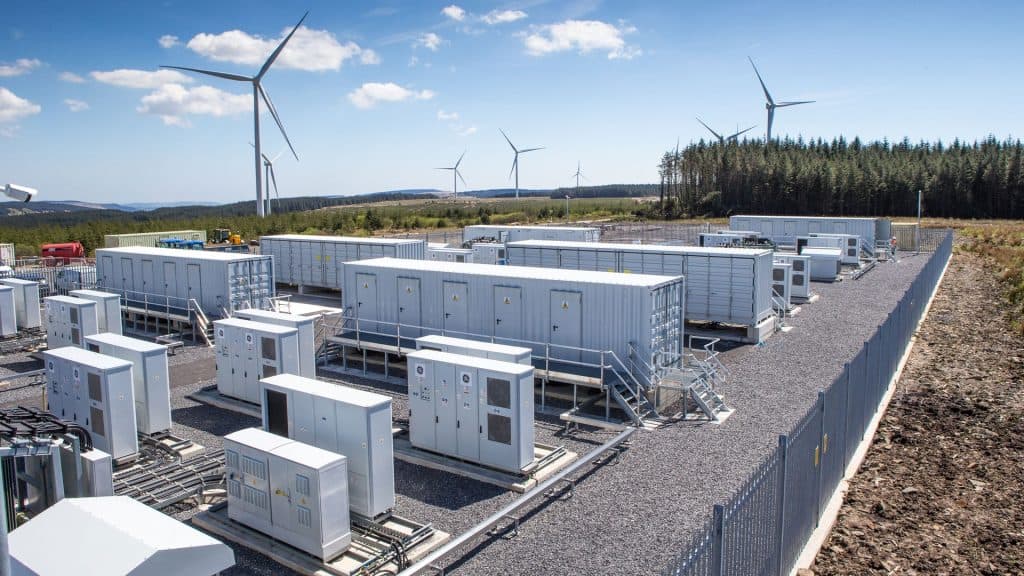
Balancing services (SVR) have recently become one of the most widely discussed topics in the energy sector. The new regional ALPACA initiative linking Czechia, Germany and Austria has entered the picture, while the importance of flexibility aggregators is growing. We now bring you the first part of an interview with Matěj Hrubý, Senior Project Manager at EIFlexi, one of the leading flexibility aggregators in the Czech Republic, on current developments in the balancing services market.
Since 3 September, Czechia has been involved in the ALPACA initiative, which links Czechia, Germany and Austria and provides backup for automatically activated frequency restoration reserves (aFRR). What has it brought so far in the two weeks since then?
The first two weeks of participation in ALPACA have shown an increase in prices for providing balancing services. Following a weak summer in terms of prices, prices began to rise at the turn of August and September. After joining ALPACA, this trend intensified further. Market dynamics have also increased.
A fundamental change is that aFRR bids are no longer submitted for the full day or by the hour, but for four-hour periods – i.e. six bids for the full day. These can now be divided by capacity, meaning that only part of the capacity may be accepted. In terms of time, bids remain indivisible within the respective period.
In practice, this means that if successful, revenues are received for six four-hour periods, but success may well be achieved in only one period. If, for example, you are unsuccessful in one period, subsequently placing capacity in mFRR or mFRR5 is more complicated, as ČEPS prefers full-day bids. This dynamic is also linked to the fact that prices tend to be more volatile during the day.
What volatility can be observed across individual periods during the day?
The lowest reservation price [editor’s note: for having a resource ready to provide the service] is usually in the first trading period, when the average price is around 3 EUR/MW/h. The price then gradually rises, reaching its highest level in the fifth period – the reservation price is around 50 EUR/MW/h, sometimes even higher. The overall daily average exceeds 20 EUR/MW/h.
Participation in ALPACA has also shown that, despite what many have claimed, Czech resources providing flexibility can also be deployed in the German and Austrian markets – we are often exporters in this segment. Germany is particularly key for us, with exports reaching as much as 100 MW.
So are market developments positive for Czech providers of balancing services and aggregators?
The situation is now more encouraging for flexibility providers than it was during the summer. Whether developments are positive depends on the perspective of individual market participants. From our perspective at EIFlexi, the situation is certainly not bad. In aFRR, the average of daily values in 2025 is around 18 EUR/MW/h.
These are not the prices seen in 2023 or 2024, but new BESS can still achieve an acceptable payback period with reasonable investment costs. For comparison, the average price in 2023 was 27 EUR/MW/h, while in 2024 it was approximately 24 EUR. Prices are therefore declining, but we expected that. We are seeing similar developments in mFRR and mFRR5. Encouragingly, FCR prices have risen and are holding at an average level above 17 EUR/MW/h.
For completeness, it is necessary to elaborate on what reasonable BESS investment costs mean. We have an idea of what level of investment costs is still acceptable. However, we see projects on the market with substantially higher costs. It is necessary to communicate openly with clients about this so that expectations align with reality. We certainly do not expect everyone in the market to succeed and achieve the required payback period. There will be a reality check.
I would like to return to the summer you mentioned – what happened during that period?
From mid-July, prices for providing balancing services [reservation] on the day-ahead market began to decline steadily. From a level of around 20 EUR/MW/h, the day-ahead market fell to around 2 EUR/MW/h in early August. There are several reasons for the summer price decline, one of them being an increase in supply and the connection of tens of MW of new resources. We can only speculate about the other reasons for the fall in prices.
It should be added that this decline affected individual players differently. It had minimal impact on us as the EIFlexi aggregator, because a large part of our portfolio is covered by annual contracts. Providers focused purely on the day-ahead market, on the other hand, faced a very difficult situation.
Translation disclaimer
This article is a machine translation of the Czech original and has not yet been fully reviewed. In case of any doubt, please refer to the Czech version.
Sdílejte článek prostřednictvím:
You might also like

24 September 2026, 11:23

24 September 2026, 10:30
24 September 2026, 06:56