HZwo: We are still at the beginning of using hydrogen, but it has potential
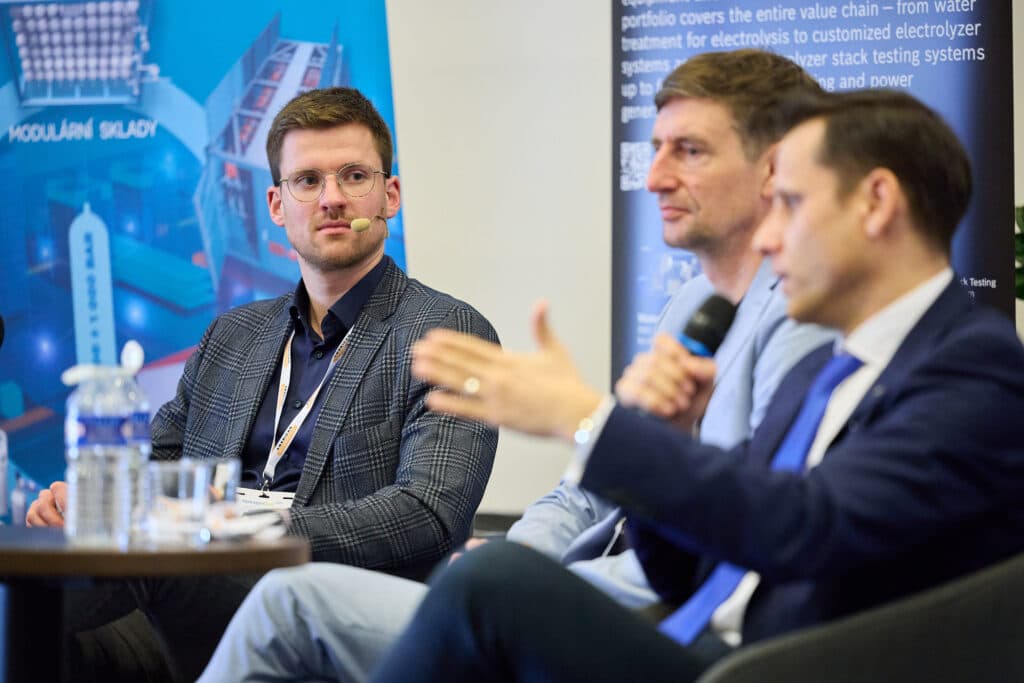
The HZwo Association was founded in 2017 as a group of several automotive industry players interested in developing hydrogen applications. Today, it is a certified European cluster dedicated to hydrogen technologies. HZwo technical adviser Frederik Wewetzer spoke about the use of hydrogen in the energy system and the automotive industry, as well as the support HZwo can provide in developing the hydrogen economy.
At the national level, the HZwo Association is responsible for the national Hydrogen Innovation Centre HIC, funded by the Federal Minister of Transport, and one of eleven transformation centres announced by the Federal Ministry for Economic Affairs. The Free State of Saxony has also tasked the association with meeting the goals of the Saxon Hydrogen Strategy.
Frederik Wewetzer, technical adviser at the Saxon Hydrogen Competence Centre, which serves as the central point of contact for citizens, local authorities, the media, industry and academia on all matters relating to hydrogen production, transport, storage and applications, spoke about how HZwo approaches the tasks entrusted to it.
Although HZwo is based in Germany and focuses primarily on tasks related to the German hydrogen value chain, the association has members from across Europe. How did you get to this point?
In 2017, just a handful of industry players founded the association together with Chemnitz University of Technology and the Fraunhofer Institute for Machine Tools and Forming Technology. You can see this in the name too: HZwo is a colloquial way of saying “H2” in our region. We didn’t intend to grow this far.
But I think the value chains we have focused on here in Chemnitz and the surrounding areas matter across Europe and the world, because the automotive industry is a huge economic force.
How can the association help its members?
I think there are three main benefits. The first is easy access, short communication channels and direct communication. The second is that we can raise their profile. Many companies, especially in the automotive industry, are experts in a very narrow area of technology. But they find it difficult to share their expertise and sometimes to find partners. That’s where we can help. Through our network of general partners, we organise many events, from small workshops to international scientific conferences, that help these companies network.
The third is that we can also provide real physical and digital platforms for their projects.
When I worked in the automotive supply industry, HZwo approached us with an idea for a project involving an intelligent clamping system for a fuel cell stack. I was assigned to work on the project, and we quickly reached the point where we needed some basic data to actually engineer and create a layout for the system. But it’s quite difficult to get hold of fuel cells, for example, unless you’re Ballard, EKPO or ElringKlinger—which you need if you want to do some serious development on your own. That’s where an open-source stack really comes in handy.
The entire value chain
You have been tasked with helping to meet the goals of the Saxon Hydrogen Strategy and the German Hydrogen Strategy. What have you achieved so far, and what are the next steps?
One of the major goals was to have the entire value chain for hydrogen technology products represented within the association. We’ve achieved that to some extent, and it’s reflected in the membership structure. But there are still some technologies and gaps where we can—and are trying to—grow.
On a really personal level, I think we need to improve the density of our refuelling stations, especially in Germany. We have two hydrogen cars in our fleet, and it takes a lot of planning to make sure your route passes a hydrogen refuelling station every 500 km. Especially since there isn’t one yet in our home city of Chemnitz.
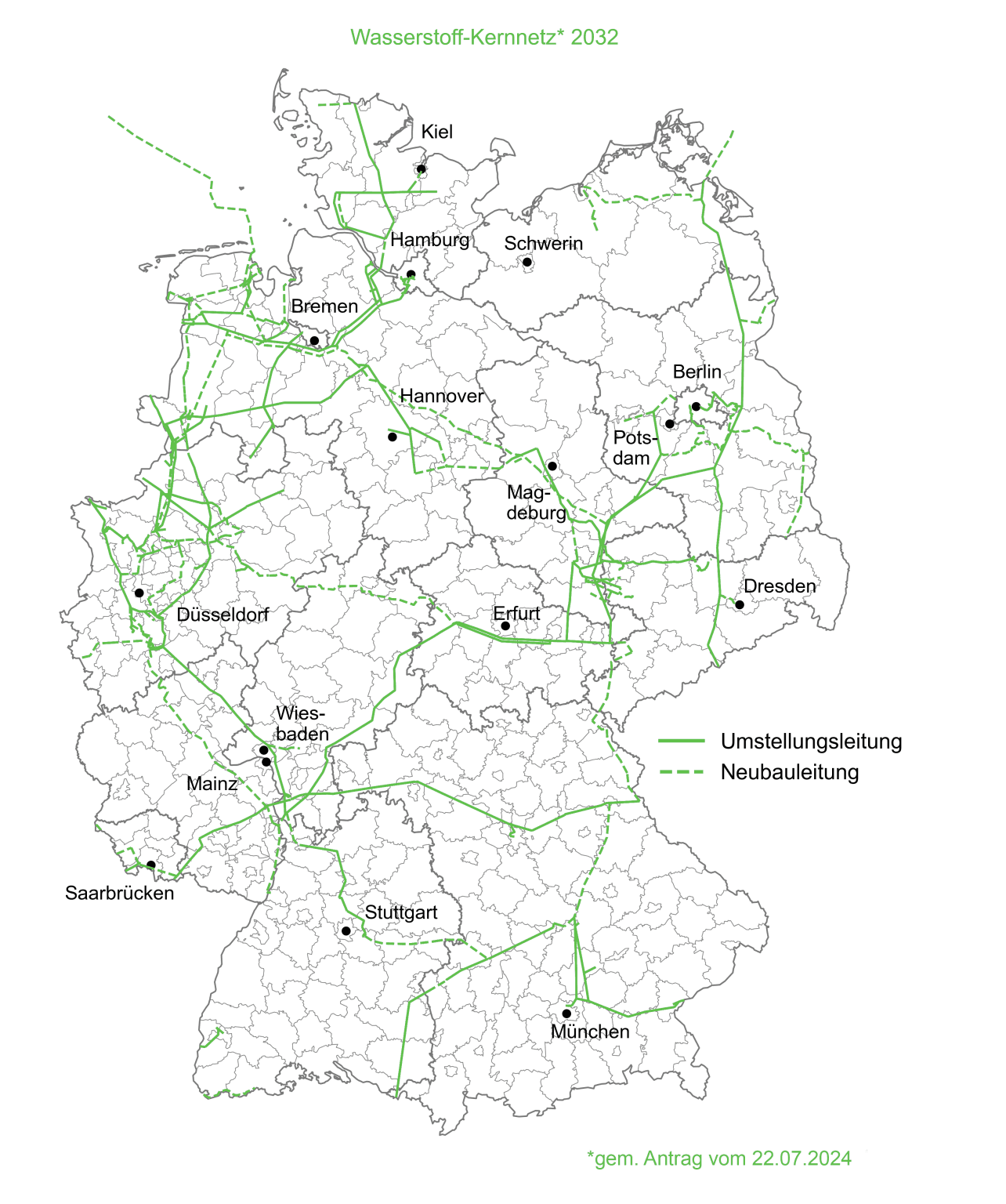
On a larger scale, Germany is developing the “Kernnetz”, essentially our German hydrogen backbone. There is a lot of discussion and consultation currently under way about how to fund it and find the right balance between subsidising its development and making it an investment that generates a return in its own right.
HZwo is involved in this strategic development—not only from the perspective of the automotive industry, which will consume hydrogen, but also from the perspective of hydrogen supply. Although the association wasn’t originally set up to take on these kinds of tasks, I see it as a positive sign that we have grown beyond our role of enabling research and development of technologies, which remains important and still accounts for the vast majority of our activities.
It sounds as though you’re moving from the role of a hydrogen valley to helping develop the broader hydrogen infrastructure. On the other hand, the hydrogen backbone infrastructure approved by the Federal Network Agency and published by FNB Gas is not very extensive in Saxony by 2030.
It’s not a sensitive issue, but it is a topic for discussion in general. The planning of this key hydrogen infrastructure was based on potential industrial demand. Regions with potentially high hydrogen consumption, such as steelworks or large chemical plants, were the original target hubs when the Kernnetz was planned. In Saxony, near Dresden, we have one of these areas with huge potential demand for hydrogen, which is connected to the main hydrogen network: Industriebogen Meißen.
There are also businesses around Chemnitz with significant potential to use hydrogen.
Our region in south-western Saxony consists mainly of small and medium-sized businesses. But when you add up all the energy they consume, the demand is substantial.
The problem arises when you want to collect data, which is something HZwo has worked on with our local chambers of commerce. The small businesses we ask have other things to worry about than their energy consumption after 2045. Many of them are struggling just to survive.
I naively thought at first that if a pipeline runs about 30 to 40 km from Chemnitz, it wouldn’t be a problem to extend it to us. The Kernnetz does focus primarily on existing infrastructure—around 60% of the pipelines will be converted from existing gas pipelines—but some new pipelines still need to be built. Why not to us? But then I found out that even building the outlet point and laying the connection would cost around one million euros. And even if it cut emissions to zero without reducing comfort, it would be expensive; it has to be done at a cost consumers are willing to pay.
So we have brought together a kind of “alliance of the willing” and are talking to local network operators, who can connect the Kernnetz to local customers.
Hydrogen is not the solution to all our energy problems, but it is for some
About five years ago, it seemed that hydrogen would be used in almost every area of the economy—heating, power generation, transport, industrial energy and non-energy fuel applications. How do you see things now?
What I liked about the situation was that I can’t remember another vision so positive that it translated into action, as happened with hydrogen technology. I’m not saying it was entirely realistic, but having a concrete goal in mind was a good thing for a lot of people, which is probably why enthusiasm for hydrogen grew so much.
Now we’re in a more realistic phase, thanks to all the work done on those “crazy” ideas, and we can clearly see the challenges that need to be overcome if we want to make the vision a reality.
On the other hand, our chairman, Professor von Unwerth, has long made it clear in his presentations and speeches that hydrogen will by no means be the only solution to all our energy problems. That is the approach we take at HZwo. We see hydrogen as an important piece of the puzzle.
Where does Germany stand now in terms of hydrogen uptake?
We’re still at the very beginning. We can see that in hydrogen applications in the automotive sector, which are a good starting point for the technology because they are not as price-sensitive as, for example, the energy sector. There are cars you can buy today if you want to. The same goes for trains. You can order a hydrogen fuel cell truck from our partners at FES in Zwickau and have it in eight to nine months. We’re moving forward. So I’d say we’re perhaps two-thirds of the way through the early-adopter phase.
Would you say the market is impatient?
Definitely, and understandably so. We are trying to decarbonise several sectors in parallel. That is a huge challenge. At conferences, when we talk to people who don’t always work on this topic every day, they often tell us that enthusiasm for hydrogen has faded. I don’t think so. As I see it, we are now at the stage where we need to ensure that hydrogen reaches wider practical use. When we talk to our members or to specialists at trade fairs, we see products that are no longer just PowerPoint slides or demo versions. They are physical products you can touch and use.
Cleaning up our mess
Since we’ve touched on decarbonisation, is it possible to decarbonise the German economy by 2045?
Of course. I’m an optimist. We’re doing everything we can. At the same time, I feel it’s our responsibility as privileged Europeans who have made the most mess. The general question for me is how to address this through global value chains. Once we reach the goal, how will it affect other parts of the planet?
To achieve the goals, the entire energy system needs to change. What requirements does decarbonisation place on the system?
I think the system will still depend heavily on trade, imports and exports. And that’s an idea we work with at HZwo. Some regions are better suited to producing renewable energy—and therefore hydrogen—than Central Europe. To make the most of this, we need to find our “piece of the pie” in the energy transition. From our perspective, that piece is exporting technologies and know-how, and manufacturing machinery that will ultimately support the energy transition.
From the customer’s perspective, it would be best if the change went unnoticed. That’s obviously challenging, if only because of the costs, but it would help with public acceptance overall. We see this during test drives. Drivers first ask whether it’s dangerous. 700 bar in a tank sounds dangerous. Then they start driving and see for themselves that it’s just a car. The car goes. And it’s as quiet as an electric car. Because it is an electric car, really. After that, they are more open to the technology.
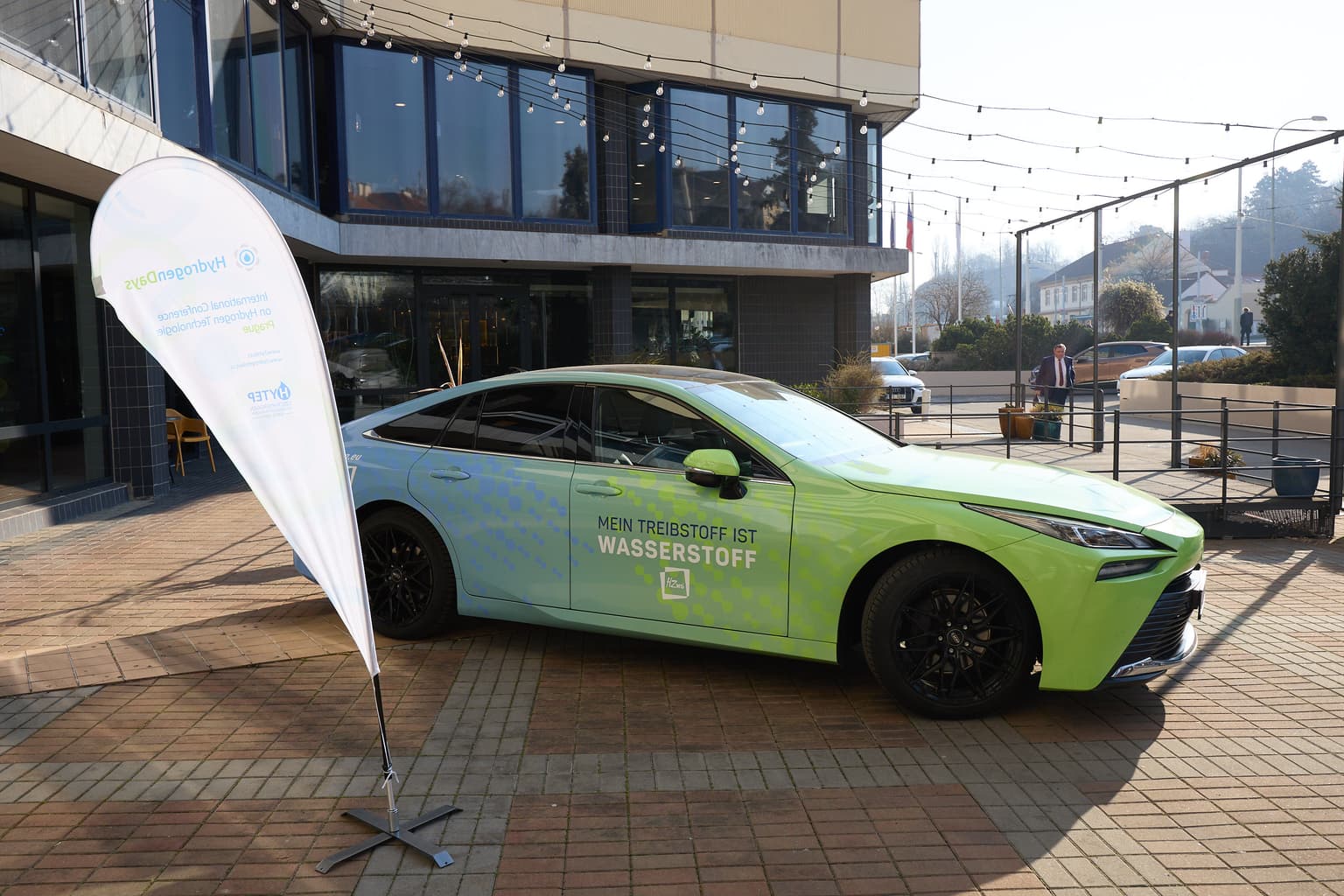
Did you drive to Prague in a hydrogen car for Hydrogen Days?
Of course. I also used the refuelling station in Prague, which worked perfectly. I was just a little shocked by the price. 500 crowns per kilogram is a lot compared with refuelling in Dresden. There, a kilo of renewable “green” hydrogen costs around €13, which isn’t too bad even compared with diesel under the future EU ETS 2.
The difference between Czech and German prices is one of the reasons why, as an association, we are pushing so hard for cross-border cooperation with our neighbours in the Czech Republic. We share a region and, with it, the same general reality. Neither country will be able to achieve energy autonomy on its own; a well-connected market can help provide it.
Let’s wrap up with one final question. If you had the opportunity to build the perfect energy system from scratch, how would you approach it?
I’m afraid I’m not very original or creative in this respect. A 100% renewable system would be a given, designed to allow large-scale waste recycling and achieve as much circularity as possible. The system would be as closed-loop as possible. And it would use different energy carriers, including hydrogen, for applications suited to their specific needs.
Translation disclaimer
This article is a machine translation of the Czech original and has not yet been fully reviewed. In case of any doubt, please refer to the Czech version.