16 October 2026, 06:38
Loading...
Germany to scrap mandatory gas storage filling targets; national reserve planned
Adam Sosna
16 October 2026, 06:38
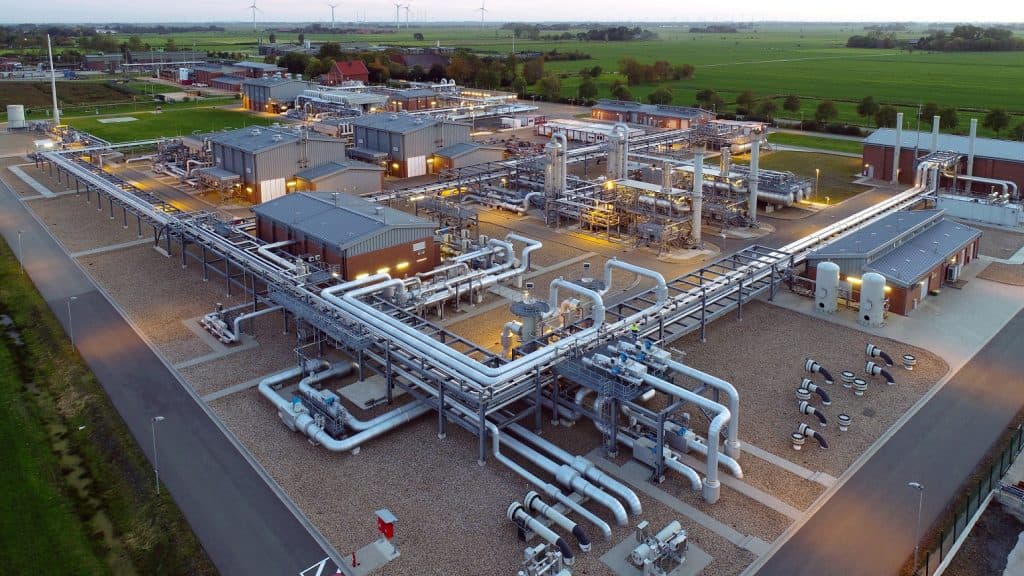
According to a proposal by the Federal Ministry for Economic Affairs and Energy, Germany plans to scrap its existing mandatory gas storage filling targets by the end of March 2027. They will be replaced by a newly created national strategic gas reserve. The reserve is intended solely as a safeguard in the event of a supply crisis and is designed to cover around 30 days of consumption. Industry representatives welcome the proposal but criticise its management and planned financing through a new levy.
According to a leaked draft law seen by Clean Energy Wire, Germany’s Federal Ministry for Economic Affairs and Energy plans to scrap the existing mandatory gas storage filling targets by March 2027. They are to be replaced by a strategic national natural gas reserve, which will serve solely as a tool for responding to crisis situations.
Under the current rules, German storage facilities must be around 70% full by November and 30% full by February 2027. These targets are to be abolished. They will be replaced by a reserve intended to mitigate the effects of a crisis in the event of a supply disruption and delay or entirely prevent state intervention in the market.
According to the proposal, the reserve is intended to cover around 30 days of gas supplies in the event of a failure of the regular supply infrastructure. It is to be built up gradually over several years so as not to burden routine storage filling. Although the document refers to a benchmark of 24 terawatt-hours, the proposal does not set a mandatory reserve volume.
Industry criticises management and financing of the reserve
According to the proposal, Trading Hub Europe (THE), the operator of Germany’s gas market area, would be responsible for managing the reserve and purchasing the gas. It would buy gas based on its own risk assessment. The Federal Network Agency (BNetzA) would oversee the entire system and any release of gas onto the market.
The Association of German Gas Storage System Operators (INES) is calling for the federal parliament, alongside THE, to decide on key parameters of the reserve. INES says parliament should determine, for example, the reserve’s volume, the types of crises it is intended to address and the rules governing its use.
Financing is also a subject of criticism. The proposal envisages introducing an entirely new levy from October 2027. Estimates put the cost of building up the reserve at 247 to 308 million euros per year during the first ten years, equivalent to an additional charge of around 0.29 to 0.36 euros per megawatt-hour.
The German Association of the Energy and Water Industries (BDEW) proposes financing the reserve from the state budget. It argues that the reserve is a public good and should not be paid for exclusively by market participants.
Translation disclaimer
This article is a machine translation of the Czech original and has not yet been fully reviewed. In case of any doubt, please refer to the Czech version.
Sdílejte článek prostřednictvím:
You might also like

15 October 2026, 14:19
15 October 2026, 13:30
15 October 2026, 10:51
15 October 2026, 10:01