25 September 2026, 09:51
Loading...
Now is the ideal time to buy solar PV, says Martin Hodek

Martin Voříšek
13 November 2024, 17:05
Like the energy sector as a whole since 2021, the residential solar PV sector has been on a rollercoaster since the energy crisis. The energy crisis substantially increased the number of new residential installations. As a result, the installed capacity of solar power plants connected to the Czech grid began to rise after years of stagnation. However, this trend is gradually fading.
Nevertheless, conditions for purchasing a residential solar power system may be ideal right now. According to Martin Hodek of Huawei Technologies, solar panel prices are currently very low, while the market is also seeing a growing number of top-tier technology suppliers.
This applies not only to panels themselves, but also to solar PV inverters. We discussed current trends in this area, why a longer warranty period is important for an inverter, the specifics of the Czech market and other topics with Martin Hodek.
Martin Hodek, an energy specialist and technical design expert, has worked in the renewable energy sector for many years. His expertise stems both from cooperation with associations, universities and research institutions, and from direct experience in designing and installing solar power plants and battery systems. A number of sustainable projects thus bear his signature, whether figuratively or literally. In the residential systems segment, he focuses primarily on raising awareness, installation safety and refining the market environment.
Solar power plants in Czechia grew mainly on the roofs of family homes last year. While solar power plants are still growing most on rooftops this year, they are now much more concentrated on the roofs of companies and industrial buildings. What trends are you seeing in the market?
That is exactly as you say, and the data from the Solar Association confirm it. In the first half of this year, 484 MWp was connected, compared with 487 MWp in the first half of last year. Looking at the details, while installed capacity has not changed much year on year, residential installations now account for 224 MWp and commercial and industrial installations for 255 MWp. This is a significant shift from 2023, when 382 MWp was installed in residential systems and 105 MWp in industry in the first half of the year.
What factors have affected interest in solar power plants in the residential sector?
The decline is completely clear, and it is no surprise. In previous years, demand was stimulated by generous subsidy support, the energy crisis and the perception of solar PV as something new and attractive that has a positive impact on electricity bills. At the same time, households had the opportunity to acquire their own renewable energy source, bringing a certain degree of independence. Of course, this still applies today, but as the market has calmed, the initial wave of interest has also subsided.
It is slightly paradoxical. The systems available on the market today have a range of more advanced features, both in terms of system safety and higher efficiency. The market cooling has also led to falling prices. We are now effectively at the bottom of the price cycle, especially for solar panels, as the frenzy associated with the energy crisis has faded. Those who waited to install solar PV now have the opportunity to invest in a significantly more advanced solution for a reasonable price, still with subsidy support from the State Environmental Fund.
Have you observed any changes in the preferences of residential customers?
I see several changes. Although the residential market boom lasted barely two years, general awareness of solar PV systems is much higher today than it was before. Customers now have a better idea of what they require, what to watch out for and, for example, how to arrange panels on a roof.
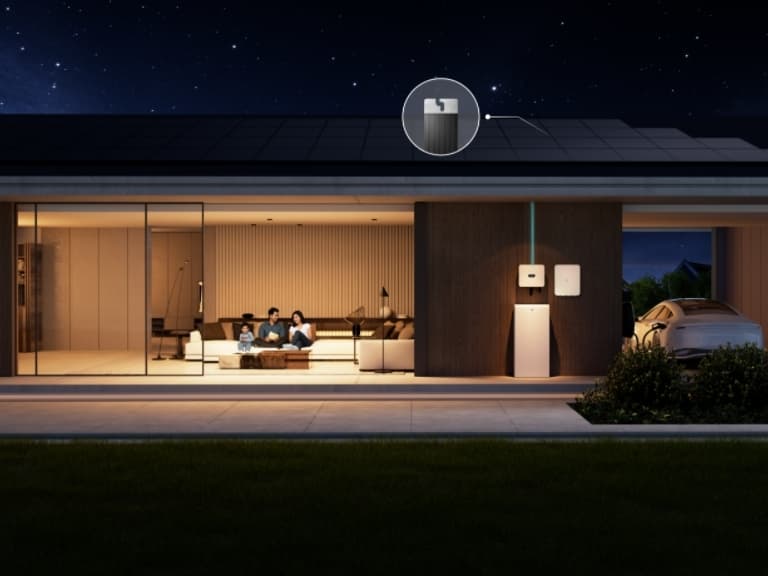
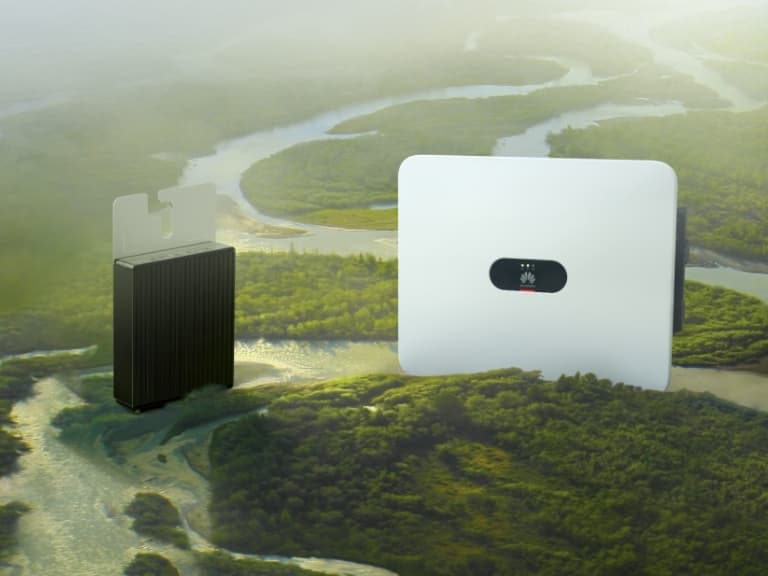
Source: Huawei Technologies
The trend in recent years was to maximise solar power production at all costs, which led end customers to seek to install solar panels primarily on south-facing sections of their roofs.
What disadvantage can south-facing orientation, which is essentially the basic orientation, have?
This can be illustrated with a simple example. Many solar power plant operators are now surprised that, although they have the maximum possible generation, their production peak occurs around noon, when they have little use for solar electricity.
The logical idea is to sell electricity to the grid at noon. However, this has a significant catch, as all solar PV owners also want to feed electricity into the grid. And we are not talking only about households, but also about ground-mounted installations with megawatts of installed capacity. They all want to sell electricity precisely when solar irradiation is sufficient. Yet correspondingly, nobody wants to pay for surplus electricity. As a result, feeding it into the grid can even become costly, as electricity prices may be negative.
So what is the ideal way to address this situation?
The solution to the problem described is the current trend, which I welcome, of focusing on maximum self-consumption. The arrangement of panels on the roof reflects this, most commonly with west- and east-facing orientations.
Such an installation will not generate as much energy as a south-facing one, but its generation curve is much flatter. This means that the solar PV system will start supplying electricity in the morning (earlier than a south-facing system) and continue until late afternoon (again, longer than a south-facing system).
As a result, you have a much better opportunity to use solar electricity for your own consumption (generation begins in the morning before people leave for work and continues until the evening when they return). This then delivers savings on electricity bills, which should be the primary goal of installing solar PV. In other words, to save money rather than make money. Of course, it is beneficial if smart control allows you to trade solar PV surpluses on the market, but that should be a bonus, not the primary objective. After all, those who made it their goal in recent years probably regret it today.
You mentioned that solar PV system technology is now significantly more advanced. Has there really been such a technological leap in the past two years?
Yes and no. Czechia has a unique situation: phase-by-phase metering, which determines how electricity taken from and fed into the grid is assessed and billed. We are almost the only country in Europe where this system is used. This also leads to a certain isolation of the local market in terms of solar PV technology. Standard solar inverters, the so-called symmetrical ones, are not ideal for installation in Czechia, and a so-called asymmetrical model is needed.
From the perspective of a manufacturer deciding whether to serve the European market with a single inverter model or develop a non-standard product for the Czech market, it is understandable that, until recently, the Czech market was dominated by inverters from only a few brands, mainly smaller Chinese suppliers.
Is there any prospect that this situation will change?
This year has brought a significant shift. A whole range of asymmetrical inverters from various manufacturers has appeared on the local market, ranging from unknown brands of questionable quality, albeit with attractive prices, to technologically highly advanced brands from both Europe and Asia. One of these is Huawei Technologies, which has been the world's largest supplier of solar inverters for several consecutive years.
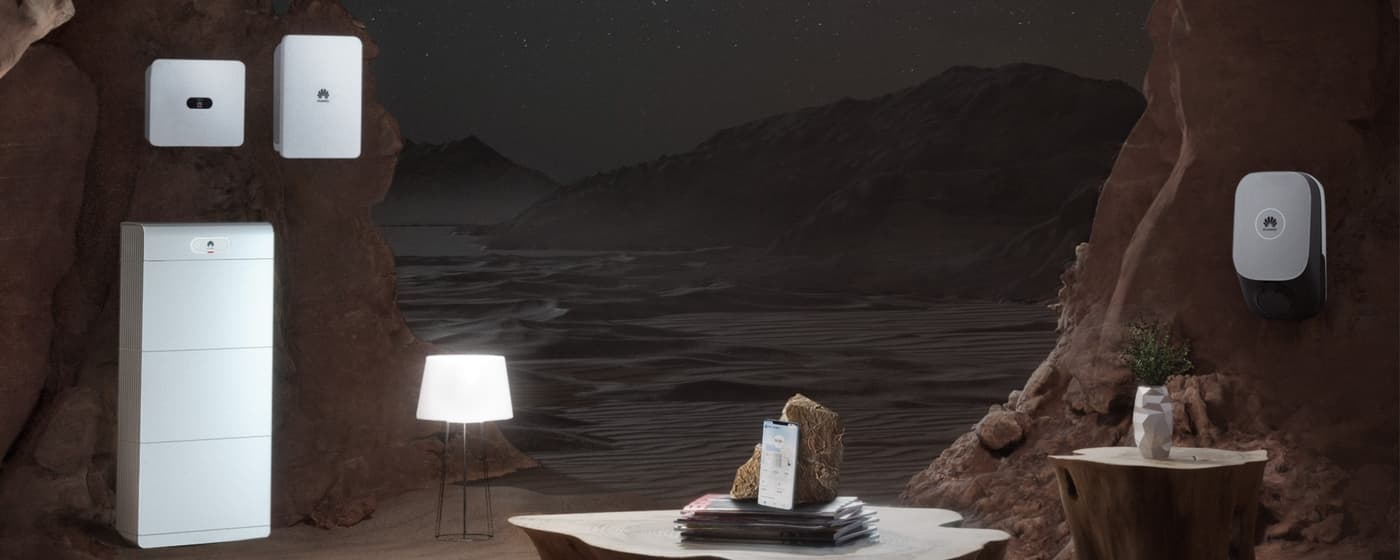
Source: Huawei Technologies
In this respect, there has not actually been a fundamental technological leap in terms of development, and manufacturers we are accustomed to seeing in the Czech residential and commercial market continue to offer essentially the same solutions, apart from a few cosmetic modifications.
So do I understand correctly that the main difference is the entry of new companies into the market, including Huawei Technologies?
Exactly. The difference is the entry into the Czech market of more advanced brands that have long been known in neighbouring European countries. They offer technologies that genuinely change the rules of the game, and because they also want to win market share, they are attractive on price as well.
In this respect, now may be the best opportunity to invest in solar PV. Solar panel prices are at a historic low and are being sold below production costs, so no further decline can be expected. A number of first-rate manufacturers are also entering the Czech market, attracting customers not only with technology but also with prices as part of their launch promotions. Winter is approaching, when demand for solar PV generally falls, and installation companies reduce their prices as a result. And what about subsidies? They will most likely only decline in the future.
Following on from the technology topic discussed, what are the most important technical features that residential users should focus on when choosing an inverter for their solar system?
Starting from the basics, it should be an inverter supporting asymmetry. With asymmetry, or “unbalanced output” or “asymmetrical output”, as manufacturers predominantly call this feature, it is necessary to know the “degree of asymmetry”, meaning how asymmetrically the inverter can operate.
Source: Huawei Technologies
Solutions with 100% asymmetry are commonly available on the market, meaning that the inverter can supply a maximum of 100% of phase power to one phase. For example, a 12 kW inverter supplies 12 kW to three phases, so the power per phase is 12/3=4 kW. At 100% asymmetry, such an inverter could supply 4 kW to one phase, while supplying nothing, or perhaps only 2 kW, to the other two. Such differences in loads between phases are entirely common in households.
What are the advantages of asymmetrical over symmetrical inverters for customers?
The symmetrical inverters mentioned cannot account for these differences. This leads to inefficiency in using solar electricity and only limited savings.
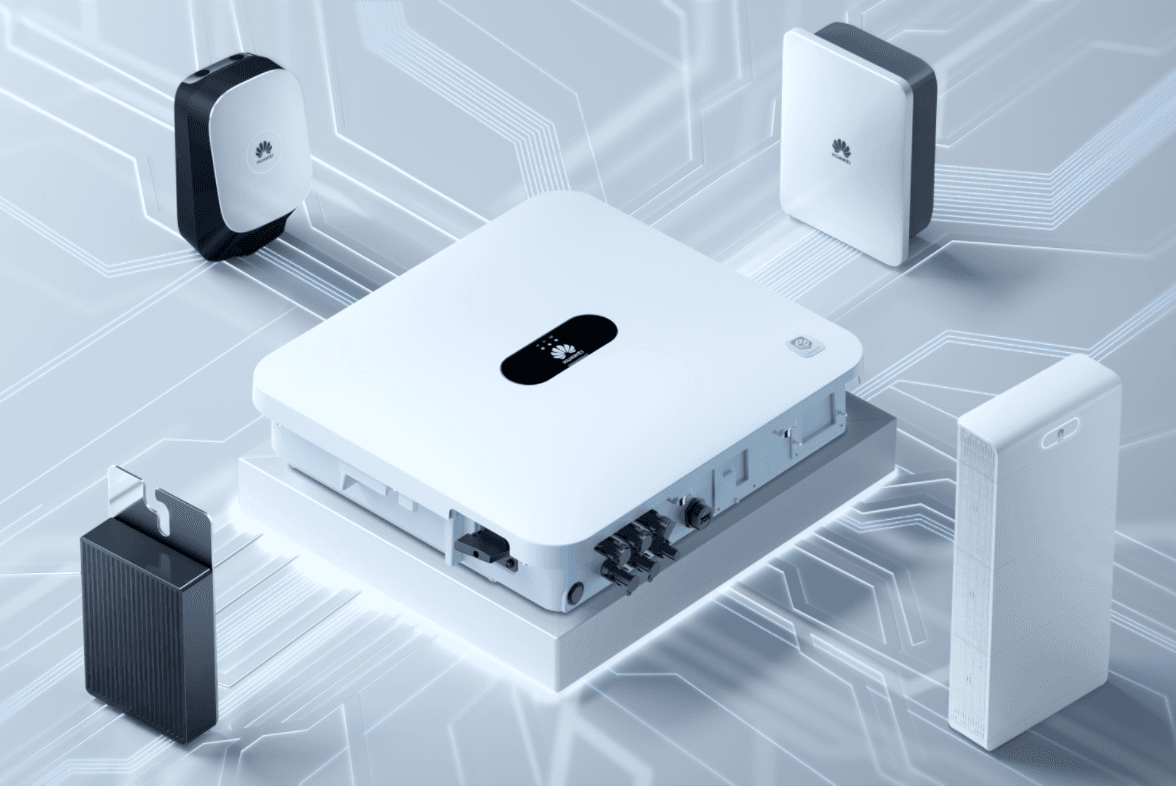
When I mentioned that more advanced products are coming onto the market, Huawei Technologies' SUN2000-5/6/8/10/12K-MAP0 or SUN5000-8/12K-MAP0 inverter achieves a degree of asymmetry of 150%. In the case of the aforementioned 12 kW inverter with phase power of 4 kW, this would mean maximum supply of 6 kW (=4k W * 1,5) on one phase.
Simply put, the higher the inverter's degree of asymmetry, the better it can adapt to fluctuations and demand peaks at the connection point, and the more efficiently it can cover consumption. This ultimately means greater energy savings and better use of solar electricity.
What are the other advantages?
Another parameter is the overload capacity, indicating how much an inverter can be overloaded for a short time. This is a key parameter especially for systems planned with a battery and as a backup power source. If, for example, more than 10 kW is connected, even briefly, to a 10 kW inverter in off-grid mode (i.e. when there is a grid outage), it will disconnect as a result of its protection systems. So you will end up in the dark just like everyone else.
This can of course be prevented by using appliances sensibly when the solar PV system is in off-grid mode. To demonstrate overload capacity using the SUN2000-5/6/8/10/12K-MAP0 or SUN5000-8/12K-MAP0 inverters, they can operate continuously at 110% load, at up to 150% load for 5min, and for 10 seconds at up to 200% overload. In terms of user comfort, you therefore do not need to worry about overloading the inverter by carelessly switching on an appliance.
You are talking about overloading the inverter. How will this affect its lifespan?
The question of whether such operation will adversely affect the inverter's lifespan naturally arises. This is entirely the right consideration, which manufacturers address by providing warranty periods.
The standard warranty period is now 10 years for almost all manufacturers known on the Czech market from earlier years. Here again, the newly introduced inverters stand out: for example, our Huawei SUN5000-8/12K-MAP0 and its more powerful SUN5000-17/25K-MB0 version come with a standard 15-year warranty, with the option to extend it to 20 years at any time during the basic warranty period. The same applies to compatible LUNA2000-7/14/21-S1 batteries.
Source: Huawei Technologies
In this respect, it is also necessary to consider that a warranty is valid only for as long as there is someone against whom it can be claimed. Interestingly, 91% of solar inverter brands have disappeared from the market since 2008. It is therefore also necessary to look for a reliable company that you can count on in 10, 15 or 20 years.
If the standard warranty period is 10 years, how can some manufacturers provide a warranty that is up to twice as long?
When a manufacturer provides an above-standard warranty, it is often linked to the quality of the product's design. Otherwise, the warranty would be very costly for the manufacturer. That is also why, for some brands on the market, extending the warranty costs almost as much as a new inverter.
In this respect, Huawei Technologies solar PV systems offer a robust design, with both inverter and battery featuring a metal enclosure, passive cooling and operating status indication via LED diodes. Looking at the details, the metal enclosure itself provides greater durability for both the inverter and battery while also enabling a better cooling effect. This makes it possible to use passive cooling; by the simple logic that “what is not there cannot break”, the absence of a fan is a step towards greater solution reliability.
We are nearing the end. What would you recommend now to households considering the purchase of their own solar PV system?
As we mentioned at the outset, the market cooling and the entry of new suppliers into Czechia offer a fairly unique opportunity to invest effectively in a residential solar PV system. However, the decision should be rational, in the form of a long-term investment.
As we outlined at the beginning, it should not be an impulsive installation aimed at making as much money as possible, but rather a considered step towards saving money while ensuring a certain level of electricity price stability and partial independence. No one can tell you today what the price of electricity will be in a few years, except that it will be higher. By contrast, the price of electricity from your own solar PV system represents a degree of price fixing for the next two decades.
When deciding between individual manufacturers and products, it is important in the long term to focus on quality, safety and, last but not least, ease of operation.
Translation disclaimer
This article is a machine translation of the Czech original and has not yet been fully reviewed. In case of any doubt, please refer to the Czech version.
Sdílejte článek prostřednictvím:
You might also like

24 September 2026, 11:23
24 September 2026, 10:30
24 September 2026, 06:56