22 September 2026, 14:20
Loading...
Vladimír Wagner: No point waiting for SMRs. We need new units at Czech Dukovany and Temelín as soon as possible
Milan Bechyně
28 January 2022, 13:11
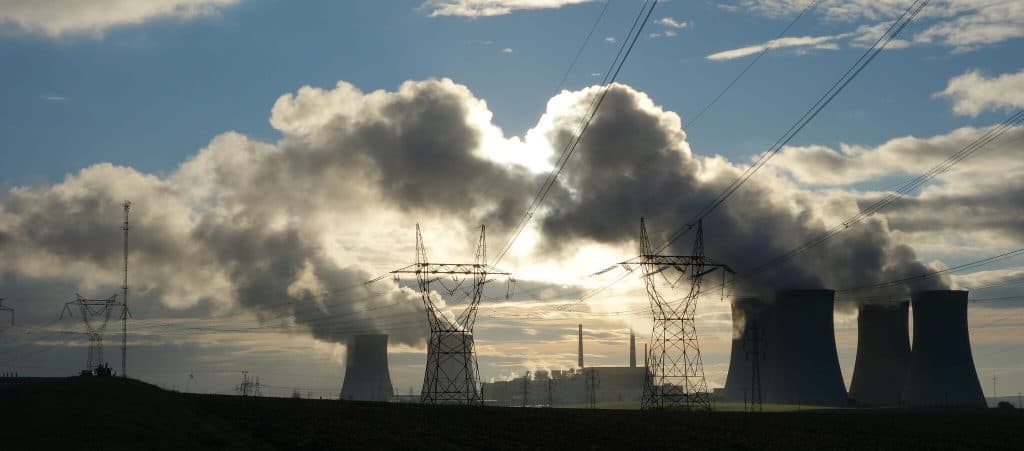
For the transition to low-emission energy to be effective, new units at Dukovany and Temelín must obtain construction permits before 2045. The proposed European taxonomy of sustainable investments therefore does not fundamentally restrict nuclear construction in Czechia.
The proposed European taxonomy of sustainable investments also includes conditions for the construction of new nuclear power plants and the operation of existing ones. How will the new conditions affect the construction and operation of nuclear facilities in Czechia? We asked nuclear physicist Vladimír Wagner.
According to Hospodářské noviny, the Czech response to the proposed taxonomy of sustainable investments includes a request to extend the operation of nuclear power plants beyond the deadlines proposed by the European Commission. How likely is the Commission to accept this proposal?
First, we need to clarify what the taxonomy actually means in practice. It is not a ban on particular energy sectors, such as nuclear energy or gas. It concerns rules for financing investments in these sources through subsidies. At the same time, in the form of recommendations—which can nevertheless be very strict in the European Union—it also concerns rules for the provision of loans and support by not only public but also private banks and other institutions. I would also like to point out that no taxonomy, legal rule or law is immutable. Nor is it true that declared commitments will necessarily be fulfilled. The only things that strictly apply and cannot be exceeded are the laws of nature, which limit the potential of individual technologies. Let us recall that Sweden voted in a referendum in the 1980s and enshrined in law the closure of all nuclear units by 2010. Yet it still makes intensive use of nuclear energy and is planning new units. It simply changed the laws approved earlier. It is hard to imagine that, in a situation where it becomes clear that we cannot do without nuclear power and gas, or even coal, and there is a threat of energy shortages and social decline, some taxonomy would stand in the way of using these sources.
Now to the specific wording of the taxonomy. It should be stressed that the cited time limits—2040 for operating Generation II reactors and 2045 for Generation III reactors under construction—are not limits on their operation or construction. They are not even a cut-off point for providing financing, in line with the taxonomy, for upgrades and the long-term operation of Generation II reactors or for the construction of Generation III reactors. The limits serve other purposes: they are intended to give investors certainty that, until then, their investments will be assessed as sustainable and in compliance with the current taxonomy.
So you do not regard the proposed deadlines as immutable?
The deadlines will not change, but they do not signify restrictions on or an end to the use of nuclear facilities. They merely mean that after these years, the taxonomy rules may change in order to support the best available nuclear technology. In the nuclear sector, sustainability is focused mainly on safety and dealing with spent fuel. It is therefore possible that, after 2040, Generation II reactors will be required to use advanced so-called accident-tolerant nuclear fuel. Western and Russian suppliers are beginning to test and offer these fuels, and within a few years they could become the safety and sustainability standard. There may also be a requirement to use a certain share of recycled fuels such as MOX and REMIX, precisely in connection with addressing the closure of the fuel cycle and reducing the amount of waste going underground. Similarly, the 2045 limit need not mean that construction of new Generation III units will not be supported. It may mean a change in the taxonomy so that they operate entirely on MOX or REMIX fuel and, together with Generation IV fast breeder reactor types, create conditions for closing the fuel cycle and reducing the volume of waste going to a permanent repository.
It is good that the Czech Republic expressed in its response the requirement that nuclear energy should under no circumstances be viewed as a transitional solution, but as an indispensable element of the transition to a low-emission mix that cannot do without it. On the other hand, as I have tried to show, the conditions set out in the taxonomy do not pose any critical problem for us. This is also because an efficient and financially affordable transition to a low-emission mix requires construction permits for two Generation III nuclear units at Dukovany and two at Temelín to be obtained before 2045. As for adoption, I believe that the combination of nuclear power, which France urgently needs, with natural gas, which Germany cannot do without, as well as the very demanding conditions and the large number of countries—especially large ones—needed to reject it, will lead to the adoption of this taxonomy. Of course, an unpleasant surprise due to growing ideological fanaticism cannot be ruled out. Given the very differing positions of individual European states, however, the willingness to make changes to the proposal will probably be limited.
Another condition is the construction of a permanent nuclear waste repository by 2050. Is this condition realistically achievable for the Czech Republic?
Even experts at SÚRAO (the Radioactive Waste Repository Authority), who are involved in preparing the permanent repository, say that meeting this condition is possible. It should be recalled that work on preparing this repository is under way here and progress has already been made. The number of sites has now been narrowed down to four, and the final one can be selected after more detailed geological surveys. We want to adopt the repository model and disposal method from Finland, which is so far the only country completing such a repository. And it should be noted that even Finland has not resolved the permanent disposal of nuclear waste from its entire nuclear sector. The Onkalo repository does not envisage disposal of spent nuclear fuel from the Hanhikivi plant; its disposal is planned elsewhere. In any event, compared with most countries that expect to use nuclear units in the future, the Czech Republic is not critically behind schedule. It can therefore achieve readiness and a realistic project for a repository by 2050 during the 2030s.
It should be said here that the taxonomy requirements somewhat contradict one another. On the one hand, they seek to push for closure of the fuel cycle and a reduction in the volume of nuclear waste; on the other, they require the rapid construction of a permanent repository. If the transition to repeated recycling and the most efficient possible use of nuclear fuel is successful, the need for a repository will shift significantly further into the future. This is also why completion before 2065 had not previously been envisaged here: there is simply no real need to rush. If the introduction of recycling and the use of recycled fuel is successful, this may be one of the conditions changed in the 2040s, with the requirement for a completed repository shifted further into the future in the taxonomy. On the other hand, it would do no harm to have a fully prepared project with all the necessary permits.
In 2008, the report of the so-called Pačes Commission was prepared, and in 2012 the second Pačes Commission, of which you were a member, was appointed. How do the conclusions of the two commissions differ regarding nuclear energy?
It should be recalled that when creating an energy mix, it is necessary to respect geographical conditions, population density, the nature of industry and the capabilities of individual available technologies. Technologies can of course develop and become more accessible, but geographical conditions and population density change only minimally. This is also why the proposals of both commissions for the Czech energy strategy were very similar and are reflected in the currently valid 2015 update of the State Energy Policy.
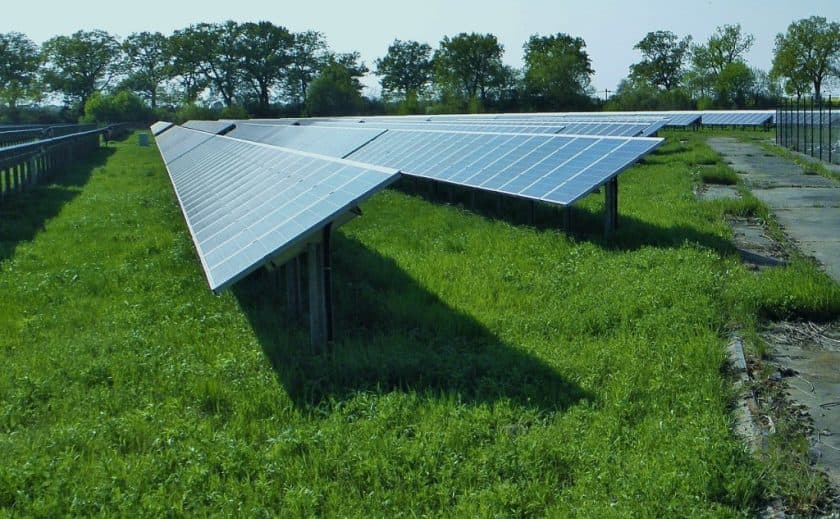
Our geographical conditions allow only limited supplies of renewable energy. We have no significant additional potential in hydropower. If food production and the environmental functions of the landscape are to be respected, the idea that we will massively produce biogas to replace coal-fired electricity is truly unrealistic. In wind energy, we have no sea coast. A large part of the territory with more suitable wind conditions is also environmentally valuable. We also have a relatively high population density, and the example of neighbouring Bavaria shows that building wind turbines in the face of strong opposition from residents is a major problem. Photovoltaics probably have the greatest potential, although we do not have ideal conditions for them either. Moreover, without solving storage, they can effectively supply only around 11% of electricity. In summer, when consumption is at its lowest, we must also deal with surpluses, while in winter, when consumption is highest, the sun supplies the least.
Both strategies therefore envisaged a combination of nuclear and renewable sources on the path towards a low-emission mix. They planned the gradual replacement of coal with nuclear and renewable sources, as well as an increase in the share of gas. It should be said that neither assumed such a rapid departure from coal use as is now being pushed in the European Union. Neither strategy stipulated strict shares for individual sources. They allowed for the possibility of exploiting potential technological breakthroughs in different sources.
Let us recall that, according to the 2015 update of the State Energy Policy, nuclear energy was to provide between 46% and 58% of electricity generation in 2040, renewables between 18% and 25%, coal still 11% to 21%, and natural gas between 5% and 15%. Since under current plans coal, and indeed natural gas, should not be used in 2040, electricity generation from nuclear and renewable sources should be even higher. Moreover, over the past decade we have implemented almost nothing in nuclear and renewable energy; we merely cancelled the tender for two units at Temelín. We really no longer have time for further hesitation and delays.
Small nuclear reactors are also being developed in Czechia. At what stage is this development here and around the world?
It should be stressed that one important word is missing from the question. We are talking about small modular reactors. That word represents an important condition. Small reactors were built in the past and are still being built now. Most current Generation III reactors began as low-capacity prototypes. The move to high capacities is driven primarily by economic reasons. Large units are much more cost-effective per unit of capacity than small ones. This may change in two cases. The first is if small reactors can be built modularly in factories in large numbers, which could significantly reduce their production costs. That is why the word modular is important. The second is the possibility of integrating small modular reactors into decentralised energy systems. There, by producing electricity and heat, they would replace today’s medium-sized power plants and heating plants. In this case, however, it is crucial that their licensing method corresponds to their different safety parameters and that they can be used near cities without the strict protection rules applied to today’s large units.
What, then, are the advantages of small modular reactors?
The problem with large units is that they involve a large one-off investment with long-term use and therefore a long payback period. The stability of the political and investment environment is crucial to their economics. Nuclear energy in particular, which can be affected by ideological political interventions such as those seen in Germany, faces a fundamental risk. The cost of capital, and thus the chosen investment financing model, is therefore critical. The construction cost of a large unit itself, calculated per unit of electricity generated, is fully competitive with any source. However, it can be significantly increased by a high cost of capital and insurance against investor risk under an inappropriately chosen financing model. Small modular reactors could help in this respect. As with photovoltaic and wind sources, even large power plants would be built gradually in stages.
Personally, I believe that even if small modular reactors are successfully introduced, large Generation III reactors, or possibly Generation IV reactors, will not disappear. This is especially true where we have space for a large unit, need high overall capacity and can secure a suitable financing model. And that is precisely the situation at Dukovany and Temelín. One prototype small modular reactor could perhaps be built there as well. But not to replace large units; rather, to use a specific model to establish the rules for licensing such units in a decentralised form here.
I would also note that there are two different kinds of small modular reactors. The first are more or less scaled-down versions of current reactors, and these are already entering operation—although, for economic reasons, mainly for specific purposes. An example is the Akademik Lomonosov floating nuclear power plant operating in the Siberian town of Pevek. Similar floating plants, as well as land-based plants using reactors originally developed for nuclear icebreakers, are to be deployed widely in Siberia. Work is under way on a number of other similar units. They are still only on paper and under licensing review, but in the case of the NuScale reactor, for example, the first prototypes should appear in the early 2030s.
The second direction involves highly innovative concepts, mostly based on one of the Generation IV reactor models. Most of them are expected to have very long fuel burnup periods and to be delivered to the place of use in compact form, somewhat like batteries. They would operate there for years, after which the whole unit would be replaced by another module and transported to a central facility for refuelling. They can be expected to become available much later. However, there is an exception here too. Last year, China’s small modular Generation IV helium-cooled high-temperature reactor, HTR-PM, entered operation.
The Czech Republic is seeking to cooperate with several foreign companies developing small modular reactors so that it is ready to use them, or even participate in their production, once they enter operation. Four projects are also under way directly in Czechia, though these too cannot do without international cooperation. Two are based on current technologies and envisage the use of VVER reactor fuel assemblies. The first is the David system by Witkowitz. The second is Teplátor, designed at the Czech Technical University; however, this is not for electricity generation but a heat source for heating. These could hypothetically be available sooner because they seek to use existing, already known technologies and components as much as possible. The other two are advanced small modular reactor projects being developed at ÚJV a.s. in Řež. The first is EnergyWell, which uses molten salts for cooling, and the second is the helium-cooled fast reactor HeFASTo. It should be stressed, however, that even building a prototype of just one of them would be a huge success. On the other hand, these projects can be a major source of experience for our students, scientists, engineers and companies.
In conclusion, I would stress once again that the first small modular reactor prototypes will arrive at the turn of the 2020s and 2030s. It will therefore not be possible to choose from commercial offerings before the 2030s. It will then take further years before it becomes clear whether serial production of these reactors really gives them an economic advantage. There is therefore no point in considering them as a replacement for large units at Dukovany and Temelín.
The proposed taxonomy also refers to Generation III and IV reactors. Could you explain how the two generations differ? And are Generation IV reactors being considered for small reactors?
Here, too, it should be explained that the taxonomy is not consistent or scientifically and technologically correct in this respect. Generation III reactors emerged through the evolution of Generation II reactors. They are therefore conventional reactors using moderated neutrons, predominantly light-water pressurised water or boiling water reactors, or reactors moderated by heavy water. Generation IV reactor concepts are very different and should contribute both to the efficient use of uranium and thorium and to closing the fuel cycle and reducing the amount of nuclear waste. That is why most of the six proposed concepts are fast reactors. Sodium-cooled fast reactors are probably the furthest advanced: the BN600 and BN800 at Russia’s Beloyarsk plant commercially supply electricity. Based on experience with them, the commercial BN1200 sodium reactor is being prepared. China has begun building the first CFR-600 units of this type, which should commercially supply electricity and serve as prototypes for commercial units. A prototype of such a unit will also start up in India this year. Russia also began building a prototype BREST-OD-300 lead-cooled fast reactor last year. These types of reactors can operate in breeder mode, in which they can produce more plutonium-239 from uranium-238 than they consume. They can thus produce fuel not only for themselves but also for conventional Generation III reactors. In a different configuration, they can also very effectively burn recycled plutonium and transuranic elements.
The second direction addressed by some of the concepts is the production of industrial heat and highly efficient hydrogen production. These are high-temperature reactors. A typical example is a gas-cooled, for instance helium-cooled, high-temperature reactor. It can be a fast reactor or use carbon to moderate neutrons. And I have already mentioned the Chinese carbon-moderated, helium-cooled HTR-PM small modular reactor. Generation IV reactors are advanced small modular reactor projects.
As I have already said, further specification of the taxonomy for new units after 2045 need not mean that all new units supported by the taxonomy will then be only Generation IV reactors. It may involve a combination of Generation IV fast breeder reactors and Generation III reactors using recycled fuel.
There is currently broad political agreement among both the government and opposition on launching a tender for a new unit at Dukovany NPP. In the current situation, do you consider it sensible to start preparing two units at Temelín as well, or would it be better to wait for small reactors?
I have already said that, in my view, it is not only sensible but, if we want to achieve a low-emission mix, even necessary to start preparing and then building two Generation III units at Temelín as soon as possible. There is no point in waiting for small modular reactors. Nuclear opponents often say that one unit at Dukovany will not solve the energy issue. That is true. But if it is completed in 2036 and the old Dukovany units operate for 60 years, that is until the second half of the 2040s, it can replace part of the coal-fired capacity for ten years. At the same time, the two Temelín units could then be nearing completion. If someone claims that no more nuclear units should be built here and everything will be replaced purely by renewables, then these must also replace the retiring nuclear capacity—Dukovany by 2047 at the latest. If coal-fired sources supplied 38% of our electricity last year, nuclear 37%, renewables 14% and natural gas 11%, the notion that we can easily replace coal and nuclear sources with renewables does not seem very realistic to me.
Is a nuclear-free energy mix realistic for our country?
I do not share the view presented by some people, including here on TZB-info, that the Czech Republic’s only option is to follow Germany and build renewables alone. I do not believe that in such a case the Czech Republic could ensure stable, secure and socially sustainable electricity supplies.
Germany believes it can resolve its energy sector primarily with large wind farms, especially in the north, and hydrogen for storage. It plans to multiply the installed capacity of both wind and solar power. Onshore, residents are increasingly no longer accepting large numbers of turbines, which is why a large share of new turbines should be offshore. However, experts in Germany also point out that even full use of the potential areas off the German coast will not be sufficient to supply all the energy needed. In addition, a large amount of extra-high-voltage transmission infrastructure must be built and, under the new strategy, hydrogen pipelines as well. The question is how quickly, and whether at all, it will be possible to overcome public opposition to the necessary safety corridors for these energy highways.
Here, proponents of a purely renewable mix envisage solving our energy sector with photovoltaics and hydrogen. Yet even Germany does not assume it will be able to generate the necessary energy using photovoltaics. Until storage is resolved, copying the German strategy will carry one very fundamental problem. During windy and sunny periods, the entire region will have electricity surpluses with nowhere to use them. Conversely, during a winter inversion, which can last for many days, there will be shortages everywhere. This is also why it makes sense to build nuclear facilities capable of supplying electricity at such times. We can see this during the current winter as well, when Germany quite often faces situations in which its enormous installed wind capacity supplies almost nothing, and any number of newly installed wind turbines will not improve that.
How do you see the potential use of hydrogen to replace natural gas and store electrical energy?
In my view, the belief of some people in the rapid deployment of hydrogen for seasonal storage is seriously misguided. Most of the necessary technologies are still in development, prototype or pilot stages. We have minimal knowledge of the economic aspects so far. The idea that it will soon be implemented merely because Germany, the economically strongest country, has decided to do so is not realistic in my view.
If we build nuclear units and Germany nevertheless succeeds in deploying hydrogen technologies, nuclear units can be used to produce hydrogen just as well as renewable sources, and more efficiently by using the heat they produce. Likewise, new nuclear units do not prevent us from participating in the development and deployment of hydrogen technologies. On the contrary, secure supplies of cheap electricity from them will help us produce hydrogen and ensure the necessary competitiveness.
But the debate about the share of nuclear energy in the Czech energy mix is not new?
Yes, I have been debating anti-nuclear campaigners since the 1990s. At that time, they sought to halt construction of the first two Temelín units. They used exactly the same arguments as today. Construction would not be completed and, if it was, it would be delayed and become more expensive. Moreover, electricity from them would be uneconomic and ever-cheaper renewables would overwhelm it. The opposite is true, and today at least some of them acknowledge that without at least two operating Temelín units, our path to a low-emission mix would be in far deeper trouble.
The same people and others like them campaigned intensively against new nuclear units at the turn of the 2000s and 2010s, and they do so now as well. Again, they claimed that the units would not be built, would not be economic, and that our sole goal should be to copy Germany. At the same time, they convinced politicians that we had enough capacity left over from the past, that there was no need to hurry and that we could wait to see how the situation developed. It was they who convinced politicians that construction of new nuclear units should ultimately not begin, right up to the present day. It probably would not have been without problems; there would have been delays, and the cost would most likely have been higher than initially claimed, but a new large source would have been in prospect, moving us towards low emissions for many years. Yes, Mochovce, Olkiluoto 3, Flamanville 3 and Hinkley Point C have had numerous problems, but Slovakia will be low-emission after their commissioning and Finland will make a significant move towards low emissions. We have nothing.
Different EU countries have chosen different paths in energy. And the results will be comparable. It will be possible to compare how successful France and Germany are in creating low-emission energy systems. And also how the energy transition has proceeded in Finland, Slovakia and Hungary, and here.
In conclusion, I would refute one more mistaken claim that also appears here among opponents of nuclear sources. They claim that renewable and nuclear sources are not compatible. That is nonsense. A mix of nuclear and renewable sources works very well, as the example of France demonstrates in practice. We can take advantage of the fact that photovoltaic sources are very well suited to covering the daily peak in demand and complementing nuclear sources operating at baseload. If Germany really succeeds in making a breakthrough in hydrogen technologies thanks to its enormous financial weight, there is of course no problem incorporating hydrogen into such a mix as well.
The interview was originally published on the TZB-info website, author: Ing. Milan BechyněTranslation disclaimer
This article is a machine translation of the Czech original and has not yet been fully reviewed. In case of any doubt, please refer to the Czech version.
Sdílejte článek prostřednictvím:
Topics:Rozhovor
You might also like
22 September 2026, 12:50
22 September 2026, 06:09
21 September 2026, 15:25