Battle over Nord Stream 2: Germans, Austrians and Czechs in the same boat
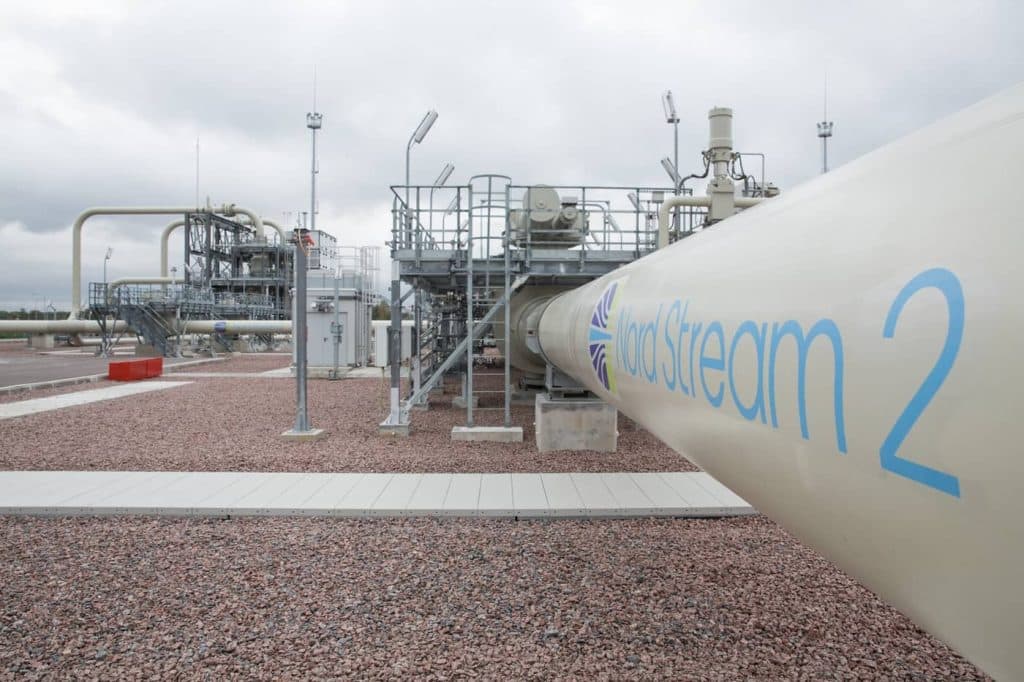
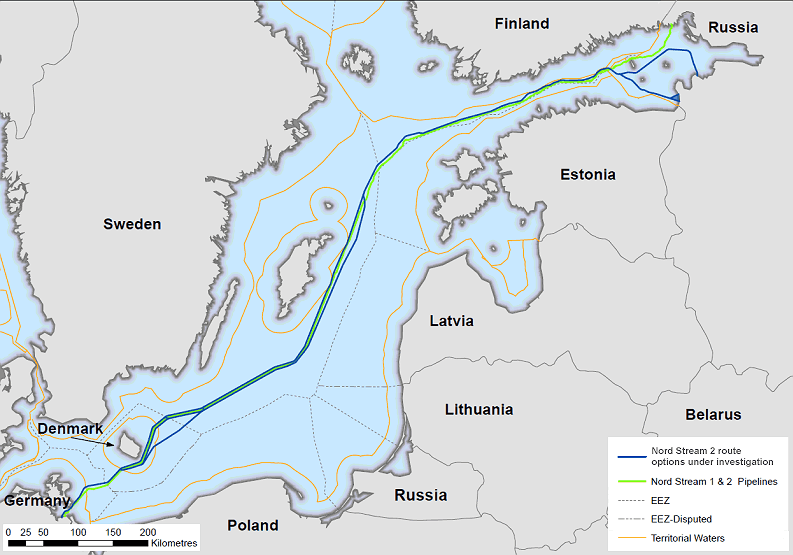
The planned construction of the Nord Stream 2 pipeline under the sea directly from Russia to Germany is currently one of Europe’s most controversial energy issues. Everyone understands that Russia wants to bypass Ukraine, which for a long time has been the most important route for transporting Russian gas to Europe. And everyone also understands why Ukraine, Poland and other countries are protesting against Nord Stream 2 – they face economic losses because they will lose their role as key transit countries. They also fear Russia’s growing influence in European energy and gas markets. As do the United States.
However, an entirely different factor may determine whether Nord Stream 2 is ultimately built – Germany’s strong interest in the project. Germans are convinced that the pipeline, which will double the capacity of the existing transport route under the Baltic Sea (to as much as 110 billion cubic metres per year), will be highly profitable for them economically.
A safer sea route
But it is not only about economics. Although this may seem paradoxical to many countries in the eastern part of the EU, from the German perspective, transporting gas from Russia under the sea strengthens energy security. Whatever is officially said in Europe about today’s Ukraine, nothing fundamental has really changed regarding concerns that it is not a country with long-term stability. The conflict with Russia naturally does not help Kyiv in this respect either.
One of the main and logical arguments against Nord Stream 2 is that, by participating in the construction of another subsea pipeline (in one form or another), Europe would economically harm Ukraine, which it instead wants to help.
However, given German interests, this argument is unlikely to be the decisive one when it comes to deciding on construction. Experience so far shows that Berlin has been able to assert its interests in recent years. The sceptical stance of part of the European Commission towards Nord Stream 2 need not change that. In reality, the question is rather whether Germany will be willing to accept some compromise and support efforts by other European countries to preserve at least part of transit through Ukraine.
With Austrians and Czechs
Germany is not alone in its favourable stance towards Nord Stream 2. This is evident from the list of companies seeking to participate in the Nord Stream 2 project together with Russia’s Gazprom – in addition to German companies Uniper and Wintershall, there are France’s Engie, British-Dutch Shell and Austria’s OMV – a company also very well known in the Czech Republic.
The Austrians are very much aligned with the Germans in this regard. They want a large share of the gas from Nord Stream 2 to flow to their gas hub in Baumgarten. Both Germany and Austria are attracted by the vision of a major gas crossroads. When the US Senate recently raised the threat of sanctions, which would also affect Western companies involved in building the Nord Stream 2 pipeline, it drew sharp joint criticism from German Vice-Chancellor Sigmar Gabriel and Austrian Chancellor Christian Kern.
And although many people do not realise it, the Germans and Austrians actually have a third member of the group – the Czechs. The Czech Republic is sometimes mentioned among opponents of Nord Stream 2, alongside the whole eastern part of the EU, but that is an inaccurate assessment.
The country’s geographical position alone says much about the Czech Republic’s real approach. Not only is it effectively wedged into Germany, with the Gazela pipeline running through it from the northern to the southern part of the Federal Republic. The Czech Republic is also the natural route from northern Germany to Baumgarten near Vienna.
How to use pipelines
The Czechs have an opportunity to make better use of the traditional network of transit pipelines, although increasing gas transport from the northwest to the southeast through Czech territory will still require substantial investment in this infrastructure. An episode from less than two years ago says much about Prague’s true position – at the time, the Czech government did not join the negative position towards Nord Stream 2 taken by Central and Eastern European countries, which had been initiated by the Slovak Ministry of Economy. The Slovaks then feared that they too could suffer significant losses from reduced transit of Russian gas – their pipelines directly connect to the Ukrainian ones.
If anything had held the Czechs back from openly joining the advocates of Nord Stream 2 alongside the Germans and Austrians, it was to some extent policy towards Ukraine, but above all consideration for the Slovaks. However, the situation has changed considerably in this respect since two years ago. According to available information, the Slovaks have received de facto guarantees from Russia that transit through their country will continue even after Nord Stream 2 is completed – although the gas may reach them via Germany and the Czech Republic before flowing onwards. Above all, to the aforementioned Austrian hub at Baumgarten.
After all, the Czechs have also assured Bratislava that they are not planning to build some giant pipeline interconnection with Austria that would leave Slovakia out of the game.
It cannot be expected that the Slovaks will suddenly become vocal supporters of Nord Stream 2. But they will take a more sober view of the project. In expert circles in both the Czech Republic and Slovakia, the view is heard that Germany will push through the subsea pipeline project anyway. Pragmatists in both countries will therefore say that, in such a case, it is better to become part of such a project than to counterproductively put obstacles in its way.
Such a pragmatic attitude is, by contrast, entirely foreign to Poland’s current government, which has effectively taken over from Slovakia the role of leader of opposition to the pipeline.
Czech pipelines, German investors
When examining the Czech strategy, one cannot overlook who controls the domestic Net4Gas pipelines. They are financial investors from the group of German insurer Allianz, together with Canadian investor Borealis. The domestic company Net4Gas recently joined a protest against the legal uncertainty that questioning the Nord Stream 2 project could create. A number of investments in gas infrastructure would then reportedly become highly uncertain.
Net4Gas thus joined four German gas transmission operators – Fluxys, Ontras, Gascade, Gasunie – and Austrian company Gas Connect. All these companies see a problem in the possibility that the European Commission could begin negotiating the entire project with Russia. It is no surprise – opponents of the pipeline in the EU are betting that such involvement by Brussels would at least lead to delays in the entire project.
The aforementioned transmission operators argue, however, that auctions have already taken place this year in which their capacity for the future onward overland transport of gas from Nord Stream 2 was sold. From the gas transmission operators’ perspective, this means they have already started investing in new infrastructure, with investments expected to reach 3-4 billion euros. This includes, among other things, the planned German Eugal pipeline and reinforcement of the transport route through Czech territory.
Berlin shows its hand
While the Czechs can be expected to signal their de facto positive position on Nord Stream 2 only very cautiously, the aforementioned statement by German Vice-Chancellor Gabriel on the threat of US sanctions shows that Berlin is showing its hand completely. Chancellor Angela Merkel also defends Nord Stream 2 as a “commercial project”.
So what are the economic reasons that, it appears, form the firm foundation of Germany’s position? It has already been said that Germany can strengthen its role as a major gas crossroads. Even if the share of Russian gas in the German market rises, the Federal Republic has effectively secured diversification thanks to a network of pipelines also leading to European LNG terminals – if necessary, it can obtain more gas from other sources as well.
Cheaper Russian gas
But Russian gas will be cheaper for Germans thanks to Nord Stream 2. Gergely Molnar, an analyst at Wood Mackenzie in London, for example estimates, according to a Bloomberg report, that transport via Nord Stream is 40 percent cheaper for Germany than via Ukraine. According to Brussels think tank Bruegel, not only Germany but also the United Kingdom, France, Belgium and the Netherlands will benefit from lower gas prices – partly because fees for transporting the commodity through Ukraine or Poland will be eliminated.

One of the key German arguments for the northern, subsea route for gas from Russia is the assumption that further declines in gas production can be expected in Norway, Britain and the Netherlands. And gas is highly important for Germany at a time when it needs to manage its ambitious project of major energy transformation – the Energiewende. As Germany exits nuclear power, seeks to abandon coal and transition as far as possible to renewable sources, gas is meant to provide temporary support. According to many observers, it needs assurance that it will have enough gas at an acceptable price.
Germany’s perception of Russia differs from the image of the Kremlin and Gazprom in eastern EU countries. Germans regard Russia as a reliable partner that has always done everything to fulfil its gas supply commitments (especially towards Germany).
Who will stop Nord Stream 2?
The question, then, is this: can anyone be found who could overcome Germany’s determination to build Nord Stream 2? There have been many attempts to stop, or at least slow down, the project. The Poles took over the baton from the aforementioned Slovaks and, it must be said, they rather “shone” last year. With its negative opinion on the pipeline, Poland’s antitrust authority forced five Western companies to abandon direct equity participation in the project.
However, Uniper, Wintershall, Engie, Shell and OMV found another way – they agreed to lend Gazprom money for the entire project. The hopes of Nord Stream 2 opponents then rested on efforts by the European Commission to launch further negotiations with Russia, preceded by doubts from countries such as Sweden and Denmark about the project as a whole. At that point, (some) countries in eastern EU were no longer entirely alone in their opposition… Estonia, the country currently holding the EU presidency, is also critical of Nord Stream.
Nevertheless, it is doubtful that Berlin would be unable to assert its interests within the European Union. A much tougher challenge would be the US sanctions backed by the Senate. The question is whether Washington will really let matters go that far. Americans could clearly see the sharp backlash the Senate’s decision provoked in Germany. Will they risk strained relations with Europe’s economically strongest country?
The author works as a consultant and energy project specialist for HATcom agency.
Translation disclaimer
This article is a machine translation of the Czech original and has not yet been fully reviewed. In case of any doubt, please refer to the Czech version.