
28 October 2026, 15:10
Loading...
Bulgaria plans to strengthen its position in gas transit
Klára Čeperová
2 March 2024, 13:17
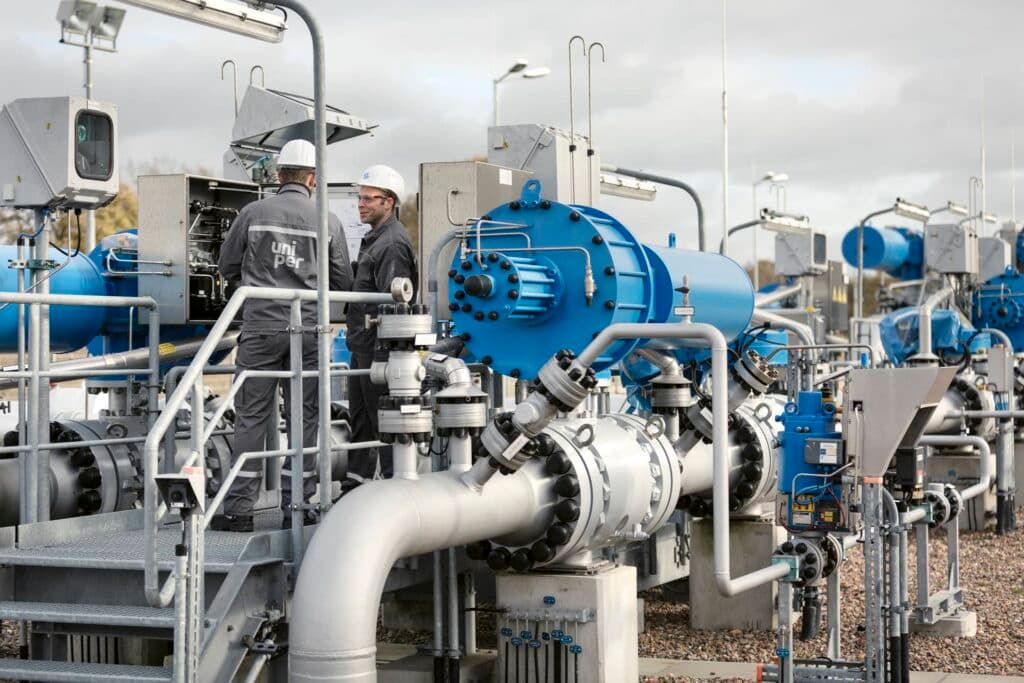
If the declared end of Russian gas transit through Ukraine takes place at the end of this year, the Balkan Stream pipeline will become the main supply route to Europe. In the long term, Bulgaria will therefore become an important transit country, ensuring supplies to Romania, Moldova and the countries of southeastern Europe.
At the end of 2024, a five-year agreement governing one of the oldest and largest economic ties between Russia and Europe will expire: the transit of Russian gas through Ukraine. Kyiv has already declared that it will not extend the agreement, and Russian officials have confirmed that no talks to this effect are taking place with Ukraine or the EU.
According to Reuters, European Commissioner for Energy Kadri Simson also expects this scenario.
“We have no interest in extending the trilateral gas transit agreement with Russia, which expires at the end of this year,” Simson said at a meeting of the European Parliament committee.
European Commission data show that since the start of Russia’s invasion of Ukraine, the EU has drastically reduced its imports of Russian gas, from more than 50% to 15% last year. A total of 9% of Russian gas supplies to the EU comes through pipelines, with the rest made up of liquefied natural gas. After the Ukrainian gas corridor is suspended, supplies to the EU and Ukraine will have to pass primarily through Bulgaria, Euractiv reports.
The last route
After all the upheavals of the past two years of war, including the interruption of supplies through the Nord Stream pipeline, Russian gas now reaches Europe via two routes, each carrying around 14 billion cubic metres of gas a year. The first is the corridor through Ukraine to Slovakia. The second is the TurkStream pipeline and its extension, Balkan Stream, running beneath the Black Sea to Turkey, Bulgaria, Serbia and Hungary.
Simson also referred to the Balkan route at the committee meeting.
“Based on our preliminary analyses, there are alternative solutions for supplying these countries, which still receive some of their gas via the Ukrainian route,” she added.
One such solution is Balkan Stream, an extension of the TurkStream pipeline. Bulgaria and Greece have also built a gas pipeline interconnector linking Bulgaria’s gas network to the Trans Adriatic Pipeline, which carries gas from Azerbaijan. In addition to transporting Azerbaijani gas, the interconnector enables the transportation of liquefied natural gas from Greek terminals and imports of liquefied natural gas from Russian terminals.
Making use of existing routes
Bulgaria and Romania are currently not making use of the potential of the Trans-Balkan Pipeline, which, before TurkStream came online, was the old route for Russian gas transit from Ukraine through Romania to Bulgaria.
The authorities in Sofia intend to reverse the direction of the pipeline, turning Bulgaria into an export route for gas to Romania and supplying gas to Ukraine as well.
“Following the likely end of Russian natural gas transit through Ukraine from the beginning of 2025, the Vertical Gas Corridor through Bulgaria will be the only project capable of ensuring both the necessary transportation of liquefied gas and the continued operation of Ukraine’s gas transmission network and underground gas storage facilities,” said Vladimir Malinov, head of Bulgartransgaz.
The project, called the Vertical Gas Corridor, is a joint initiative of gas companies in Greece, Bulgaria, Romania, Hungary, Slovakia, Moldova and Ukraine, aimed at expanding existing gas connections between these countries.
Further development
Vladimir Malinov also said that increasing capacity from Greece to Bulgaria and from Bulgaria to Romania would make it technically possible to transport additional volumes of natural gas, including gas from the Southern Gas Corridor and liquefied natural gas, while making maximum use of existing infrastructure.
The Bulgarian authorities have discussed with the European Commission the possibility of financial support for implementing the Vertical Gas Corridor projects. The total indicative value of Bulgartransgaz’s two Vertical Gas Corridor projects is 300 million euros.
“We are exploring financing options for the projects, including increasing the company’s capital, debt financing, the use of state guarantees and European funding,” Malinov said.
The project to increase capacity with Greece will also make it possible to boost supplies from alternative sources to North Macedonia, covering 50 to 80% of the country’s daily needs.
Translation disclaimer
This article is a machine translation of the Czech original and has not yet been fully reviewed. In case of any doubt, please refer to the Czech version.
Sdílejte článek prostřednictvím:
You might also like

28 October 2026, 13:08

28 October 2026, 11:10

28 October 2026, 09:08
