
8 November 2026, 20:02
Loading...
Cold seawater will limit the operation of LNG terminals in Germany during winter

Eduard Majling
25 October 2023, 06:41
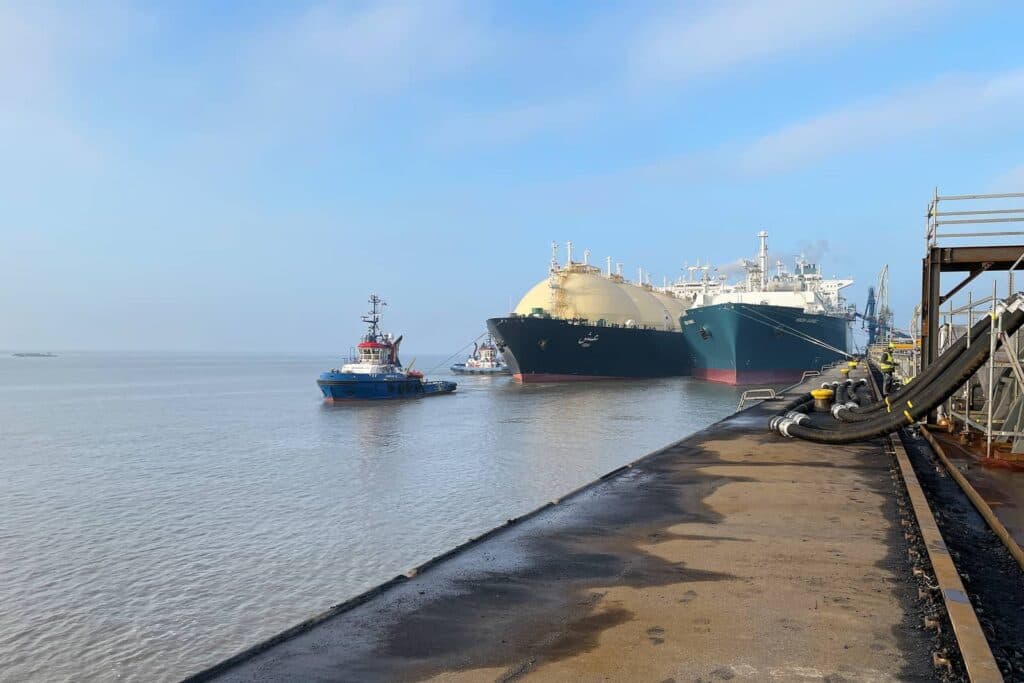
Cold water will limit the operation of three floating LNG terminals in German waters during winter, state operator Deutsche Energy Terminal warned. During summer, floating terminals use warm seawater to heat liquefied natural gas (LNG), allowing it to be converted back into gaseous form and delivered into the transmission system. During winter, however, they switch to a closed-loop system using steam heating, which has lower capacity.
Germany had considered building terminals to import liquefied gas for years, but the plans had stalled until the energy crisis broke out. However, as Russian natural gas supplies fell to a fraction of their previous levels, the country found itself in a desperate situation last year, which was helped by leasing several floating LNG terminals (FSRUs, short for floating storage regasification units).
These vessels receive liquefied gas imported by tankers and then convert it back into gaseous form. To do so, the facilities typically use seawater for open-loop heating during summer, according to Argus. Seawater temperatures fall during winter, forcing the floating terminals to use a closed-loop system that heats LNG with steam. This in turn limits the volume of gas they can deliver into the transmission system.
According to state-owned German company Deutsche Energy Terminal (DET), which operates some of the floating terminals in German waters, this limitation affects the Wilhelmshaven 1 and 2 floating terminals, as well as the Stade terminal. Wilhelmshaven 1 and Stade are already operational, while Wilhelmshaven 2 is expected to start operating later this year. For now, the vessel Excelsior is moored in Spain.
Closed-loop heating system limits terminal capacity
When the three terminals use a closed-loop steam system to heat LNG, their maximum gas send-out capacity is reduced by a total of 207 GWh per day, according to DET. For comparison, this figure roughly matches current gas demand across Czechia.
According to DET, the terminals typically switch to a closed-loop system when seawater temperatures fall below 14 °C. However, the change in operating mode also depends on other factors, so DET says it is not possible to say exactly when the terminals will switch.
Translation disclaimer
This article is a machine translation of the Czech original and has not yet been fully reviewed. In case of any doubt, please refer to the Czech version.
Sdílejte článek prostřednictvím:
You might also like

8 November 2026, 13:59

8 November 2026, 08:10
7 November 2026, 17:23