Počerady accounts for 5% of Czech gas consumption; Czech Republic needs many more such plants

Martin Voříšek
Martin Voříšek
27 February 2024, 12:21
pocerady-se-podili-z-5-na-ceske-spotrebe-plynu-cr-takovych-zdroju-potrebuje-nasobne-vic

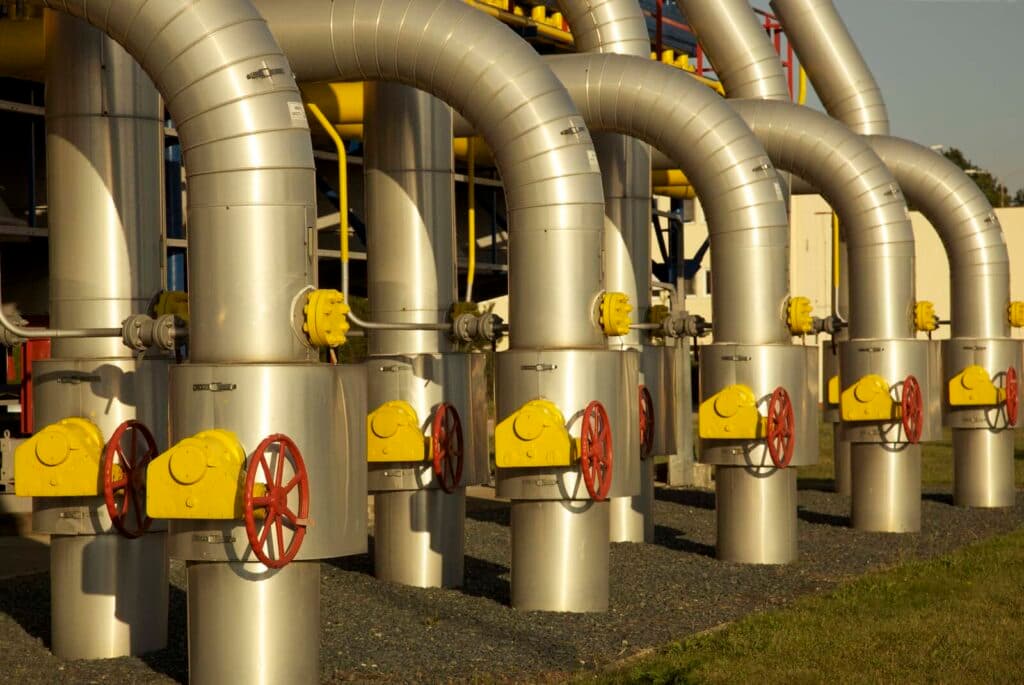
The Počerady combined-cycle gas power plant, operated by the semi-state-owned company ČEZ, generated approximately 1.66 TWh of electricity last year. The plant required 3.3 TWh of natural gas to do so, nearly five percent of total natural gas consumption in the Czech Republic. The State Energy Policy envisages the construction of further gas-fired capacity, which will have a major impact on gas consumption. According to ČEZ, up to 5 GW of installed capacity in gas-fired plants needs to be built by 2030, six times the installed capacity of the Počerady combined-cycle gas power plant. 

Electricity generation at the Czech Republic's largest combined-cycle gas power plant has been declining gradually for the fourth consecutive year. Last year, the plant's capacity utilisation reached only approximately 25%. This is substantially lower than for nuclear capacity, but reflects the role of combined-cycle gas power plants in the system. Their main purpose is the rapid deployment of capacity and covering peaks in system demand.

So far, Počerady supplied the most electricity to the grid in 2019, when generation reached 3.6 TWh of electricity, more than twice last year's volume. Last year, it returned roughly to the generation levels seen in 2016-2018.

Although the Počerady combined-cycle gas power plant was dispatched much less frequently, it consumed a total of 3.3 TWh of natural gas for electricity generation. Compared with total gas consumption in the Czech Republic, which according to data from the Energy Regulatory Office stood at around 73 TWh, the Počerady plant accounted for nearly 5% of all gas consumption in the Czech Republic.

Počerady therefore has a major impact on gas consumption in the Czech Republic. Further development of gas-fired power plants similar to the one at Počerady is planned in the coming years. Natural gas is intended to serve as a transitional fuel towards renewable energy sources and gases that will, in the near future, enable the phase-out of coal-fired electricity generation.

"In the short to medium term, an increase in natural gas consumption is expected, with gas serving as a transitional fuel, particularly in electricity and heat generation," the Ministry of Industry and Trade states on its website dedicated to the draft State Energy Policy.

The State Energy Policy does not specify what capacity of gas-fired power plants should be built in the Czech Republic to meet its needs. Nevertheless, the policy makes it clear that gas-fired power plants will be indispensable in the short term.

There is also broad agreement among experts on the need to build new gas-fired power plants. An analysis by ČEPS, the Czech transmission system operator, pointed out at the beginning of 2023, among other things, that at least three large combined-cycle gas power plants need to be built.

The need to build new gas-fired capacity is also stressed by semi-state-owned ČEZ, which operates the Počerady power plant. Gas-fired capacity should primarily replace ageing coal-fired power plants, whose operating economics are substantially constrained by the price of emission allowances.

Although emission allowances are currently trading at levels last seen before the energy crisis, the prevailing view is that this is a temporary decline. Their price should therefore rise again to levels that ensure the achievement of the European Union's increasingly ambitious climate targets. Coal-fired power plants will thus face higher generation costs, making it more difficult for them to compete in a market where plants with the lowest generation costs are dispatched. However, if new capacity is not available on the market and coal-fired capacity remains necessary to cover demand, higher emission allowance prices will feed through into higher wholesale electricity prices.

"By 2030, we would need to build a total of around 5 GW of gas-fired power plants and cogeneration capacity for district heating in the Czech Republic, split roughly equally by capacity. Their advantages are low investment costs and short construction times, as well as high flexibility. The European Commission has approved the temporary inclusion of nuclear power and gas among clean energy sources, which will facilitate investment in these sources, among other things. We need them to successfully move away from coal and, above all, to transform Czech district heating," spokesperson Ladislav Kříž told oEnergetice.cz.

ČEZ's new gas-fired capacity should be built at the sites of existing coal-fired power plants. By contrast, the conversion of a power plant from coal to gas is to take place at the Mělník site. ČEZ received a grant from the Modernisation Fund for the conversion of this power plant at the end of last year.

For comparison, if 5 GW of installed capacity in gas-fired power plants were indeed to be built in the Czech Republic in the near future, it would be equivalent to six new Počerady plants. With some simplification, and assuming the same capacity utilisation achieved by the Počerady plant last year, these future plants would consume approximately 16.5 TWh of natural gas, estimated at around one-fifth of the gas consumed in the Czech Republic.

Translation disclaimer

This article is a machine translation of the Czech original and has not yet been fully reviewed. In case of any doubt, please refer to the Czech version.