25 September 2026, 09:51
Loading...
Russia prepares for new EU sanctions, expands shadow LNG tanker fleet
Adam Sosna
12 August 2026, 13:16
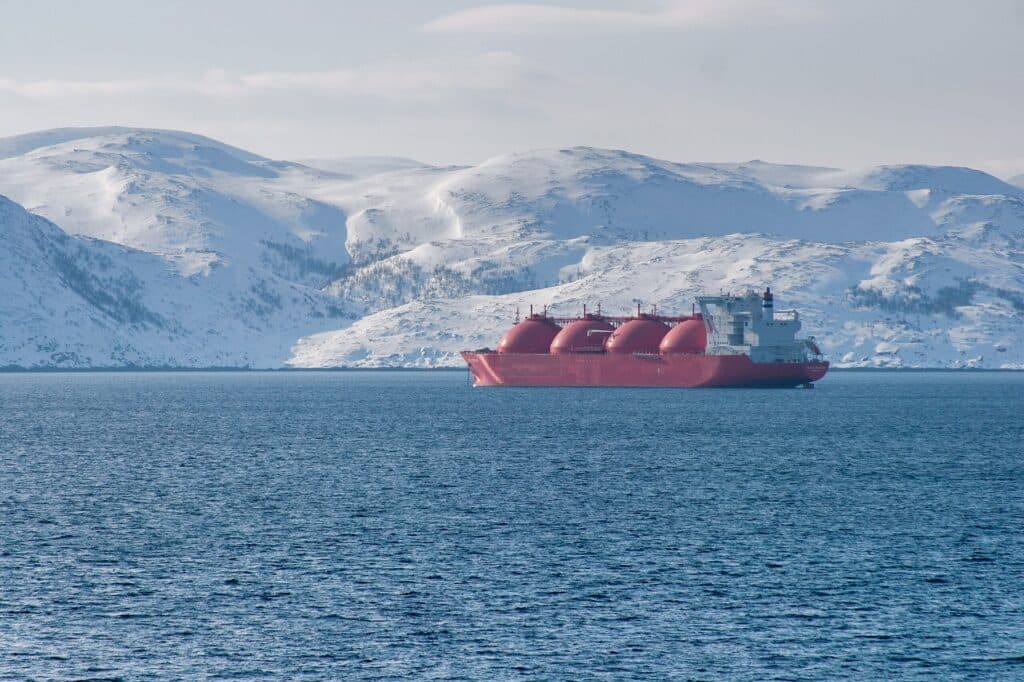
In the first half of the year, Russia has been deploying every effort and resource to expand its LNG tanker fleet. The acquisition of new transport capacity is intended to ensure continuity in Russia's liquefied gas exports even next year. From January, an EU sanctions package will enter into force that is set to effectively end Russian LNG in Europe. A larger fleet of vessels is meant to broaden Russia's options for circumventing this blanket ban and retaining at least part of its European market. As the data show, that market is at a record high this year.
Shadow LNG fleet: Russia buys older vessels but is also building new ones
According to data from maritime company Windward, Russia has expanded its shadow fleet by eight LNG tankers over the past six months. Russians managed to build two of them themselves at the Zvezda shipyard, while the other six were purchased second-hand.Shadow LNG tankers are owned by companies with ties to Russia and registered in jurisdictions such as Dubai, Hong Kong or Singapore. They resort to the same practices as the shadow oil fleet, including frequent signal jamming and ship-to-ship cargo transfers to conceal the origin of their cargo. However, due to the complexity of the technology, shadow LNG tanker operations are far more difficult for Russia than those involving oil tankers.
While the number of “Russian” oil tankers is estimated at more than one thousand, Russia's shadow fleet of the considerably more sophisticated LNG tankers currently totals 25 vessels following this year's expansion. Russians are currently building another four tankers, while six other new tankers are being withheld from them at South Korean Hanwha shipyards due to the sanctions regime.
The rapid build-up of LNG transport capacity is crucial for the country at war in view of the impending entry into force of new European sanctions. From 2027, these are intended to more effectively prevent European entities from continuing to buy Russian LNG.
Revenues from sales on the European market are absolutely crucial to Russia's war economy, as data from the first half of the year demonstrate.
EU imports record volumes of Russian LNG this year
From January to June, a record volume of Russian LNG flowed to EU countries. According to data from analytics company Kpler, EU states bought a total of 9.89 million tonnes of liquefied gas from Russia's largest LNG terminal, Yamal, in the first half of the year, an annual increase of almost 20 percent.The EU thus itself absorbed almost the entire export capacity of Russia's most important LNG terminal. It has been in operation since 2018 and, for strategic and technological reasons, can be described as the “showcase” of Russia's gas sector. It is Russia's first Arctic LNG project. It is served by specialised Arc7-class tankers capable of breaking through Arctic ice on both western and eastern routes.
According to estimates by non-governmental organisation Urgewald, these supplies brought as much as EUR 6 billion into the Russian state treasury in the first half of the year. The overwhelming majority of gas from Yamal went to three European countries—France, Belgium and Spain.
At a time of significant restrictions on alternative routes, these countries are using their long-term contracts and maximising their purchases of Russian LNG while they still can. At the same time, however, even in the fifth year of Russia's full-scale invasion of Ukraine, they are making a very significant contribution to financing the budget of a country at war. European sanctions, which will enter into force at the beginning of 2027, are intended to change this.
New sanctions: The end of Russian LNG in Europe?
Since April this year, EU rules have prohibited purchases of Russian liquefied gas under short-term spot-market contracts. Each individual LNG cargo is therefore subject to verification as to whether it is supplied under a long-term contract concluded before 17 June 2025.This arrangement will change on 1 January 2027, when LNG supplies under long-term contracts will also be banned. A complete ban on pipeline supplies is also due to follow during the year. Depending on the level of European gas storage inventories, this is to take effect either in September or November.
However, a blanket ban does not automatically mean that no Russian LNG will arrive in Europe from next year. Russia is already preparing several mechanisms to circumvent sanctions, including by building a shadow tanker fleet. In addition to ship-to-ship transfers, Russians will likely also seek to use ports in third countries, for example in Turkey or North Africa, from where LNG will reach Europe on another vessel as a “non-Russian” product.
If Russia succeeds in sufficiently expanding its shadow LNG tanker fleet and finding reliable transshipment points, it may continue to maintain part of its exports to Europe. The question remains whether the EU will be able and willing to effectively detect and penalise these practices.
Translation disclaimer
This article is a machine translation of the Czech original and has not yet been fully reviewed. In case of any doubt, please refer to the Czech version.
Sdílejte článek prostřednictvím:
You might also like
24 September 2026, 11:23
24 September 2026, 10:30
24 September 2026, 06:56