Strategic partnership: Russia plans gas pipeline to Iran
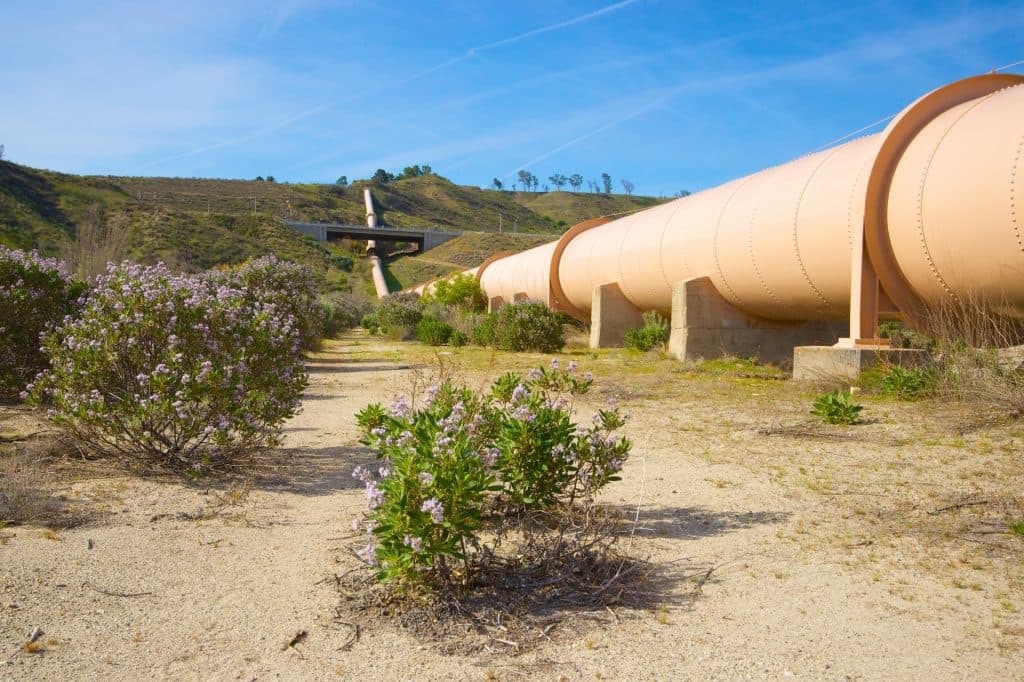
The Russian and Iranian presidents signed a 20-year strategic partnership agreement covering defence, energy, technology and trade, including plans to supply Russian gas. The pipeline project, with a transport capacity of up to 55 billion m³ per year, follows a memorandum between Gazprom and the National Iranian Gas Company (NIGC), while initial supplies are expected to use existing infrastructure through Azerbaijan, Reuters reported.
Russian President Vladimir Putin and Iranian President Masoud Pezeshkian signed a comprehensive strategic partnership agreement between the two countries at a meeting in Moscow on 17 January 2025. The 20-year “strategic partnership” agreement covers areas ranging from defence and technology to energy and trade.
During a joint press conference with his Iranian counterpart, Russian President Vladimir Putin said that his country was considering building new nuclear power units in Iran. Moscow is also seeking to sell some of its surplus gas to Tehran.
President Vladimir Putin announced plans to build a new pipeline with a capacity of up to 55 billion m³ per year, equivalent to the volume previously exported to Germany through Nord Stream 1. The plan follows a memorandum of understanding signed in June 2024 by Russia’s Gazprom and the National Iranian Gas Company (NIGC) to facilitate gas supplies from Russia to Iran.
Initial supplies are expected to amount to 2 billion m³ per year and use the existing pipeline through Azerbaijan, which would need to be expanded to raise capacity to 8–10 billion m³ per year. The project has no set timeline yet, and supply terms are still under negotiation. Gazprom has also pledged to help NIOC develop the Kish and North Pars gas fields and six oil fields, complete LNG projects and build export pipelines.
Iran’s position
Iran has abundant gas reserves and was once seen as an alternative gas supplier to Europe. However, Western sanctions, voluntary isolation and inefficient management have severely constrained its production capacity. A lack of modern technology and foreign investment is causing production to decline by up to 5% per year, which is not enough to meet even domestic demand, the Iran Insight website reports.
Critics therefore argue that Iran, which has the world’s second-largest natural gas reserves, should focus on maximising its own production and export capacity rather than facilitating the export of competing gas. They also point out that Russia and Gazprom have repeatedly failed to meet their investment commitments in Iran’s gas industry, instead using projects to isolate Iran from global export markets.
Supporters of the pipeline, however, point to the prospect of a steady revenue stream from the project, which could strengthen Iran’s sanctions-hit economy. The project could also transform the country into a regional energy transit hub, increasing its geopolitical influence and standing in global energy markets. In cooperation with Russia, Turkmenistan and Qatar, Iran could become a regional gas hub.
Plans for the Iran–Pakistan gas pipeline
The plans could also include the Iran–Pakistan gas pipeline, a project Russia has long sought to join. However, the project faces obstacles due to sanctions against Iran, political disputes and India’s withdrawal in 2009 under pressure from the United States. Political tensions between India and Pakistan further complicate matters. Sanctions also restrict access to the financing, modern technology and strategic partnerships needed to build pipeline infrastructure.
Another challenge is the need to modernise Iran’s north–south gas pipelines, which would enable Russian gas to be transported to potential buyers in India and South Asia. The project also faces competition from other producers, such as Qatar.
Translation disclaimer
This article is a machine translation of the Czech original and has not yet been fully reviewed. In case of any doubt, please refer to the Czech version.




