25 September 2026, 09:51
Loading...
80-year operation of nuclear plants? Activists call for new impact assessment

oEnergetice.cz, ČTK
16 July 2026, 13:22
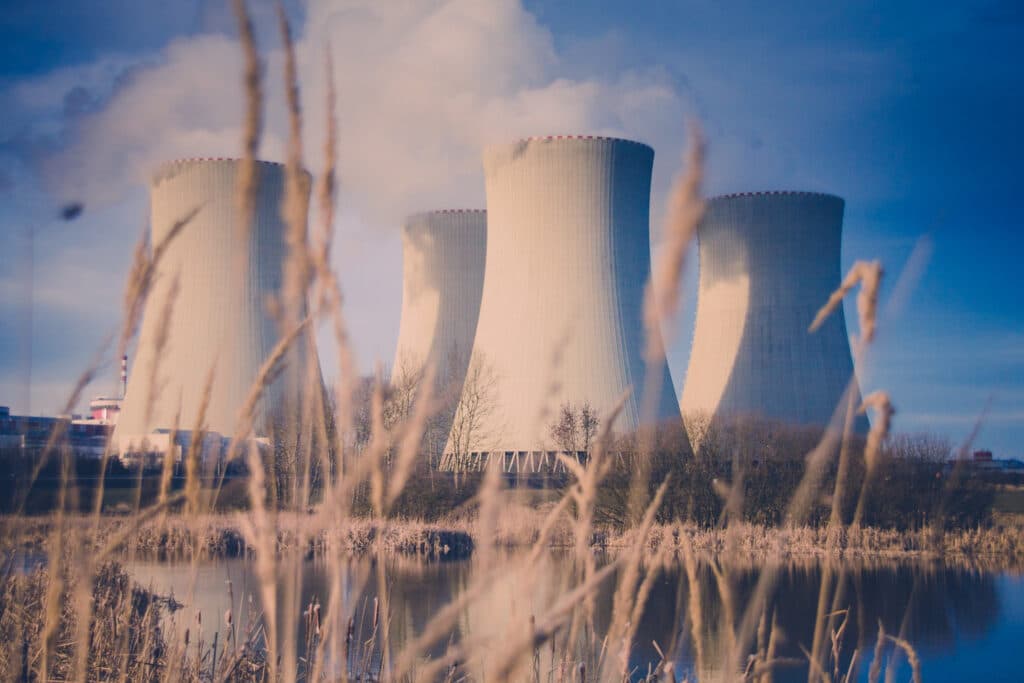
The Civic Initiative for Environmental Protection (OIŽP) and the Calla association oppose extending the operation of the Temelín and Dukovany nuclear power plants by 20 years without a new environmental impact assessment (EIA). They say the Czech Republic is circumventing European law and is therefore exposing itself to the risk of legal disputes. The groups said this in press releases sent to ČTK. According to ČEZ, this is not a new project requiring an EIA, and the plants are licensed to operate indefinitely.
Minister of Industry and Trade (MPO) Karel Havlíček (ANO) announced that the current Temelín and Dukovany units would have their operating lives extended to a total of 80 years.
"Operating a nuclear power plant for 80 years cannot be approved solely on the basis of the investor’s technical assessments and administrative decisions. Such a fundamental change must be reassessed in terms of its environmental impacts, and the public must be given an opportunity to comment on it," Gabriela Reitingerová said on behalf of OIŽP.
According to her, the process must also include an assessment of transboundary impacts, and residents, local authorities and experts from neighbouring countries must be able to participate in such proceedings.
The Calla association likewise says that EIA is not merely a formal step. "In addition to extensive technological changes, longer operation also entails larger volumes of radioactive waste, including spent fuel, as well as cooling water withdrawals and related impacts on ecosystems in an environment being transformed by climate change," said Edvard Sequens of Calla. He added that ČEZ’s analyses are not publicly available and that, in the case of Dukovany, ČEZ refused to provide them on the grounds that they constituted a trade secret.
Temelín nuclear power plant spokesperson Marek Sviták told ČTK that ČEZ fully complies with applicable Czech and European legislation and international standards in both operating the Dukovany and Temelín nuclear power plants and planning their future use. "No new permit is issued for the continued operation of existing plants that have been operating for a long time beyond the 60-year horizon; under the law, this is therefore not a new project that would require follow-up proceedings or an environmental impact assessment," Sviták said.
The plants have indefinite operating licences from the State Office for Nuclear Safety. "We demonstrate our readiness for further safe operation at regular ten-year intervals," Sviták added. According to ČEZ, the plants’ future long-term operation therefore depends, in addition to meeting statutory conditions, on investment in maintenance and refurbishment or modernisation of equipment.
However, activists say that extending the operation of the nuclear power plants circumvents European law. "If Czech authorities sought to avoid the legally required assessment of the impacts of extending the operation of both Dukovany and Temelín, they would face the risk of legal disputes over breaches of European law," Sequens said. He added that the European Court of Justice had issued a precedent-setting ruling in the case of a ten-year extension of the operation of Belgian reactors, finding that such a project falls under the EIA Directive and requires a full assessment, including transboundary consultations. “This must take place before a legal decision on the extension is adopted,” Sequens added.
Translation disclaimer
This article is a machine translation of the Czech original and has not yet been fully reviewed. In case of any doubt, please refer to the Czech version.
Sdílejte článek prostřednictvím:
You might also like

24 September 2026, 11:23

24 September 2026, 10:30
24 September 2026, 06:56