
28 September 2026, 08:36
Loading...
A message for Dukovany, too: Americans revive Westinghouse
Jan Žižka
18 December 2017, 19:20
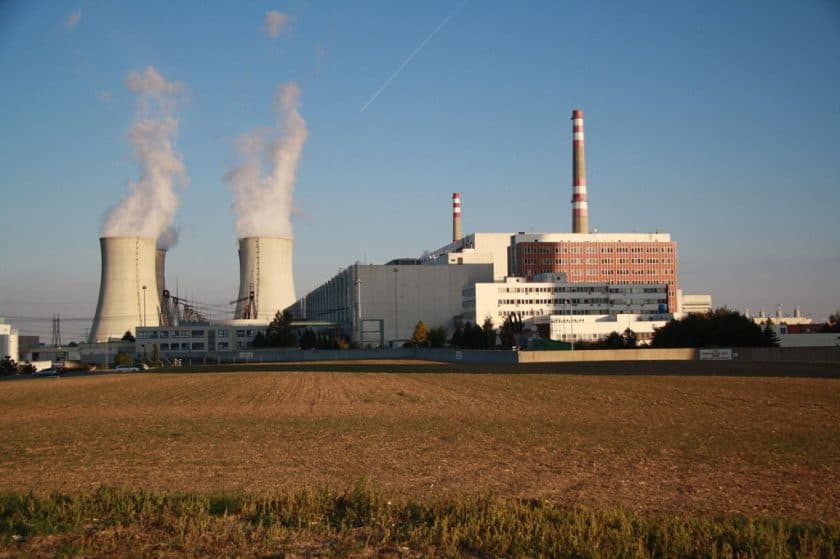
A corporate bankruptcy, the failing construction of new nuclear units in the US, and a company that its Japanese owners are desperate to get rid of as soon as possible. Together, all this makes up the mosaic of the faded image of the once-famous Westinghouse corporation.
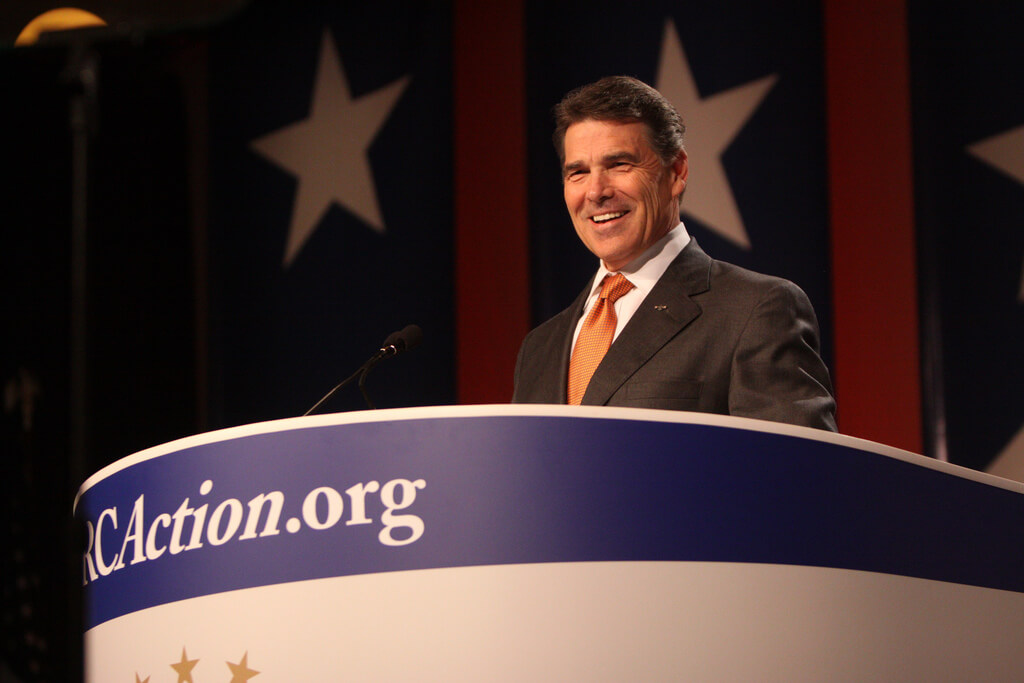
Yet everything suggests that many Americans have not come to terms with this state of affairs. Whether they sit at Westinghouse headquarters in the suburbs of Pittsburgh, Pennsylvania, or in government offices in Washington. The man directing the attempt at the near-resurrection of US nuclear power and its expansion abroad is Rick Perry, the US energy secretary in Donald Trump’s administration.
If Westinghouse were able to return to foreign markets after the expected completion of its bankruptcy proceedings next year, it would send an important message to Dukovany and Temelín, too. Westinghouse is one of six bidders for the construction of new reactors in the Czech Republic, but recently it has quite logically been regarded as an outsider.
Will the Saudis help?
Perry is looking for ways to ensure the continuation of nuclear power in the United States and has recently also drawn attention for promoting the interests of US companies abroad. It appears that a monarchy with ambitions to become a major regional power in the Middle East – Saudi Arabia – could play a key role in this respect.
Foreign policy analysts have already commented on many aspects of strengthening ties between Saudi Arabia and Donald Trump’s America. However, everything suggests that one of the major opportunities the Americans have identified in the country concerns nuclear power.
Saudi ambitions in this sector are enormous: by 2040, the country plans to build 16 new reactors. It is already preparing a tender for the first two. Over the longer term, contracts worth tens of billions of dollars are taking shape for suppliers of know-how, technology and subcontracting work. Contenders include countries whose names are also mentioned in connection with Dukovany and Temelín – Russia, China, South Korea, France and Japan.
And Rick Perry is lobbying hard to advance another contender. US-based Westinghouse will offer its latest AP 1000 reactors, already known from the previous cancelled Temelín tender.
Attracting partners
According to available information, Westinghouse is also discussing the creation of a consortium of US companies that would enter the Saudi tender with it and put forward a comprehensive offer.
There is speculation about utility Exelon or engineering and construction company Bechtel. It is clear that Westinghouse needs strong partners – everyone vividly remembers that it entered bankruptcy after deciding to bring together various activities under one roof, including construction work.
Washington’s strong interest in preserving and developing US nuclear know-how is also demonstrated by its willingness to accommodate the Saudis on security issues – perhaps beyond what previous US administrations appeared willing to accept. The administration of George W. Bush had already discussed developing cooperation on the peaceful use of nuclear energy with the Arab monarchy. These talks resulted in a preliminary agreement under which the Americans would help develop nuclear power, while the Saudis would join a US programme aimed at countering the threat of nuclear weapons proliferation.
The model for an arrangement with the Saudis was to be the US agreement with the United Arab Emirates, under which the country renounces activities at both the front and back end of the fuel cycle – namely uranium enrichment and the reprocessing of spent nuclear fuel that would result in plutonium production. In Saudi Arabia’s case, however, the Americans are signalling that they could be willing to accept uranium enrichment directly in Saudi Arabia. This is a crucial matter for the Saudis, given that they have relatively extensive uranium reserves of their own.
Familiar India
Saudi Arabia’s decision under the new King Salman and his influential son Mohammed to develop nuclear power may seem like an unexpected gift from heaven to the Americans. In another major market, India, the question is whether projects negotiated long ago can be implemented. Even during the most difficult stages of the bankruptcy proceedings, Westinghouse maintained that it intended to complete the previously planned delivery of six AP 1000 reactors to Andhra Pradesh despite all the difficulties in the US. And despite the fact that its then-parent company Toshiba had already withdrawn from involvement in nuclear projects, including in India.
The Americans are not without a chance in India either, which in the future may see the world’s second-largest nuclear power construction boom after China. Here, too, Westinghouse can count on support from the Washington administration. India has traditionally sought to develop nuclear power in cooperation with Russia, France and the United States, with Russia currently appearing to have the most projects in prospect – also due to the difficulties faced by US and French companies.
India will likely seek to diversify its nuclear power relationships and find compromises on issues that have so far discouraged foreign companies. These include the question of liability for potential future damages.
Westinghouse will probably have fewer opportunities in Britain if Toshiba’s Moorside nuclear power plant project is taken over by the Koreans or Chinese. On the other hand, cooperation with these Asian partners would be nothing new for Westinghouse.
The Americans will apparently seek to build reactors in a number of other countries as well – besides the Czech Republic, for example in South Africa, Turkey and Poland.
Without a home field
Today’s severely weakened Westinghouse naturally has nothing guaranteed, but the fact is that foreign markets are – at least when it comes to building new nuclear reactors – its only chance. Even if Rick Perry succeeds in his efforts to support nuclear power in the United States, this will be more about keeping existing nuclear power plants alive and potentially ushering in next-generation, fourth-generation reactors.
The idea that Westinghouse could build further AP 1000 reactors directly in the United States now looks utopian. Following the forced termination of the project for two new reactors in South Carolina, the company will be glad if it can complete construction of the only two reactors of this type in Georgia.
In foreign markets, Westinghouse could apparently count on support from the US state-owned Ex-Im Bank. This export support agency (similar to Czech insurer EGAP and the Czech Export Bank) was threatened with closure – advocated by radical free-market supporters – but the Ex-Im Bank will likely be very useful to the Trump administration, given its nationally oriented trade policy.
The Ex-Im Bank was to support Westinghouse in the cancelled Temelín tender. In the Czech case, however, domestic politicians may prefer the bidder for the construction of new reactors to take an equity stake in the project. Westinghouse has so far refused this form of participation in project financing.

Under time pressure
However, many question marks still surround Westinghouse’s future. There are new plans and perhaps unexpected hopes, but much will depend on what the new owners say about all this. It also depends on when the restructuring of Westinghouse’s debt and the current bankruptcy proceedings are concluded.
The current owners at Toshiba want to complete everything by the end of March – including the sale of their US subsidiary. Toshiba must settle its financial affairs as soon as possible; it has itself run into huge economic problems, not least precisely because of difficulties at its Westinghouse nuclear division. The Japanese company, whose historical renown in no way lags behind that of its US subsidiary, faces the delisting of its shares from the Tokyo Stock Exchange.
It is now absolutely clear that US government officials have decided to have their say in the sale of Westinghouse this time as well. They have indicated that they will use every legal means to prevent the Pittsburgh-based company from falling into the hands of potentially unwanted foreign buyers – namely Chinese and Russian ones. Initially, it appeared that the Americans and Japanese wanted the Koreans to buy Westinghouse. However, they apparently saw major risks in such a move. (They have, however, expressed interest in the Moorside project in Britain.)
Financial sharks
Westinghouse will therefore likely be fought over by financial “sharks” – US private equity funds. This could have interesting consequences: after the twists and turns of several decades, the company would return to US hands by way of Britain and Japan. On the other hand, it would not yet have gained an owner from the sector and a truly strategic partner. Future owners may see potential in Westinghouse’s other major business lines – nuclear fuel and services – rather than in the construction of new reactors. It will likely also depend on how the Washington administration encourages them through its activities and support in foreign markets.
Reuters previously reported that potential bidders for Westinghouse include funds such as Blackstone Group, Apollo Global Management and Cerberus Capital Management – perhaps in partnership with nuclear power plant component manufacturer BWX Technologies.
Billionaire Leon Black’s Apollo fund had, after all, already entered the story of bankrupt Westinghouse earlier – providing financing for its bankruptcy reorganisation. Apollo has a reputation as a financier that seeks out “distressed assets”, companies in trouble from which it can make money. It is not afraid of fierce battles and legal disputes. In Westinghouse’s case, it remains to be seen what this will mean – whether the new owners will get it back on its feet or perhaps further “break it up”, as happened to the once-famous giant industrial corporation Westinghouse, whose scope was many times broader than it is today.
The author is a consultant and energy project specialist at the HATcom agency.
Translation disclaimer
This article is a machine translation of the Czech original and has not yet been fully reviewed. In case of any doubt, please refer to the Czech version.
Sdílejte článek prostřednictvím:
You might also like
28 September 2026, 07:17

27 September 2026, 08:37
26 September 2026, 13:54
26 September 2026, 07:42