Belgium permanently shuts down Doel 2 reactor after 50 years of operation

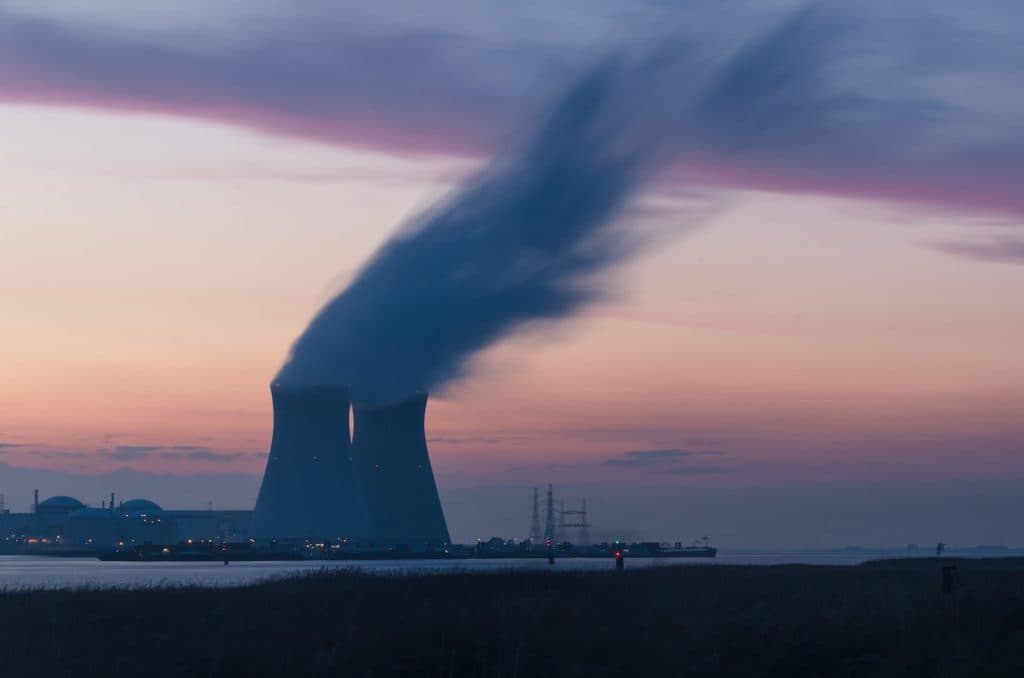
The second unit at the Doel nuclear power plant in Flanders, Belgium, has been permanently disconnected from the grid after 50 years of operation. This follows Belgium’s shutdown in September this year of the first unit at the Tihange nuclear power plant. The end of electricity generation at the reactor was planned under national policy to phase out nuclear energy. Doel 2 is the fifth Belgian reactor to be shut down, after Doel 3, Tihange 2, Doel 1 and Tihange 1.
The shutdown of Doel 2 was originally mandated by Belgian legislation on the phase-out of nuclear energy, which has since been revised. However, Doel 2 no longer meets the statutory safety requirements for nuclear facilities, preventing its continued operation.
The shutdown of the 445 MWe pressurised water reactor was carried out under the supervision of the Belgian Federal Agency for Nuclear Control. Before dismantling of the reactor begins, its fuel will first be removed and then cooled in the storage pool so it can be transported to a temporary storage facility.
Belgium’s federal law of 31 January 2003 required the gradual shutdown of all seven nuclear reactors in the country. Under this policy, Doel 1 and 2 were originally due to be decommissioned in 2015, 40 years after they began operating.
However, the law was amended in 2013 and 2015 to allow Doel 1 and 2 to remain in operation for another 10 years. Doel 1 was shut down in February this year. Doel 3 was closed in September 2022 and Tihange 2 at the end of January 2023. Tihange 1 was disconnected from the grid on 30 September this year.
Belgium reconsiders its stance on nuclear power
The last two Belgian reactors, Doel 4 and Tihange 3, were also due to close last month. However, following the outbreak of the conflict between Russia and Ukraine in February 2022, the government and Electrabel began talks on the feasibility and terms of operating the reactors for a further ten years, until 2035. A final agreement with a balanced allocation of risks was reached in December.
To continue operating Doel 4 and Tihange 3, Electrabel had to submit extensive Long Term Operation (LTO) documentation, including safety studies and an action plan to further improve the safety of the newest reactors. The documentation for both reactors was submitted in December 2024.
Tihange 3 was disconnected from the grid on 5 April for an extensive inspection and maintenance work aimed at ensuring the reactor’s safe long-term operation. After a thorough analysis, the Federal Agency for Nuclear Control (FANC) and its technical subsidiary Bel V determined that the reactor met the conditions for a safe restart, and the 1020 MWe reactor returned to operation on 10 July. Doel 4 was shut down on 30 June for a major overhaul and restarted on 8 October.
In May this year, Belgium’s federal parliament voted by a large majority to repeal the 2003 law that set out the phase-out of nuclear power and banned the construction of new nuclear power plants. The Federal Agency for Nuclear Control called for clarification during this legislative term on the possibility of extending Doel 4 and Tihange 3’s operation beyond 2035.
Translation disclaimer
This article is a machine translation of the Czech original and has not yet been fully reviewed. In case of any doubt, please refer to the Czech version.