
28 October 2026, 15:10
Loading...
ČEZ expects to sign contract for new Czech nuclear units next March

oEnergetice.cz, ČTK
19 March 2024, 17:11
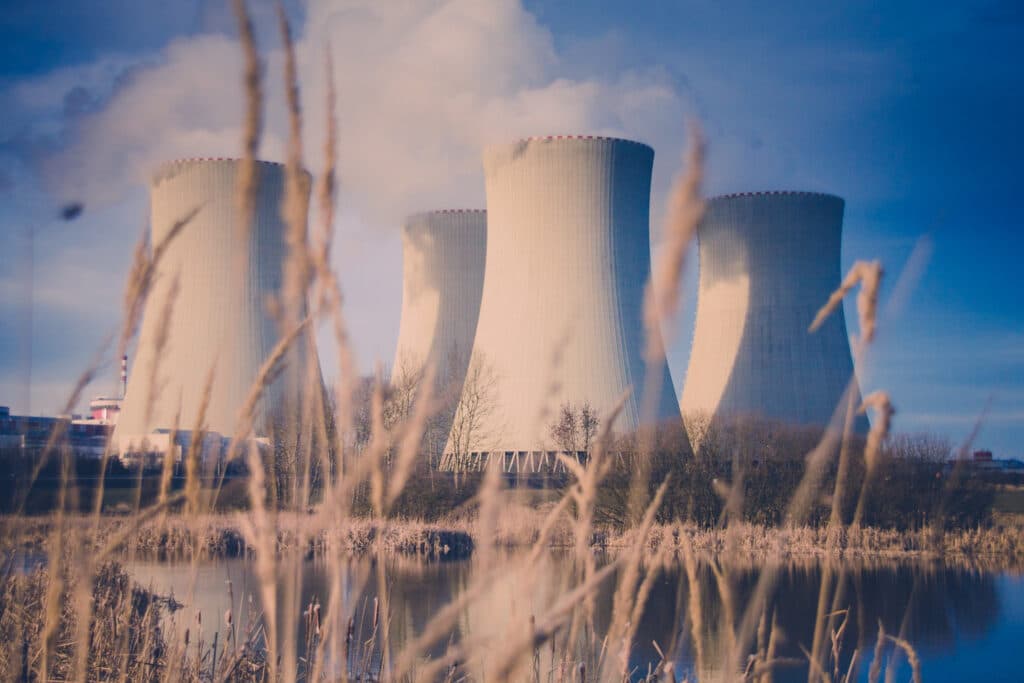
The partly state-owned energy company ČEZ expects to sign a binding contract to build up to four new nuclear units at Dukovany and Temelín next March. Tomáš Pleskač, a member of ČEZ’s board of directors, said this today at a conference in Brno on the future of the Czech nuclear industry in Central Europe.
The two bidders invited to take part in the construction tender, France’s EDF and South Korea’s KHNP, are due to submit binding bids by mid-April this year. ČEZ will prepare an evaluation report by the end of May, and the government is expected to decide on the supplier in June.
„Negotiations on the final terms of the contract will take place in the second half of this year, and we expect to sign it next March. Given the huge number of comments we have on the contract terms from both bidders, we will need to negotiate its final form. Our main principle will be to ensure that the contract terms do not deteriorate,“ Pleskač said.
Prime Minister Petr Fiala (ODS), who attended the conference, underscored the crucial role of nuclear energy in the future of Czech energy and noted that the new unit at Dukovany is expected to come online in 2036. „The non-binding bids showed that, from an economic perspective, it is worthwhile for the Czech Republic to consider up to four units, which would save up to 25 percent per reactor in construction costs,“ Fiala said.
Small modular reactors will also play a crucial role in energy in the coming years, but Czechia does not want merely to buy them—it also wants to develop them. ČEZ is also planning to build small and medium-sized modular reactors. The first reactor is expected to be built in the first half of the 2030s within the wider site of the Temelín nuclear power plant. The company has so far identified sites at the Dětmarovice and Tušimice power plants as two further potential locations.
René Neděla, a senior director at the Ministry of Industry and Trade, noted in his remarks that coal is still expected to account for 13 percent of primary energy sources in 2030, gas for 20 percent and oil for 24 percent. By 2050, coal is expected to account for just three to four percent, gas for seven percent and oil for 12 to 13 percent. Nuclear energy’s share is expected to rise from 22 percent in 2030 to 32 to 42 percent, while renewables’ share is projected to increase from 21 to 36 to 44 percent. Transforming Czech energy by 2030 will require investments of 3.46 trillion crowns, of which around 1.6 trillion will come from public support from domestic and European sources.
Josef Perlík, executive director of the Czech Energy Alliance, said domestic companies could supply 65 to 70 percent of the work and materials needed to complete the new nuclear units. Their involvement in construction will return part of the cost of the reactors to the Czech economy, he added.
Translation disclaimer
This article is a machine translation of the Czech original and has not yet been fully reviewed. In case of any doubt, please refer to the Czech version.
Sdílejte článek prostřednictvím:
You might also like

28 October 2026, 13:08

28 October 2026, 11:10

28 October 2026, 09:08
