
28 October 2026, 15:10
Loading...
Czech nuclear reactor licensing: EUR certification does not address compliance with national safety regulations
oEnergetice.cz
15 May 2024, 11:07
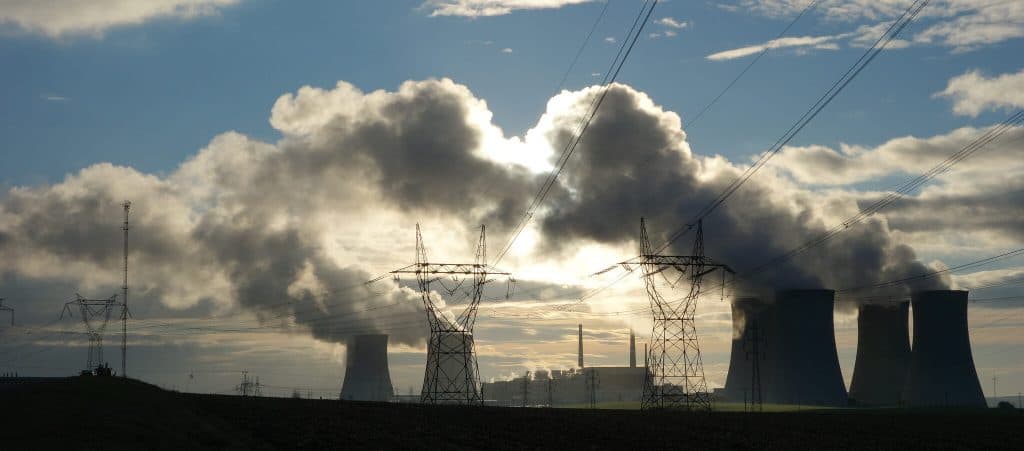
The tender for new nuclear units in Czechia is nearing its conclusion, and bidders are highlighting the various advantages of their proposals. With construction scheduled to start in 2029, licensing—the approval of a nuclear plant design by the nuclear regulator—is also coming to the fore. A smooth, high-quality licensing process is important for keeping the overall construction schedule on track.
In Europe, EUR certification serves as a kind of preliminary step before approval by the nuclear regulator. The EUR Association (European Utility Requirements) was established in Paris in 1991 and brings together major European nuclear power plant operators, including ČEZ, EDF, Finland’s Fortum and TVO, Ukraine’s EnergoAtom, Spain’s Iberdrola and Slovenia’s Gen-energija. “These companies work together to develop harmonized requirements for future nuclear power plants in Europe. These requirements are set out in the so-called EUR document, based on shared practices and standards,” EUR Association Chairman Manuel Carrasco told Ekonomický deník in an interview.
The EUR Association offers nuclear technology providers an analysis of their reactor designs, with the process culminating in the issuance of certificates of conformity. EUR thus helps suppliers understand the perspective of European energy companies, their needs and how they operate nuclear power plants.
“The assessment process enables suppliers, particularly those from outside Europe, to identify specific areas for improvement and increase their chances of entering the European market,” Manuel Carrasco continued.
“However, EUR certification is not a regulatory certification or license, and it does not replace the thorough analysis of a nuclear power plant design carried out by an independent nuclear authority. In assessing a design, EUR ensures that the declared parameters and reactor designs meet our expectations as operators. By contrast, the safety authority conducts a detailed review to verify whether the design complies with national safety regulations. These processes complement each other; neither replaces the other.”
EUR certification therefore gives prospective operators greater assurance that an assessed design meets the basic safety, performance and operability requirements of Europe’s leading nuclear operators. This is a particularly important step for technology suppliers from outside Europe, whose domestic markets may not require the same levels of safety and performance as those typically expected in Europe.
“We have assessed reactor designs intended for the European market, including the EPR (including the EPR2 and EPR1200), Westinghouse AP1000, and KHNP APR1400 and APR1000. The EPR is a reactor developed for use in Europe by one of EUR’s founding members. EDF is actively involved in defining our requirements. They know well what EUR members expect,” the head of the EUR Association explained.
EUR certification is highly beneficial for suppliers from outside Europe. They can verify that their designs comply with European standards, as they are usually designed primarily to meet the requirements of their home markets.
“Some suppliers from outside Europe had to significantly adapt their designs before submitting them for assessment to obtain EUR certification. In addition, in some cases, the design assessment identified changes needed to better align with the expectations of European operators,” Manuel Carrasco concluded.
Translation disclaimer
This article is a machine translation of the Czech original and has not yet been fully reviewed. In case of any doubt, please refer to the Czech version.
Sdílejte článek prostřednictvím:
You might also like

28 October 2026, 13:08

28 October 2026, 11:10

28 October 2026, 09:08
