
28 October 2026, 15:10
Loading...
Czech SÚRAO to take part in trial operation of Finland’s first deep geological repository

oEnergetice.cz, ČTK
9 May 2024, 17:43
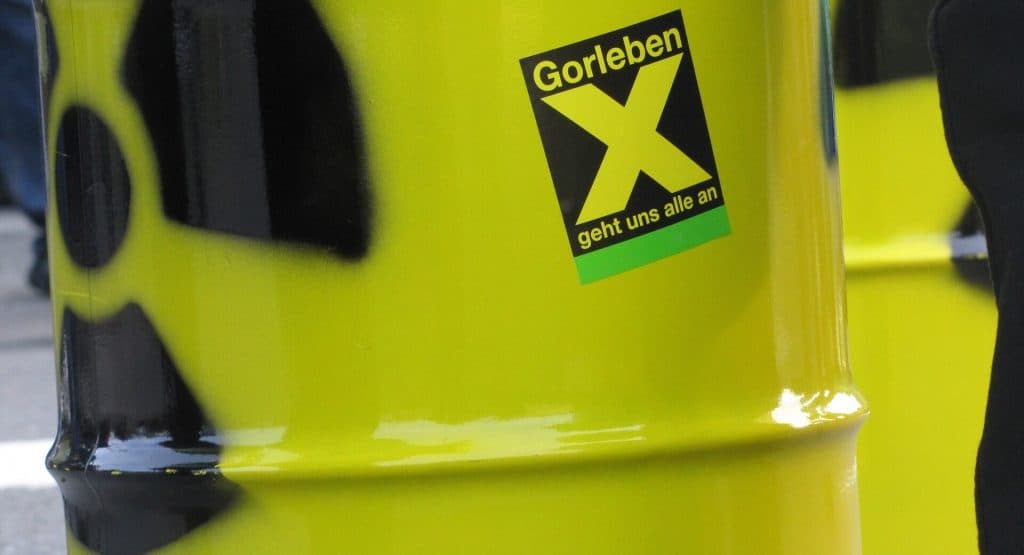
Czechs will take part in the trial operation of the world’s first deep geological repository for radioactive waste in Finland. Representatives of the Czech Radioactive Waste Repository Authority (SÚRAO) will be on site from the autumn to gain experience in preparing a repository in Czechia. In the country, the authority is currently preparing geological surveys at four candidate sites for the repository. The surveys were originally due to begin early this year, but SÚRAO is still waiting for the Ministry of the Environment (MŽP) to issue exploration permits. However, the authority says there is no threat of delays to the overall preparations for the repository, which is due to be operational from 2050. SÚRAO representatives told the Czech News Agency (ČTK). Finland’s repository is expected to begin full operation next year, and the Czechs intend to use it as a model.
According to the authority’s plans, a deep geological repository is intended to provide a permanent solution for the radioactive waste lifecycle. It will permanently store mainly thousands of tonnes of spent fuel from nuclear power plants, half a kilometre underground. Under the EU taxonomy, a repository is a condition for the continued operation of nuclear power. Other countries besides Czechia are also preparing their own repositories.
Finland is the furthest ahead in preparing its repository. The Onkalo project on the country’s southwest coast, near the Olkiluoto nuclear power plant, is expected to be commissioned next year. According to plans, around 3000 copper containers holding spent nuclear fuel are to be stored underground by 2145. Finland’s Posiva says Onkalo will then safely contain radioactive waste for the next 100.000 years.
The Finns intend to begin trial operation of the repository this autumn, initially without spent nuclear fuel. „The Czech Republic will be present throughout the trial operation. We will take part in three separate workshops, during which SÚRAO experts will see on site how nuclear fuel is transferred into containers, lowered underground and placed in disposal boreholes. We will also, for example, observe simulations of possible accidents and how they are dealt with,“ said Markéta Dohnálková, head of repository preparation. She said this would be a unique opportunity to gain experience in preparing a repository in Czechia.
The Czech Republic has so far identified four candidate sites for its own repository, and intends to select the final location by 2030. They are in the municipalities of Horka and Hrádek in the Vysočina region, Janoch near Temelín in South Bohemia, and Březový potok in the Klatovy area. To determine the most suitable location, SÚRAO wanted to begin extensive geological surveys at each site early this year, but is still waiting for its applications to designate exploration areas in the candidate municipalities to be processed. It originally submitted the applications to MŽP last February. The ministry subsequently requested additional information, which SÚRAO provided during the summer last year, according to Dohnálková, and has been waiting ever since. MŽP said that administrative proceedings for all the sites are ongoing. „Some participants in the proceedings have filed a motion alleging bias on the part of the ministry, and until a final decision is made on this motion, the Ministry of the Environment cannot take any further steps in the proceedings,“ spokesperson Veronika Krejčí said. The municipalities have long opposed the deep geological repository. They say the state has still not ensured that municipalities have adequate rights in proceedings of this kind.
The Czech repository is expected to have a greater capacity than the one in Finland. SÚRAO’s current plans put the cost at up to around 130 billion crowns, although inflation and other price changes will affect the final figure. The authority’s cost estimate includes storing fuel from the Temelín and Dukovany nuclear power plants, as well as three planned new reactors. The costs would be different if a different number of new units were built, a decision on which the government is expected to make this year.
Translation disclaimer
This article is a machine translation of the Czech original and has not yet been fully reviewed. In case of any doubt, please refer to the Czech version.
Sdílejte článek prostřednictvím:
You might also like

28 October 2026, 13:08

28 October 2026, 11:10

28 October 2026, 09:08
