9 October 2026, 06:22
Loading...
Germany and new investment in nuclear power: Government to earmark billions to support fusion

Eduard Majling
8 October 2025, 06:29
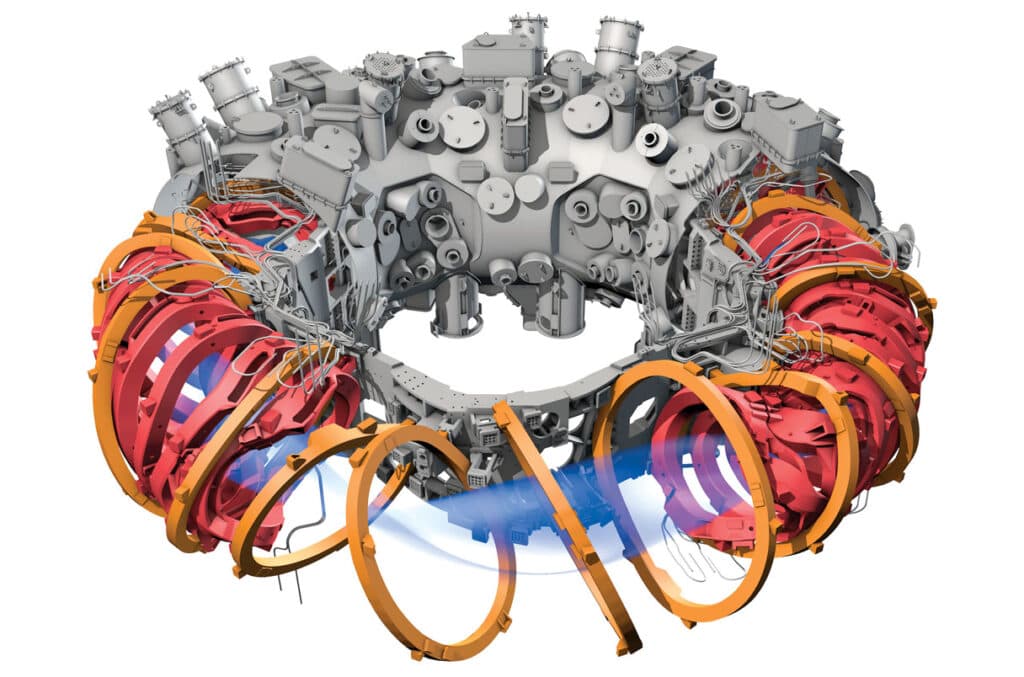
Germany—both its public and politicians—has traditionally been known for its largely negative stance on nuclear power. There are exceptions, however. Germany has long been actively involved in nuclear fusion research and development. As part of its nuclear fusion action plan, the government has pledged more than two billion euros to support the sector, with the aim of building a fusion reactor in the country.
Nuclear power is a contentious issue for German residents and politicians. After decades in which nuclear power made up a significant share of the country’s electricity mix, the last commercial nuclear power reactor ceased operation in spring 2023. The country had reconsidered its plans to phase out nuclear power plants several times, but the accident at Japan’s Fukushima Daiichi nuclear power plant proved fatal for Germany’s nuclear power sector.
Germany remains involved in the sector despite ending nuclear power generation, for example by participating in projects related to nuclear fusion. This is primarily through research at the Max Planck Institute and its stellarator-type fusion reactor, Wendelstein 7-X. Earlier this year, the facility set a world record in a key fusion physics parameter.
Germany’s efforts in nuclear fusion do not end there. The government has unveiled its nuclear fusion action plan, which promises substantial funding for research and the development of pilot projects. According to Clean Energy Wire, more than two billion euros is expected to be allocated by 2029.
“Fusion energy offers the prospect of generating electricity that can provide baseload power, is clean, safe and resource-efficient, and could become a key pillar of our society and economy,” the action plan says, according to the website, adding that fusion could be beneficial for energy-intensive processes such as hydrogen production.
Fusion technologies are still at the experimental stage, however, and there is still a long way to go before they can be deployed commercially. The German government plans to establish clear rules for fusion to provide planning certainty for start-ups and industry. Among other things, it also plans to create an ecosystem for the sector that brings together science and industry, improve education and strengthen international cooperation.
“Our energy of the future should be secure, environmentally friendly, climate-friendly and affordable for everyone,” German Minister for Research and Technology Dorothee Bär said, adding that nuclear fusion could be a key technology to help meet energy demand in the future.
Translation disclaimer
This article is a machine translation of the Czech original and has not yet been fully reviewed. In case of any doubt, please refer to the Czech version.
Sdílejte článek prostřednictvím:
You might also like

8 October 2026, 10:05